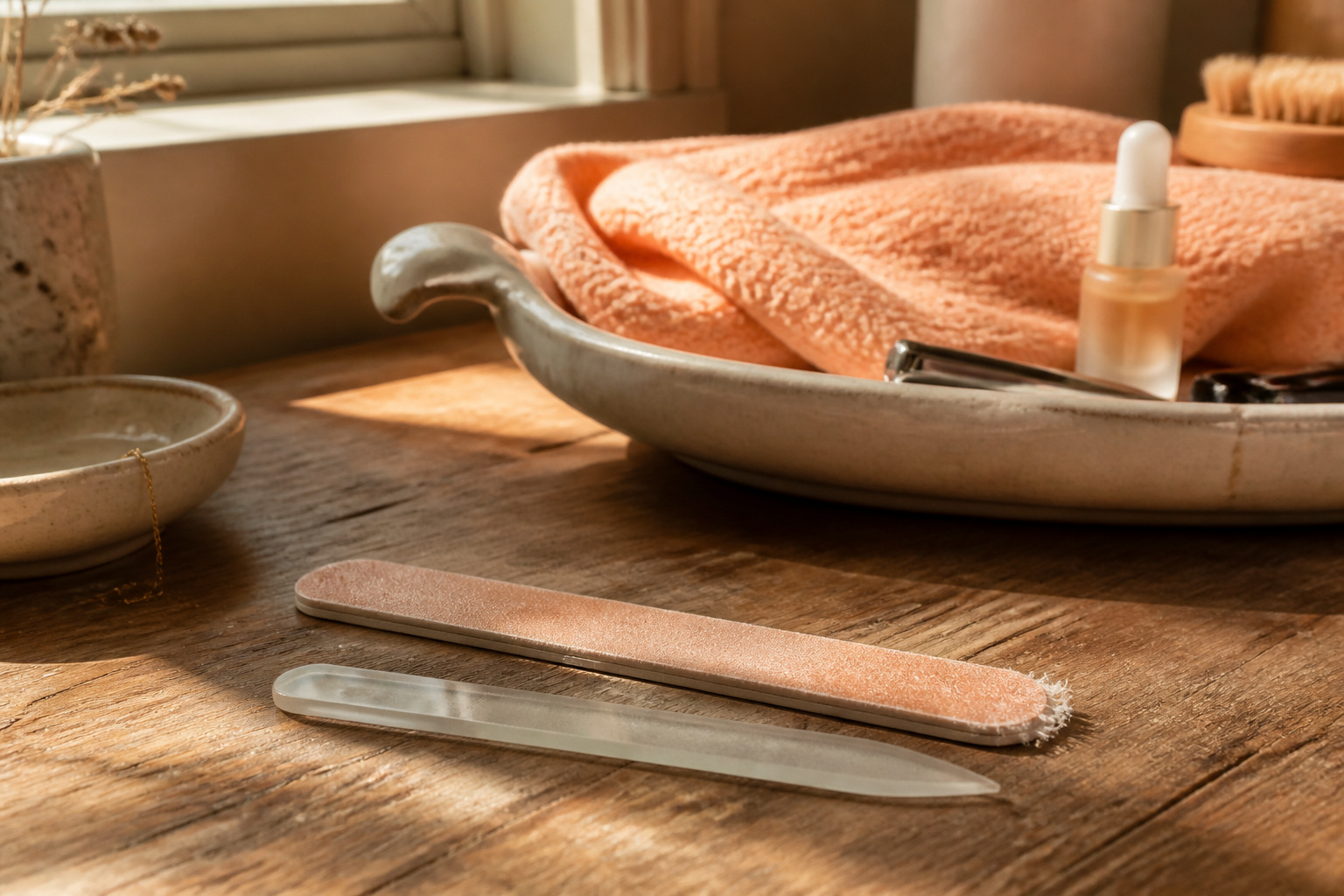
A glass file wins if you file weekly and don’t lose things.
The emery board stays king for anyone who travels light or forgets tools in hotel rooms, since a snapped or confiscated glass file stings at four times the price.
The real split is hidden in the grit numbers. Both tools stamp 180 on the package, but the emery board’s cardboard backing softens the cut so much that the same number on metal bites harder and damages natural nails.
What Sets Them Apart
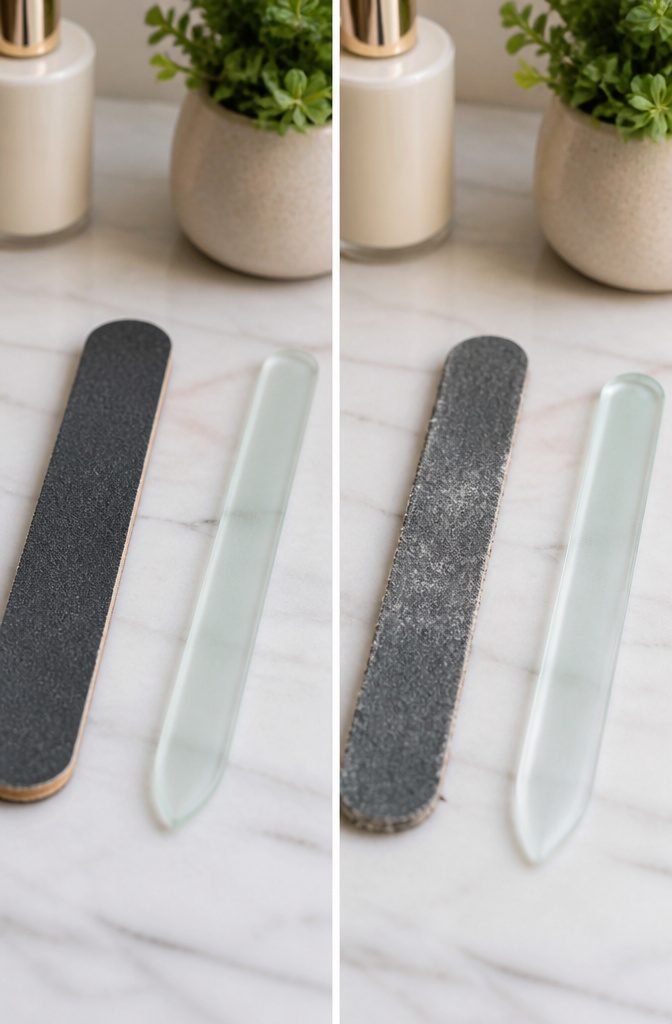
An emery board sits technically inside the family of nail files, but the two tools diverge sharply once you look past the shape.
The core difference comes down to what the surface is made from and what that means for how long it lives.
Emery itself is a mineral composed mainly of aluminum oxide, historically mined and bonded to cardboard or thin wood for these boards.
That construction keeps them lightweight and flexible, which is nice for a purse drawer but also means they wear down fast.
Emery boards are built to be disposable – the grit loosens, the cardboard softens, and you toss the whole thing.
Other nail files head in the opposite direction. Glass, metal, and crystal files use those materials themselves as the abrasive surface or bond tougher grits to them permanently.
No paper backing to fray, no wood to warp if it meets water. The result is a rigid tool that can last years with basic cleaning.
So the real choice isn’t just emery board versus nail file. It’s emery board versus glass file, or versus metal, or versus crystal – each of those alternatives trading the give-and-throwaway model for something stiffer and longer-lived.
Material
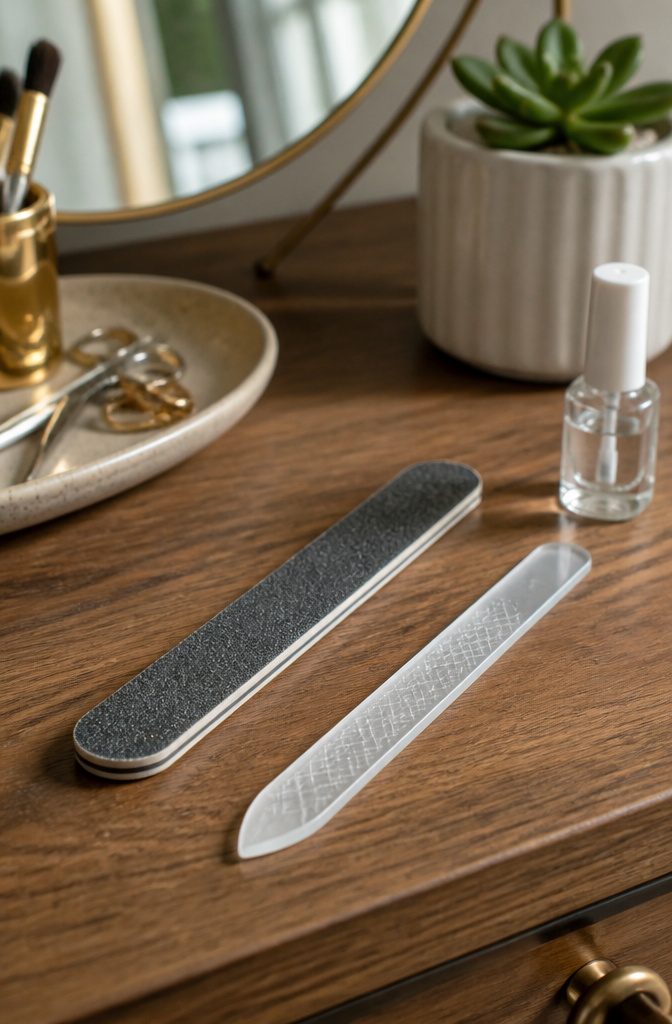
Emery boards start with cardboard or wood, layered thin and coated in emery, a naturally abrasive mineral made mostly of aluminum oxide.
That construction gives them a slight bend and almost no weight. Glass, metal, and crystal files sit differently in the hand: solid, cool, and rigid, with no flex when you press against a nail edge.
The feel under the nail differs just as much. Emery’s grit is bonded to a surface that will eventually wear smooth, usually sooner than you’d expect if you file regularly.
Glass and crystal files carry their abrasiveness in the material itself, etched or formed into the surface, so the texture stays consistent use after use.
Metal files slice more than grind, which is why so many manicurists warn against them for natural nails: the teeth can leave micro-tears that split later.
Emery boards come in grits from coarse shavers to fine finishers, but the base material limits how fine they can go before the cardboard starts to pill.
Crystal and glass can hold a much finer grade without degrading, which matters if your goal is sealing the free edge rather than just shortening it.
Durability
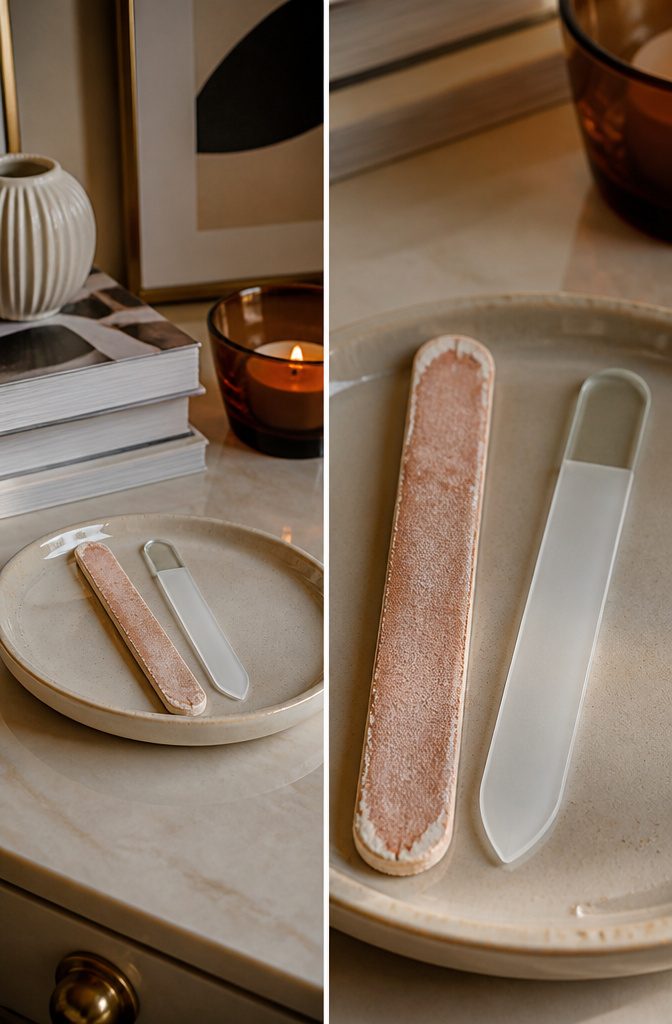
A glass file buried in a bathroom drawer four years ago still files clean today, which is more than any emery board can claim.
Those cardboard-backed boards start shedding grit from the first pass; within a few weeks the surface turns pale, the edges soften, and filing takes twice as long for half the result.
The foam-core versions hold shape a bit longer, but the grit still wears smooth and the center warps from sink moisture.
Metal files last years too, though the etched surface can dull if it meets acrylic dust or gel residue without cleaning.
Crystal and glass share that longevity, but glass files can last for years with proper care, which matters when you are trying to cut down on bathroom waste.
The wear signal on glass is subtle: the filing edge loses its bite, though the surface still looks intact. Metal shows scoring or a faint polish where the teeth have flattened.
Emery boards land in the trash every month or two in my experience.
A glass file rinsed under tap water after use outlasts a dozen of them, easy. The only question is whether you will remember to pack it.
Grit
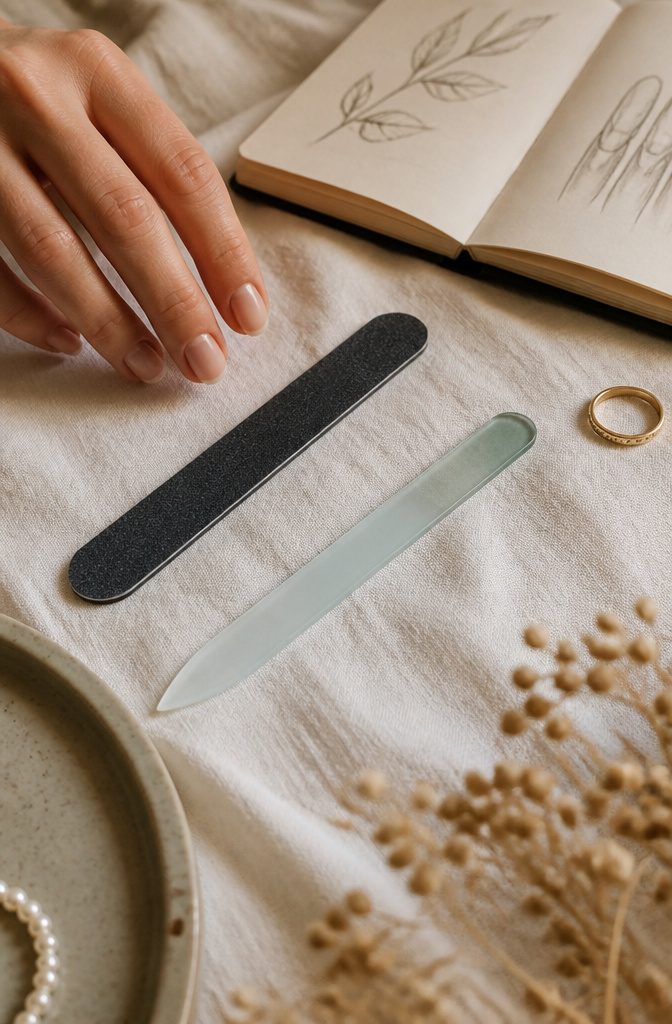
Grit is simply the measure of how coarse or fine the abrasive surface is, and the numbers run backward from what most of us expect.
Lower grit means rougher cutting action; higher grit means smoother and gentler. An emery board packaged for natural nails is typically stamped somewhere in the 180 to 240 range, and that 180 figure is the one I would look for first.
It shapes the nail without the trauma that coarser grades inflict on the nail plate.
For tougher jobs, emery boards do run coarser. Salon-grade packs go down to 60 grit for acrylics or gels, though anything below 100 has no business touching a natural nail if you are trying to grow length at all.
The real difference I noticed comparing these side by side is that dedicated nail files, especially the reusable glass or metal types, give you far more control over grit selection than a throwaway emery board ever will.
You pick the exact grade for your nail type and then file in one direction. With an emery board, you get what the pack contains, and 180 is your safest bet.
Cost
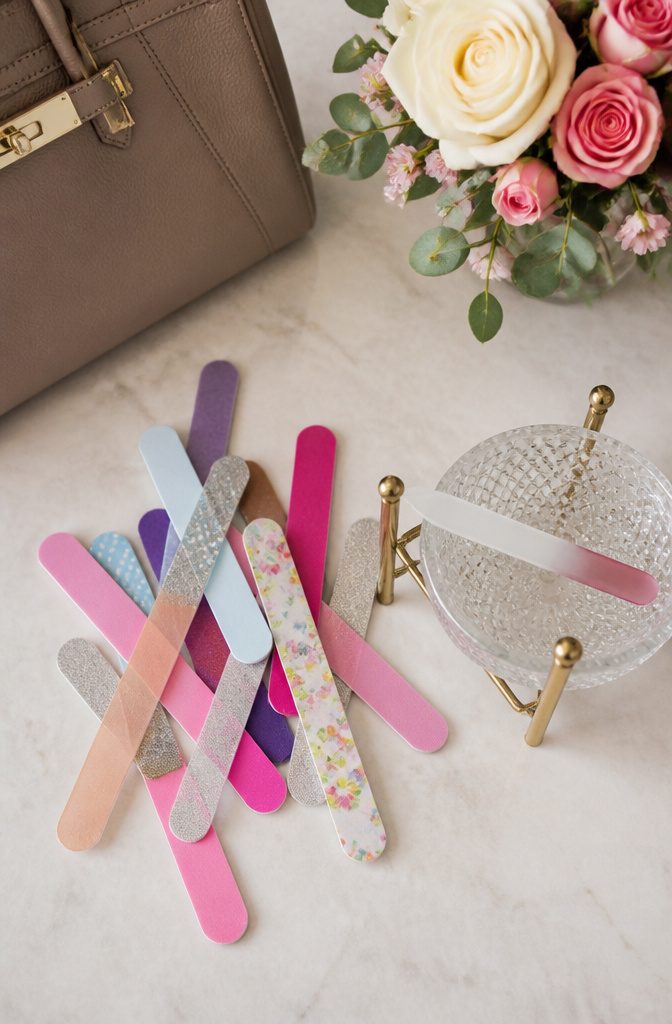
Emery boards come cheap because they are cardboard or foam with grit glued to both sides, and salons often buy them by the hundred.
A single board costs next to nothing, which matters less than you think because the grit dulls fast and the whole thing gets tossed. The real price is the replacement cycle you are locked into.
Glass, metal, and crystal files ask for more money at checkout, sometimes noticeably more.
The trade is longevity: a glass file maintained properly lasts a year or longer, and some metal files outlive entire manicure kits. Spread that upfront cost across fifty or a hundred uses and the per-manicure math flips.
For me, the decision breaks on how often you file and whether you travel. Weekly filers who keep tools at home earn back the premium fast.
Someone who only shapes before a holiday and loses things in suitcases might stay happier with a disposable pack that does not sting when TSA confiscates it. The cheaper tool costs more if you replace it twelve times a year.
Usage
Emery boards fit best for gentle shaping and the quick touch-ups most of us need between manicures.
The cardboard backing flexes slightly, which makes it forgiving if you’re new to filing or just trying to smooth a ridge before a meeting.
Nail files, especially those with a glass or crystal base, give you the precision and control for professional-quality shaping and finishing. Their sturdy surface doesn’t give way, so you can actually refine the curve rather than just blunt the edge.
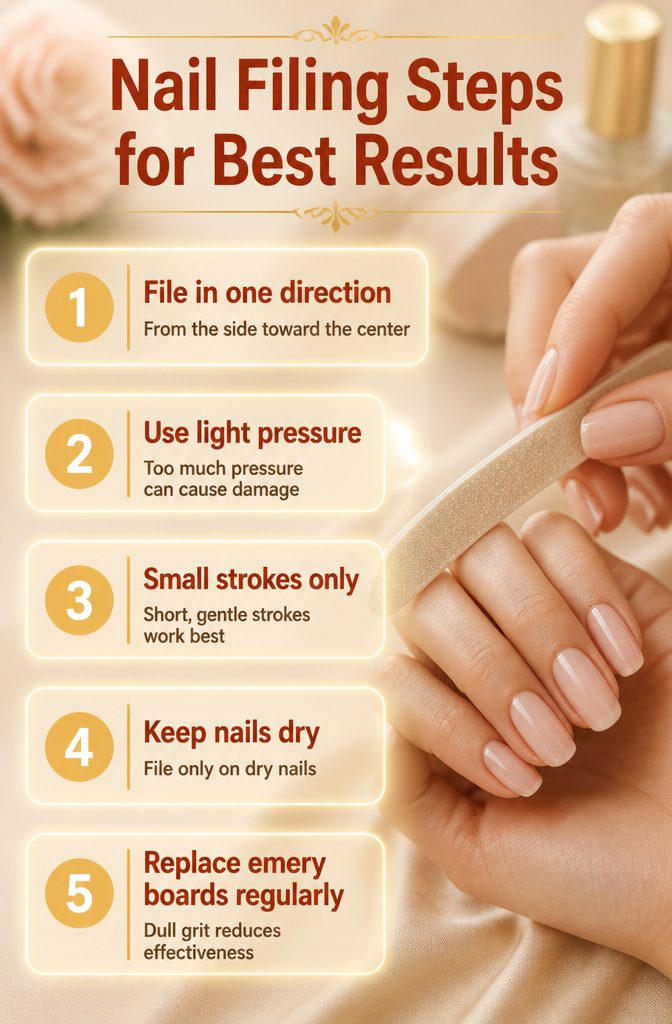
File in one direction, from the side toward the center, and always on dry nails. Wet nails are more prone to tearing, and that back-and-forth sawing motion generates friction and heat that weakens the nail plate.
Light pressure, small strokes, and a 180 grit or higher for natural nails will keep the damage minimal. Replace emery boards regularly once the grit dulls; a glass file can be washed and sanitized and will outlast dozens of disposable boards.
Professional Preference
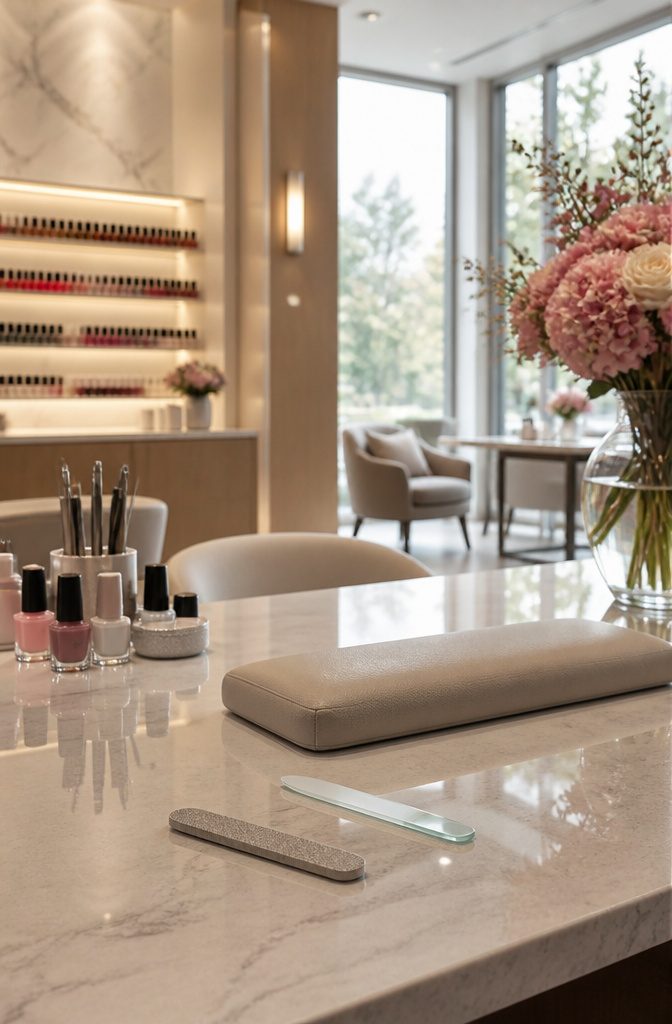
Salon hygiene shaped the split between emery boards and metal files more than any performance gap ever could.
One client, one fresh board is the rule in regulated shops because the paper backing and low cost make tossing it after twenty to thirty strokes on natural nails a non-issue.
The board goes in the trash, not the autoclave, which saves time and removes any guesswork about whether the last client left something behind.
Once the rough shape is set, the same technician likely switches to a glass or crystal file for edge refinement and cuticle cleanup.
Those tools survive hundreds of uses, are washable, and hold their grit tightly enough for the detailed passes that finish a manicure.
That single-use logic carries a cost in performance. The emery paper is less aggressive, so more strokes are needed, and the card will flex or fray before the appointment ends if pushed too hard.
Professionals accept that trade because a tossed board costs far less than a liability question.
Emery boards are inexpensive and disposable, making them a sanitary alternative to metal nail files.
For a home user, the same math applies differently: you are your own client, so a washable file you keep for years makes sense unless you prize the ritual of starting fresh each time.
Side-by-Side Comparison
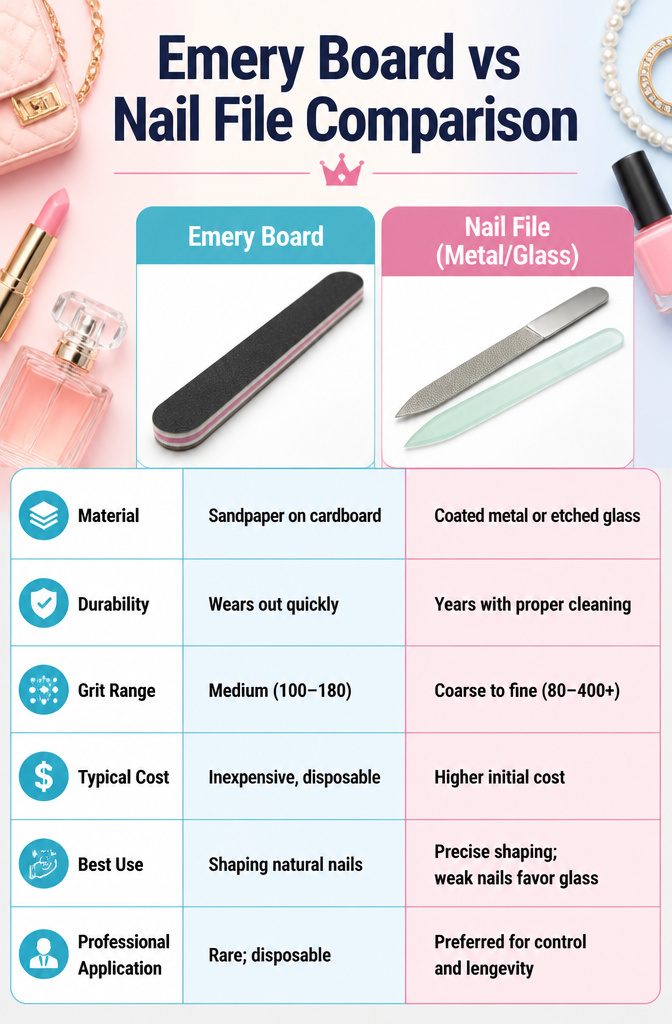
Emery boards and metal or glass nail files behave so differently that a single comparison exposes most buying mistakes before they happen.
An emery board is essentially sandpaper laminated to cardboard; it flexes, it costs next to nothing, and it dulls fast enough that professionals treat it as disposable.
Metal and glass files are rigid tools with abrasive surfaces bonded to a substrate that lasts years. The grit numbers overlap, but the experience does not.
| Attribute | Emery Board | Nail File (Metal/Glass) |
|---|---|---|
| Material | Sandpaper on cardboard | Coated metal or etched glass |
| Durability | Wears out quickly; single-use to short-term | Years with proper cleaning |
| Grit Range | Medium (100–180) | Coarse to fine (80–400+) |
| Typical Cost | Inexpensive, disposable | Higher initial cost |
| Best Use | Shaping natural nails | Precise shaping; weak nails favor glass |
| Professional Application | Rare; disposable for hygiene | Preferred for control and longevity |
One detail that still catches me: 100 grit on an emery board is not the same as 100 grit on a metal file.
The board’s flexibility softens the cut, which protects natural nails but also makes it useless for acrylic removal. Metal at 100 grit bites harder, so the same number solves a problem it would create on the other tool.
Grit Levels Explained
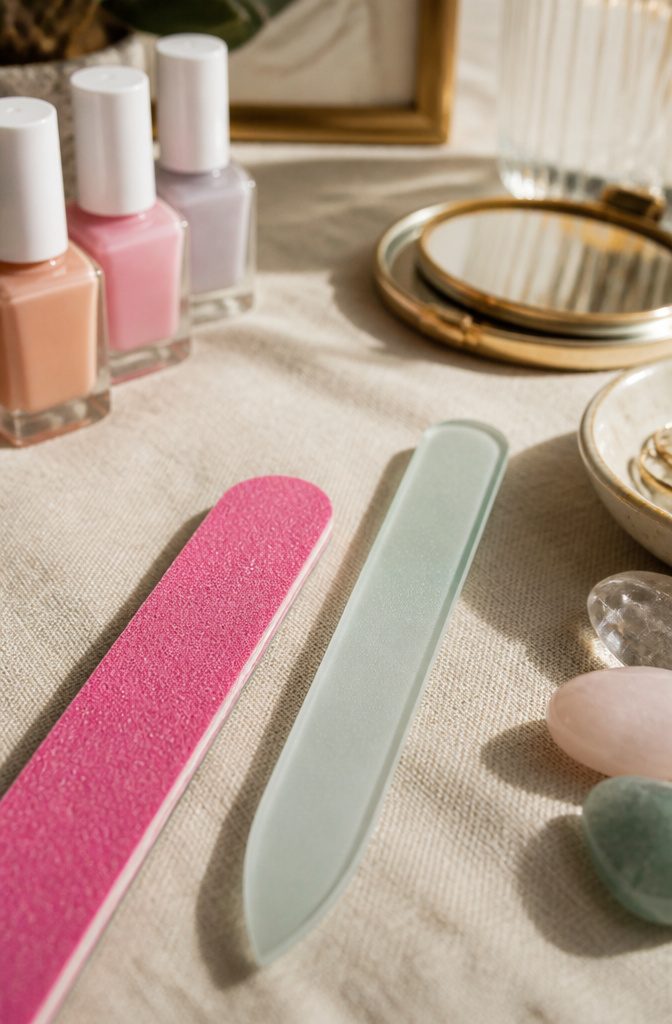
The number printed on a nail file is not arbitrary decoration. 180 grit means 180 abrasive particles per square inch, and that density is what made it the default for natural nails.
Coarser than 180 removes material faster but leaves the nail plate frayed at the edges; run a 100-grit file across a natural nail and splitting follows within days.
Finer than 240 polishes more than it shapes, so a 240+ tool is really a buffer pretending to be a file.
A double-sided file muddies this if you read the number wrong. The 100/180 combo puts coarse on one end for acrylic work and 180 on the other for finish work; grab the wrong side and natural nails pay the price.
Most salon-grade emery boards now standardize on 180 or the 180/240 split, which covers shaping and smoothing without swapping tools. For artificial nails, 60–100 grit is the range that actually bites through product thickness without clogging.
If the tool has no number, assume it is too coarse for natural nails.
Unmarked boards lean disposable and cheap, which in this case means aggressive abrasive glued to cardboard. Check the label before the first pass.
What Filing Does to Your Nails
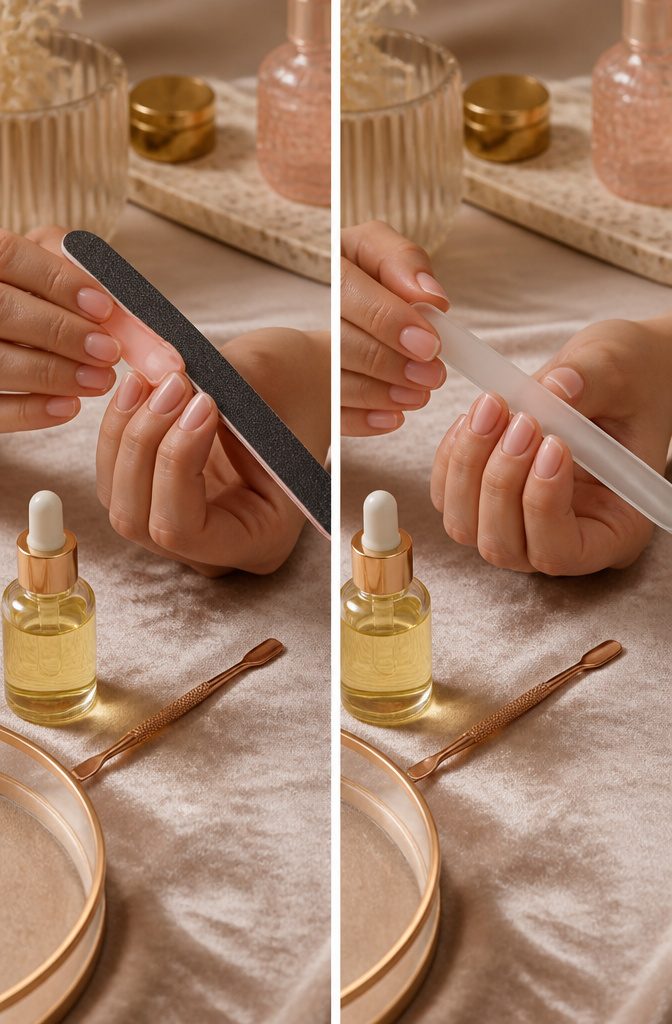
Keratin layers at the nail’s edge act like shingles on a roof, and what you file with determines whether those shingles lie flat or peel back.
Emery boards, with their glued-on grit, tend to catch and lift those layers. The result is the splits and peeling most of us blame on weak nails when the real culprit was the tool.
A glass file works differently. Finely etched peaks and valleys in the glass polish the edge rather than tearing it, pressing those keratin layers back together so water and stress can’t wedge underneath.
That is what sealing the edge means in practice: the nail tip ends up thicker and more uniform, not thinner and frayed.
Metal files sit in between. They cut more aggressively than glass but lack that polishing action, so you get a cleaner edge than an emery board without the sealed finish that prevents future damage.
I switched after watching a split travel halfway down my nail bed in a week.
The glass file didn’t just stop the problem; the new growth at the free edge actually looked denser, not see-through, because I wasn’t filing away the protective closure each time.
Keeping Tools Clean
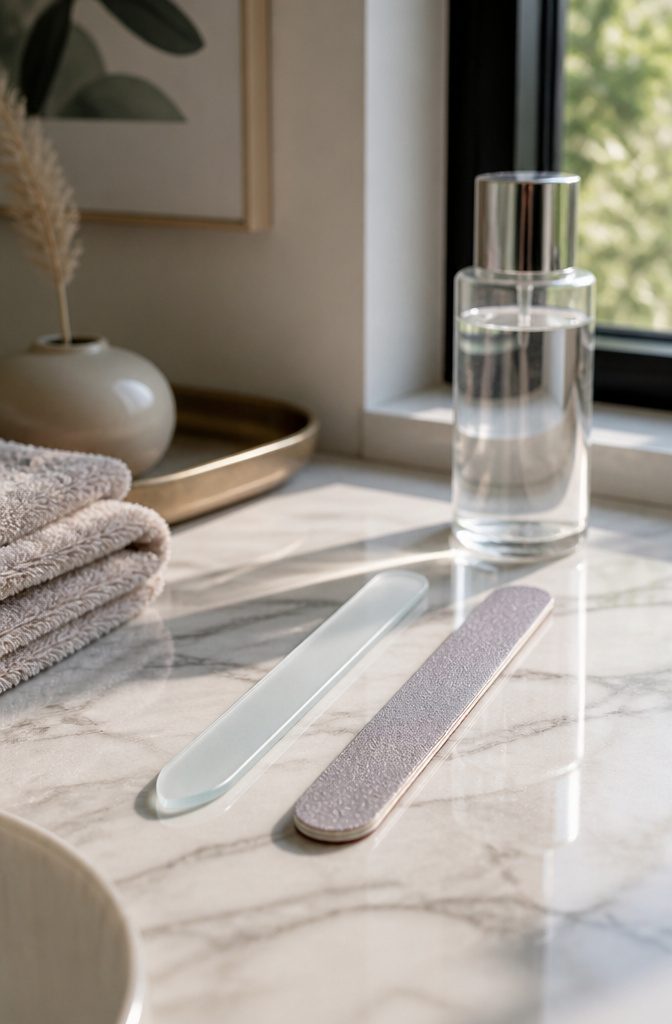
Emery boards collect bacteria in their porous abrasive surface, which is why I treat them as single-use or short-use tools and toss them after a few manicures.
Glass and metal files can be washed with soap and water or sterilized with rubbing alcohol and used again without losing effectiveness, a difference that matters if you share tools or simply do not want a landfill contribution after every filing session.
The porous grit on an emery board makes thorough cleaning nearly impossible, so regular replacement is the only safe move.
A crystal or glass file, sealed and non-porous, lasts and sanitizes; metal offers the same reusability with a sharper edge for thicker nails.
For me the choice comes down to whether I want a disposable routine or one washable file that stays in my kit for years.
What Fits in Your Bag
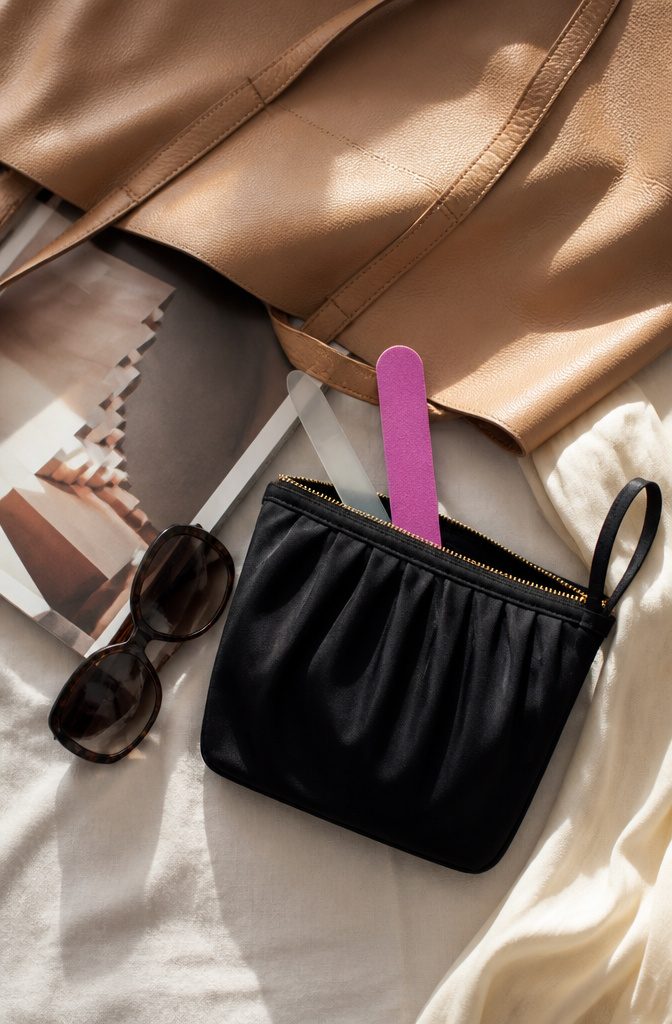
An emery board weighs almost nothing. You can slide one into the back pocket of your jeans, the corner of a clutch, or a desk drawer without a second thought.
That is the whole appeal: it is thin enough to forget until a split nail catches on a sweater.
Glass and crystal files travel differently. They need a case, which adds bulk you will notice.
Most come with one, a slim tube or sleeve that keeps the surface from meeting your keys. Without it, the finely ground edge can snap in a bag.
For a daily carry, the emery board wins on pure disappear-into-your-stuff ease.
A glass file is still portable, just not invisible. You will feel the difference when you are packing light for a weekend and every inch of a crossbody counts.
The Waste Question
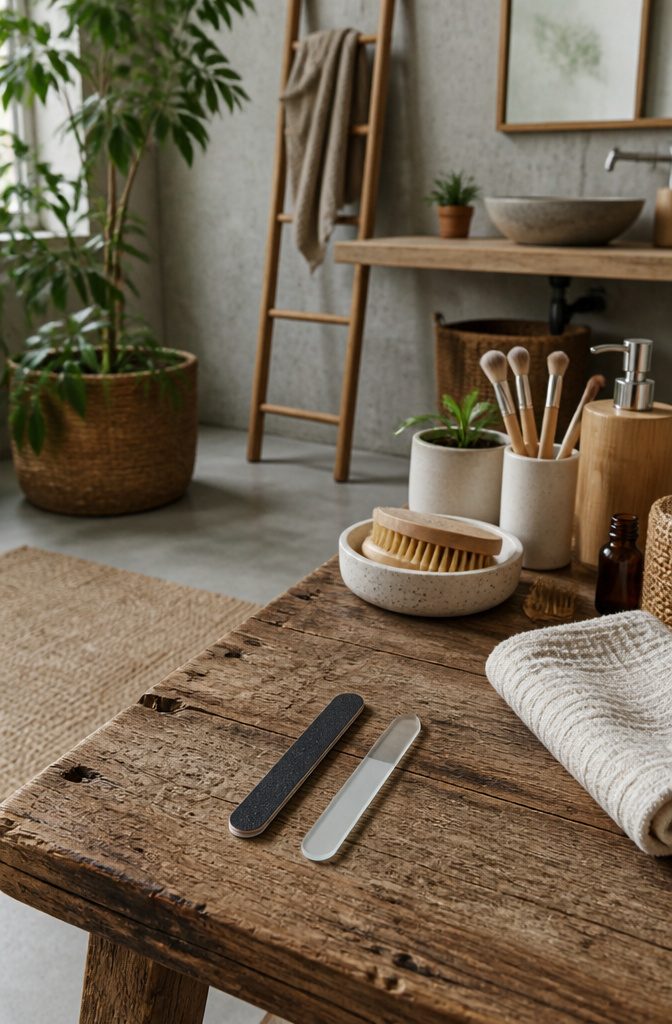
The waste factor is what pushed me to try a glass file.
Emery boards are cardboard or foam with grit on both sides, built to be cheap and tossed after a few uses. They pile up fast if you file weekly or carry one in every bag.
Glass and metal files run higher upfront but can outlast dozens of disposables, and sources now list bamboo or cardboard emery boards as a middle path for buyers who want less trash without switching formats.
The break-even point on waste depends on how often you actually file. Someone touching up gel overlays every ten days will generate more cardboard scrap than a person who only smoothes a split nail on occasion.
If landfill guilt figures into your choice, reusable files cut cumulative trash sharply, while biodegradable boards soften the impact for those who prefer the familiar grow of cardboard grit under the nail.
Frequently Asked Questions
What is the difference between an emery board and a nail file?
An emery board is technically a type of nail file, but the two diverge in material and lifespan. Emery boards use aluminum oxide grit bonded to cardboard or thin wood, making them lightweight, flexible, and disposable.
Other nail files use glass, metal, or crystal as the abrasive surface itself, creating rigid tools that last years with basic cleaning. The real choice is between a throwaway product and a reusable one.
How often should I replace my emery board?
Replace an emery board every month or two, or sooner once the grit dulls and the cardboard softens.
The surface turns pale and edges soften within a few weeks of regular use. Foam-core versions hold shape slightly longer, but the grit still wears smooth and the center warps from moisture.
Are glass nail files better than emery boards?
Glass files outlast emery boards by years and treat natural nails more gently. The etched glass surface polishes keratin layers back together rather than catching and lifting them, which prevents splits and peeling.
A glass file rinsed under tap water after use outlasts a dozen emery boards, though it needs a case for travel and is not as easy to stash in a pocket.
What grit emery board is best for natural nails?
180 grit is the safest starting point for natural nails, with 180/240 double-sided boards covering both shaping and smoothing.
Coarser than 180 removes material faster but leaves the nail plate frayed; finer than 240 polishes more than it shapes. Emery boards packaged for natural nails typically fall in the 180 to 240 range.