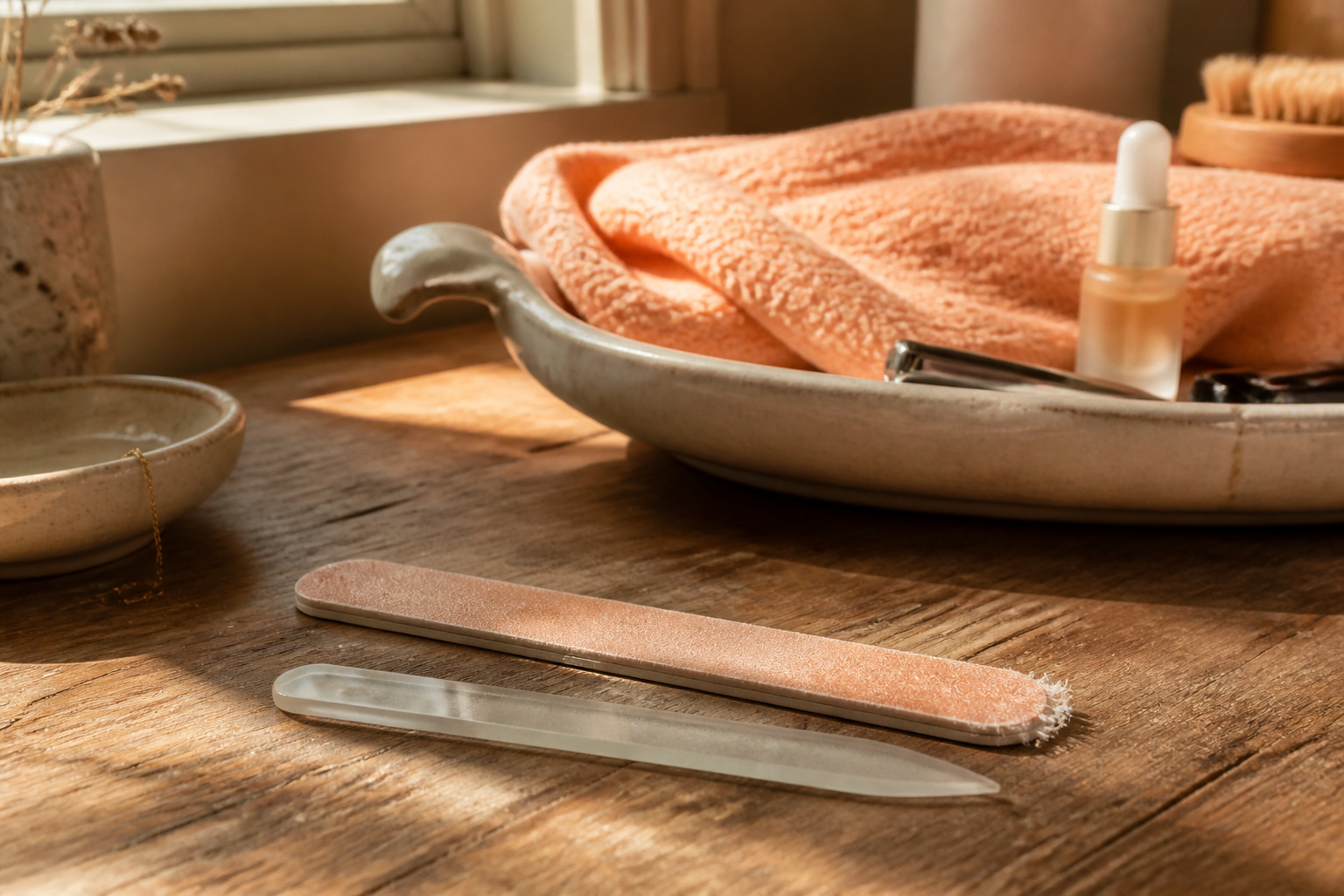
A glass file wins if you file weekly and don’t lose things.
The emery board stays king for anyone who travels light or forgets tools in hotel rooms, since a snapped or confiscated glass file stings at four times the price.
The real split is hidden in the grit numbers. Both tools stamp 180 on the package, but the emery board’s cardboard backing softens the cut so much that the same number on metal bites harder and damages natural nails.
What Sets Them Apart
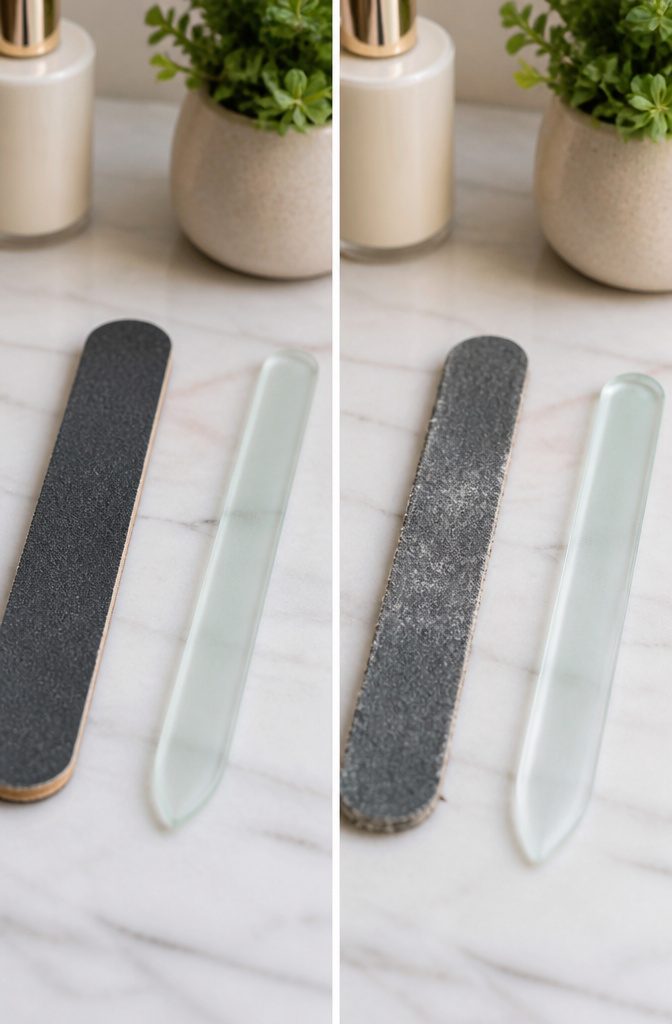
An emery board sits technically inside the family of nail files, but the two tools diverge sharply once you look past the shape.
The core difference comes down to what the surface is made from and what that means for how long it lives.
Emery itself is a mineral composed mainly of aluminum oxide, historically mined and bonded to cardboard or thin wood for these boards.
That construction keeps them lightweight and flexible, which is nice for a purse drawer but also means they wear down fast.
Emery boards are built to be disposable – the grit loosens, the cardboard softens, and you toss the whole thing.
Other nail files head in the opposite direction. Glass, metal, and crystal files use those materials themselves as the abrasive surface or bond tougher grits to them permanently.
No paper backing to fray, no wood to warp if it meets water. The result is a rigid tool that can last years with basic cleaning.
So the real choice isn’t just emery board versus nail file. It’s emery board versus glass file, or versus metal, or versus crystal – each of those alternatives trading the give-and-throwaway model for something stiffer and longer-lived.

PERFECT NAILS, ANYWHERE: Easy to carry in your purse or beauty kit, our travel size emery boards deliver superb results at home or on the go

Emory Nail File Pack:12 Pieces emery boards for nails per pack. These nail files can easily help to trim and shape the nautral nails with your desired shape or length

PERFECT NAILS, ANYWHERE: Easy to carry in your purse or beauty kit, our travel size emery boards deliver superb results at home or on the go
Material
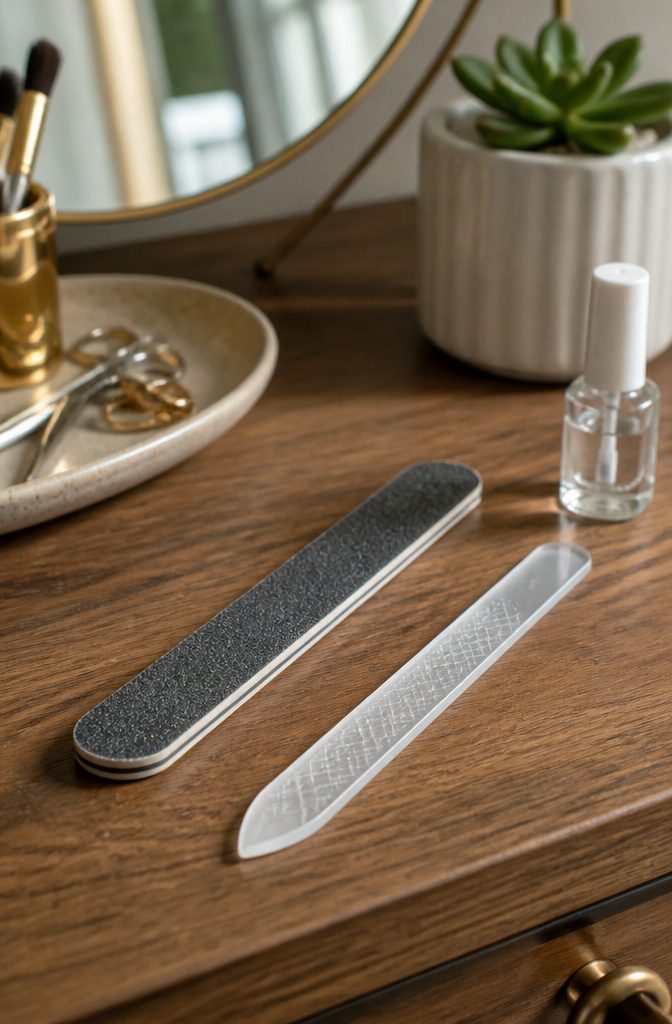
Emery boards start with cardboard or wood, layered thin and coated in emery, a naturally abrasive mineral made mostly of aluminum oxide.
That construction gives them a slight bend and almost no weight. Glass, metal, and crystal files sit differently in the hand: solid, cool, and rigid, with no flex when you press against a nail edge.
The feel under the nail differs just as much. Emery’s grit is bonded to a surface that will eventually wear smooth, usually sooner than you’d expect if you file regularly.
Glass and crystal files carry their abrasiveness in the material itself, etched or formed into the surface, so the texture stays consistent use after use.
Metal files slice more than grind, which is why so many manicurists warn against them for natural nails: the teeth can leave micro-tears that split later.
Emery boards come in grits from coarse shavers to fine finishers, but the base material limits how fine they can go before the cardboard starts to pill.
Crystal and glass can hold a much finer grade without degrading, which matters if your goal is sealing the free edge rather than just shortening it.

Professional 180/240 Grit Performance – Double sided nail files feature coarse 180 grit for shaping and 240 grit for smoothing, perfect for natural nails, acrylics, gels, and toenails.

Perfect Nail File Size - Half-moon shaped 180/240 grit nail files. Double Sided emery boards for nails - 180 grit files are commonly used to shorten and shape natural nails; 240 grit is commonly used to prep nails, filing weak or thin nails, or buffing. Keep the nails beautiful all the time!

GOOD HEALTH OF YOUR NAILS - Contributes to the good health of your nails by preventing splitting and breakage.
Durability
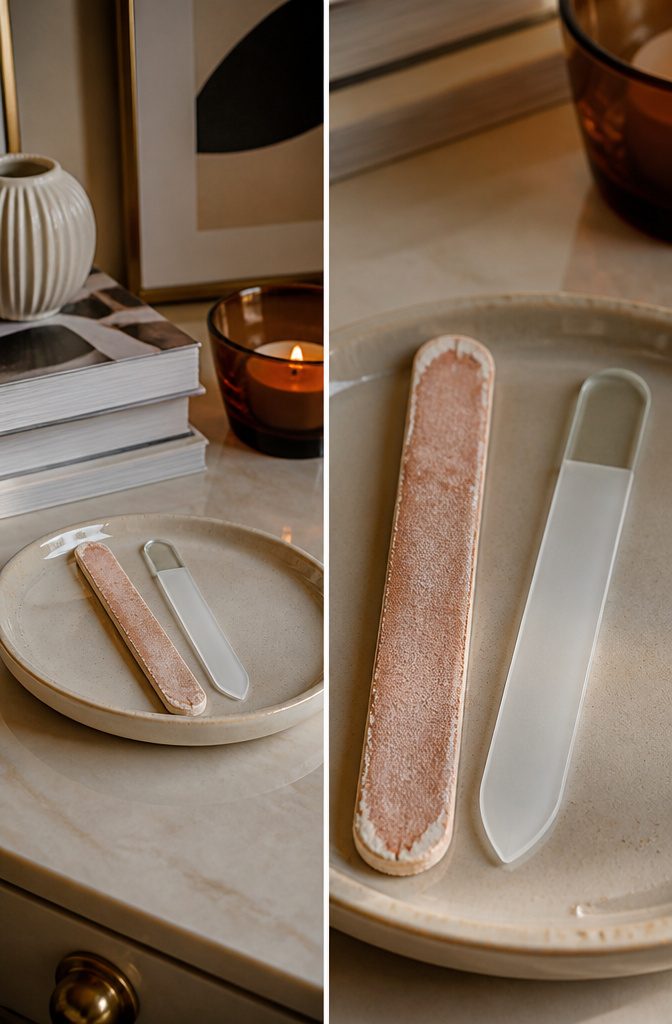
A glass file buried in a bathroom drawer four years ago still files clean today, which is more than any emery board can claim.
Those cardboard-backed boards start shedding grit from the first pass; within a few weeks the surface turns pale, the edges soften, and filing takes twice as long for half the result.
The foam-core versions hold shape a bit longer, but the grit still wears smooth and the center warps from sink moisture.
Metal files last years too, though the etched surface can dull if it meets acrylic dust or gel residue without cleaning.
Crystal and glass share that longevity, but glass files can last for years with proper care, which matters when you are trying to cut down on bathroom waste.
The wear signal on glass is subtle: the filing edge loses its bite, though the surface still looks intact. Metal shows scoring or a faint polish where the teeth have flattened.
Emery boards land in the trash every month or two in my experience.
A glass file rinsed under tap water after use outlasts a dozen of them, easy. The only question is whether you will remember to pack it.

SMOOTH, SEALED NAIL EDGES: Dual-sided czech glass nail files for natural nails shapes and smooths nail edges, creating a clean, even finish without rough or jagged edges.
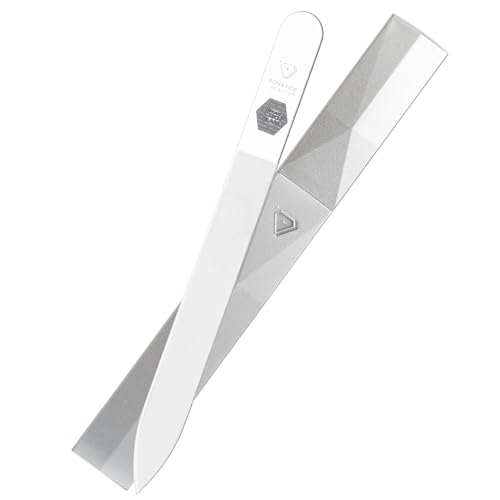
Genuine Czech Glass Nail File - a Bona Fide Beauty nail file for natural nails. Also known as a crystal nail file, this fingernail file can be used regularly to achieve strong and healthy nails. This nail filer is suitable for all nail types (thin, sensitive, thick, and more).

SMOOTH, SEALED NAIL EDGES: Dual-grit czech glass nail files for natural nails shapes and smooths nail edges, creating a clean, even finish without rough or jagged edges.
Grit
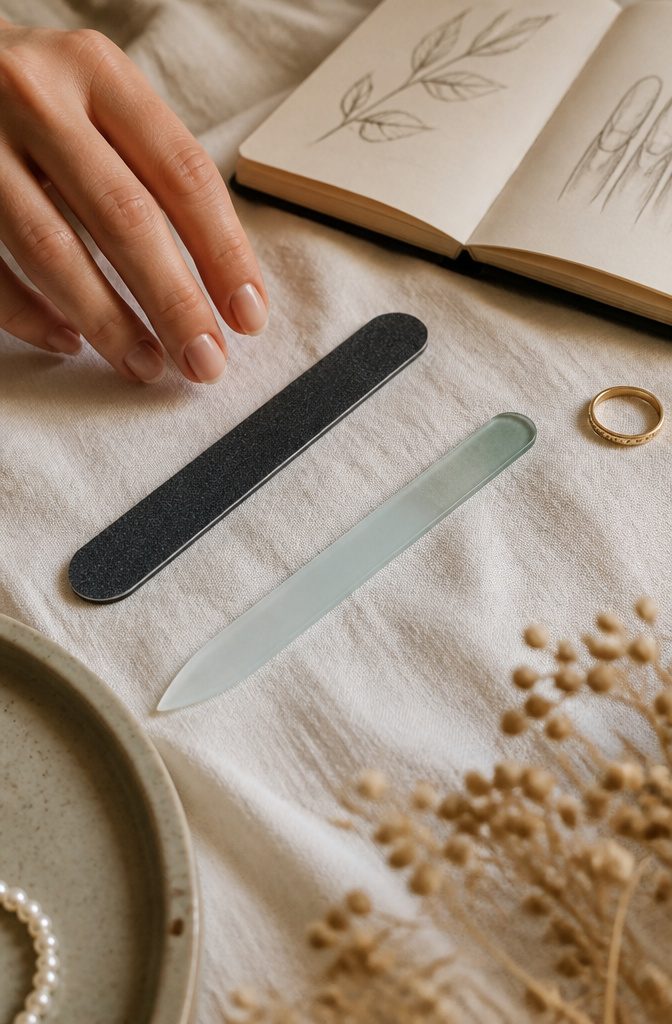
Grit is simply the measure of how coarse or fine the abrasive surface is, and the numbers run backward from what most of us expect.
Lower grit means rougher cutting action; higher grit means smoother and gentler. An emery board packaged for natural nails is typically stamped somewhere in the 180 to 240 range, and that 180 figure is the one I would look for first.
It shapes the nail without the trauma that coarser grades inflict on the nail plate.
For tougher jobs, emery boards do run coarser. Salon-grade packs go down to 60 grit for acrylics or gels, though anything below 100 has no business touching a natural nail if you are trying to grow length at all.
The real difference I noticed comparing these side by side is that dedicated nail files, especially the reusable glass or metal types, give you far more control over grit selection than a throwaway emery board ever will.
You pick the exact grade for your nail type and then file in one direction. With an emery board, you get what the pack contains, and 180 is your safest bet.

Stainless Steel Nail File with Fine Grit: our metal nail files are made of more durable steel material, and is easy to clean and sanitize; it is perfectly thin but also super sturdy to play the role of nail files for natural nails, so that it is much easier to handle and can go every spot of your nails for precise removing of edges, filing down of nail, smoothing, etc., without causing any damage to the nails.

PREMIUM SAPPHIRE COATED SURFACE Durable sapphire-coated filing surface helps shape, smooth, and refine fingernails and toenails with precision while reducing nail splitting and peeling.

MULTI-USE TOOL: One side shapes nails, the other side smooths
Cost
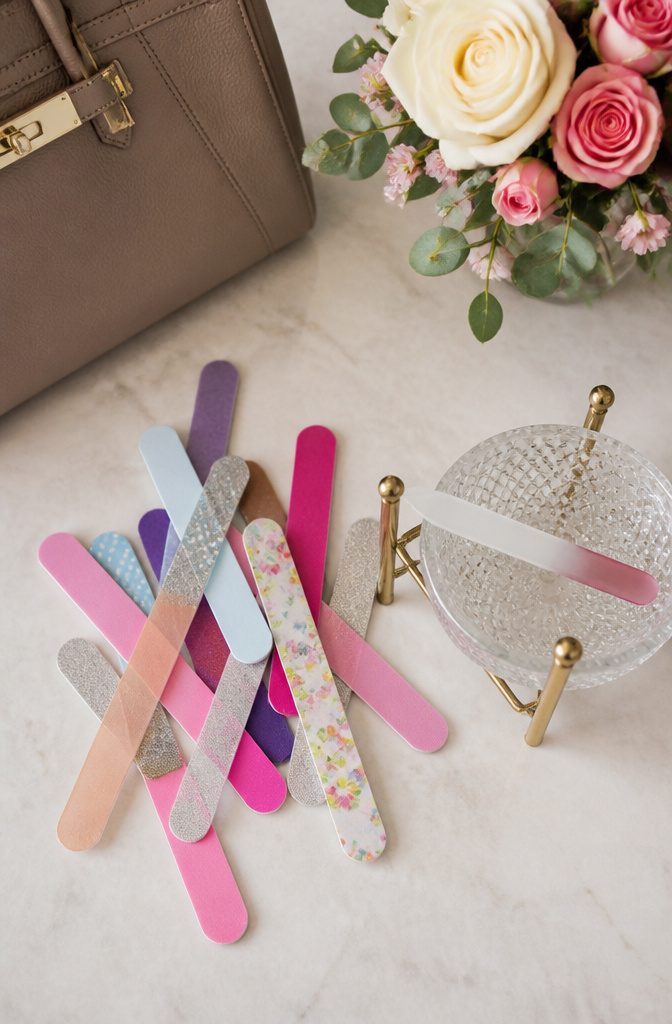
Emery boards come cheap because they are cardboard or foam with grit glued to both sides, and salons often buy them by the hundred.
A single board costs next to nothing, which matters less than you think because the grit dulls fast and the whole thing gets tossed. The real price is the replacement cycle you are locked into.
Glass, metal, and crystal files ask for more money at checkout, sometimes noticeably more.
The trade is longevity: a glass file maintained properly lasts a year or longer, and some metal files outlive entire manicure kits. Spread that upfront cost across fifty or a hundred uses and the per-manicure math flips.
For me, the decision breaks on how often you file and whether you travel. Weekly filers who keep tools at home earn back the premium fast.
Someone who only shapes before a holiday and loses things in suitcases might stay happier with a disposable pack that does not sting when TSA confiscates it. The cheaper tool costs more if you replace it twelve times a year.

Material: Each disposable nail file consists of quality sandpaper and wood stick. It can be discarded directly after use. Healthier and hygienic to use.

High-quality Material: Each mini disposable fingernail file is made with quality sandpaper and wood stick, making it healthier and more hygienic to use. These double-sided wooden nail files come in pink and blue colors, adding excitement to girl time. They are also washable and made with high-quality emery board and adhesive tape to ensure long-lasting use.
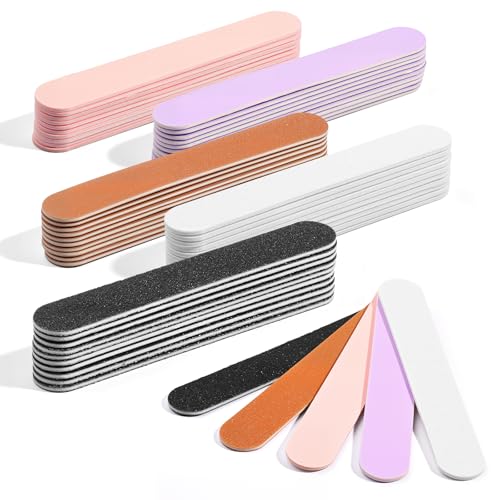
5 Assorted Colors for Easy Use: Makartt 50 pcs nail files bulk include 5 vibrant colors to help keep fingernail files organized—perfect for assigning to individual tasks or users
Usage
Emery boards fit best for gentle shaping and the quick touch-ups most of us need between manicures.
The cardboard backing flexes slightly, which makes it forgiving if you’re new to filing or just trying to smooth a ridge before a meeting.
Nail files, especially those with a glass or crystal base, give you the precision and control for professional-quality shaping and finishing. Their sturdy surface doesn’t give way, so you can actually refine the curve rather than just blunt the edge.
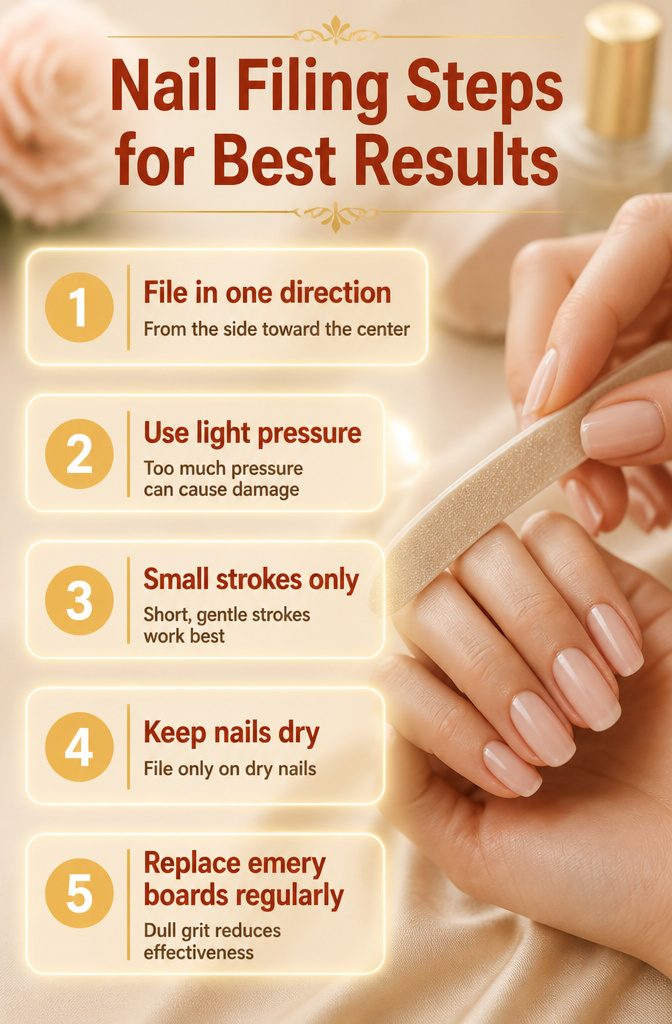
File in one direction, from the side toward the center, and always on dry nails. Wet nails are more prone to tearing, and that back-and-forth sawing motion generates friction and heat that weakens the nail plate.
Light pressure, small strokes, and a 180 grit or higher for natural nails will keep the damage minimal. Replace emery boards regularly once the grit dulls; a glass file can be washed and sanitized and will outlast dozens of disposable boards.

Upgraded Natural Wood Emery Boards Materials: Each disposable wooden fingernail file is crafted with top-quality sandpaper and a wooden stick, ensuring a hygienic and healthy nail care experience. Our nail files are washable and constructed with high-grade emery board and adhesive tape for extended durability, offering effective nail shaping and smoothing process. This user-friendly fingernail fines ensures optimal nail care results without causing any damage.

Professional 100/180 Grit: Double-sided straight emery nail file boards combine coarse 100 grit for rapid shaping with fine 180 grit for smooth edges, delivering salon-quality results every time

This set include 25 pcs of nail files and 10 pcs nail buffers blocks, grit number:100/180. They can sand your nails quickly and easily to your desired shape or length
Professional Preference
Salon hygiene shaped the split between emery boards and metal files more than any performance gap ever could.
One client, one fresh board is the rule in regulated shops because the paper backing and low cost make tossing it after twenty to thirty strokes on natural nails a non-issue.
The board goes in the trash, not the autoclave, which saves time and removes any guesswork about whether the last client left something behind.
Once the rough shape is set, the same technician likely switches to a glass or crystal file for edge refinement and cuticle cleanup.
Those tools survive hundreds of uses, are washable, and hold their grit tightly enough for the detailed passes that finish a manicure.
That single-use logic carries a cost in performance. The emery paper is less aggressive, so more strokes are needed, and the card will flex or fray before the appointment ends if pushed too hard.
Professionals accept that trade because a tossed board costs far less than a liability question.
Emery boards are inexpensive and disposable, making them a sanitary alternative to metal nail files.
For a home user, the same math applies differently: you are your own client, so a washable file you keep for years makes sense unless you prize the ritual of starting fresh each time.

100/180 Grit for Fast Shaping & Smoother Finishing: Designed with dual-sided 100/180 grit, these Makartt professional nail files help quickly shorten length, shape acrylic nails, remove gel polish or dip powder, and smooth thick natural nails with less effort. The 100 grit side works for heavy filing while the 180 grit side refines edges for a cleaner salon-style finish at home

GOOD HEALTH OF YOUR NAILS: Contributes to the good health of your nails by preventing splitting and breakage.
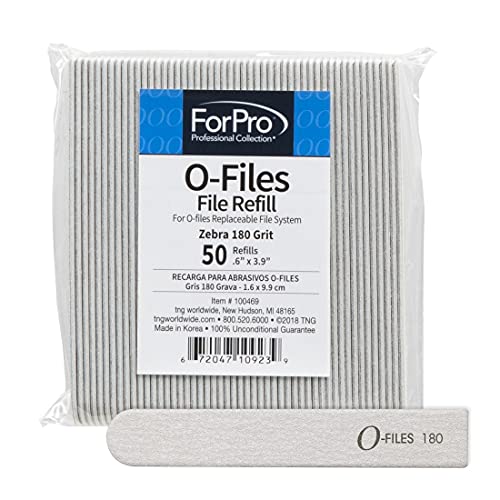
Replaceable File System Refills: ForPro O-Files Replaceable File System Refills are made of the finest Japanese paper. The 180 grit nail files are used to contour nails & prep the nails before applying any product.
Side-by-Side Comparison
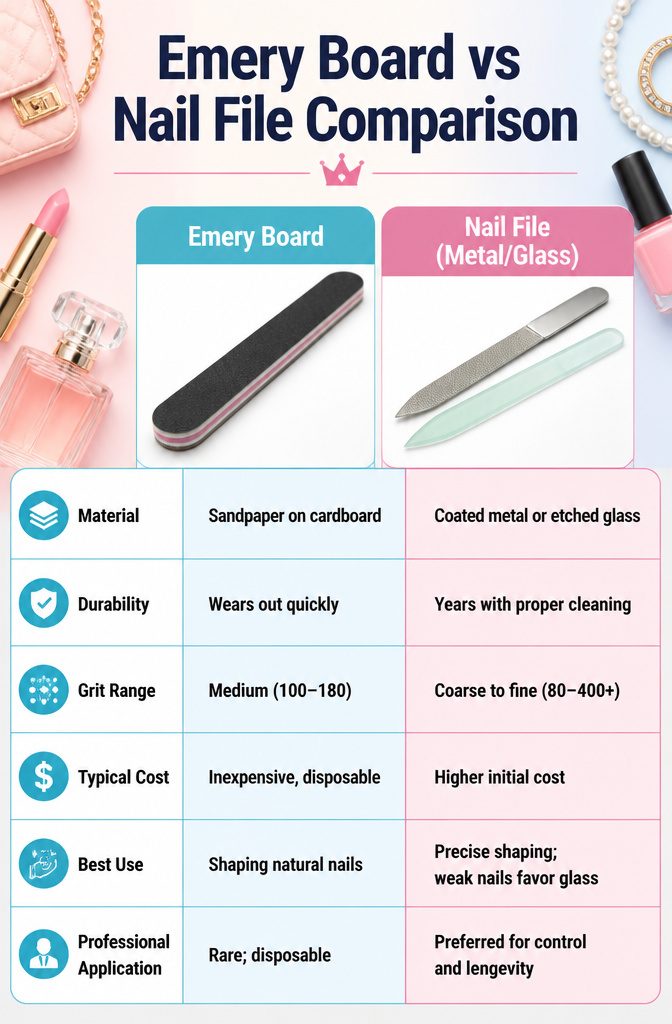
Emery boards and metal or glass nail files behave so differently that a single comparison exposes most buying mistakes before they happen.
An emery board is essentially sandpaper laminated to cardboard; it flexes, it costs next to nothing, and it dulls fast enough that professionals treat it as disposable.
Metal and glass files are rigid tools with abrasive surfaces bonded to a substrate that lasts years. The grit numbers overlap, but the experience does not.
| Attribute | Emery Board | Nail File (Metal/Glass) |
|---|---|---|
| Material | Sandpaper on cardboard | Coated metal or etched glass |
| Durability | Wears out quickly; single-use to short-term | Years with proper cleaning |
| Grit Range | Medium (100–180) | Coarse to fine (80–400+) |
| Typical Cost | Inexpensive, disposable | Higher initial cost |
| Best Use | Shaping natural nails | Precise shaping; weak nails favor glass |
| Professional Application | Rare; disposable for hygiene | Preferred for control and longevity |
One detail that still catches me: 100 grit on an emery board is not the same as 100 grit on a metal file.
The board’s flexibility softens the cut, which protects natural nails but also makes it useless for acrylic removal. Metal at 100 grit bites harder, so the same number solves a problem it would create on the other tool.


SET INCLUDES 1 FULL SIZE AND 1 TRAVEL SIZE: Glass nail files, also known as crystal nail file, have gained popularity for several reasons that make them stand out from traditional emery boards or metal files. Glass nail files are a great choice for those looking for a gentle yet effective way to maintain well-groomed nails without causing unnecessary damage.

Czech Glass Curved Nail File - Ergonomic "tear drop" nail file designed to have a large gripping area to fit your hand. The fine 180/240 grit located in the groove, or curve, of the nail file - ideal for efficient, easy and smooth fingernails.
Grit Levels Explained
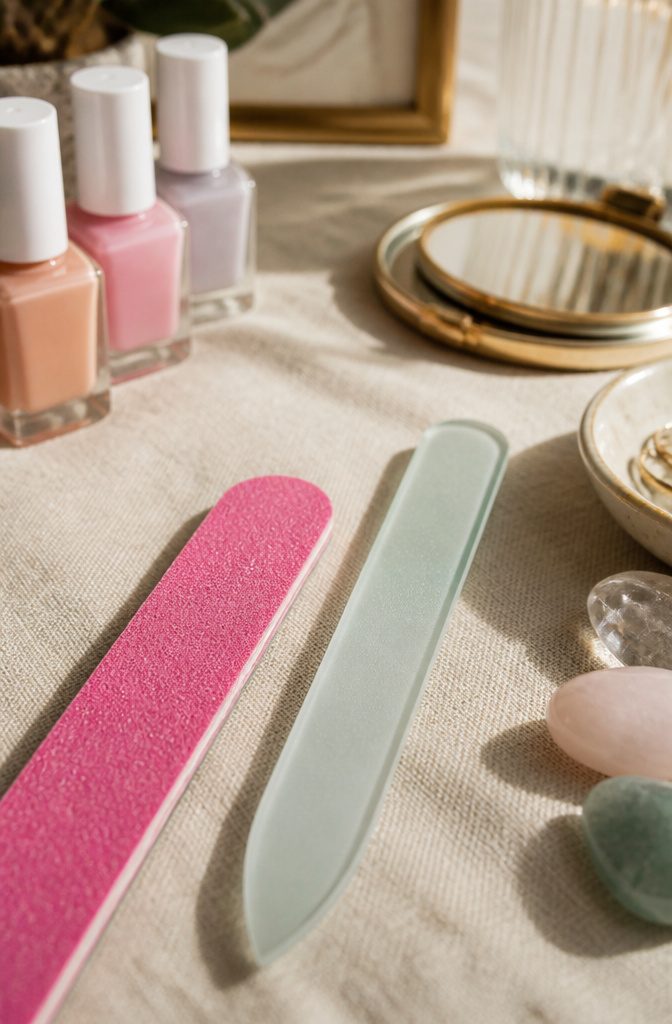
The number printed on a nail file is not arbitrary decoration. 180 grit means 180 abrasive particles per square inch, and that density is what made it the default for natural nails.
Coarser than 180 removes material faster but leaves the nail plate frayed at the edges; run a 100-grit file across a natural nail and splitting follows within days.
Finer than 240 polishes more than it shapes, so a 240+ tool is really a buffer pretending to be a file.
A double-sided file muddies this if you read the number wrong. The 100/180 combo puts coarse on one end for acrylic work and 180 on the other for finish work; grab the wrong side and natural nails pay the price.
Most salon-grade emery boards now standardize on 180 or the 180/240 split, which covers shaping and smoothing without swapping tools. For artificial nails, 60–100 grit is the range that actually bites through product thickness without clogging.
If the tool has no number, assume it is too coarse for natural nails.
Unmarked boards lean disposable and cheap, which in this case means aggressive abrasive glued to cardboard. Check the label before the first pass.

【Packing List】You will receive 10 mini metal files of different shapes, which are hook file, flat hook file, square hook file, circle file, flat/convex angle file and other ten different shapes, which can meet your various needs.

Stainless Steel Material: our metal nail filers are made of top quality stainless steel with durable sapphire dust, particles of which adhere to the blade firmly, enabling the dust to bond and ensuring the particles not dislodged, so that our finger nail filers can hold up super well and last much longer for daily nail care;

High Quality Steel Materials: our metal nail filers are made of stainless steel with durable sapphire dust, particles of which adhere to the blade firmly, enabling the dust to bond and ensuring the particles not dislodged;
What Filing Does to Your Nails
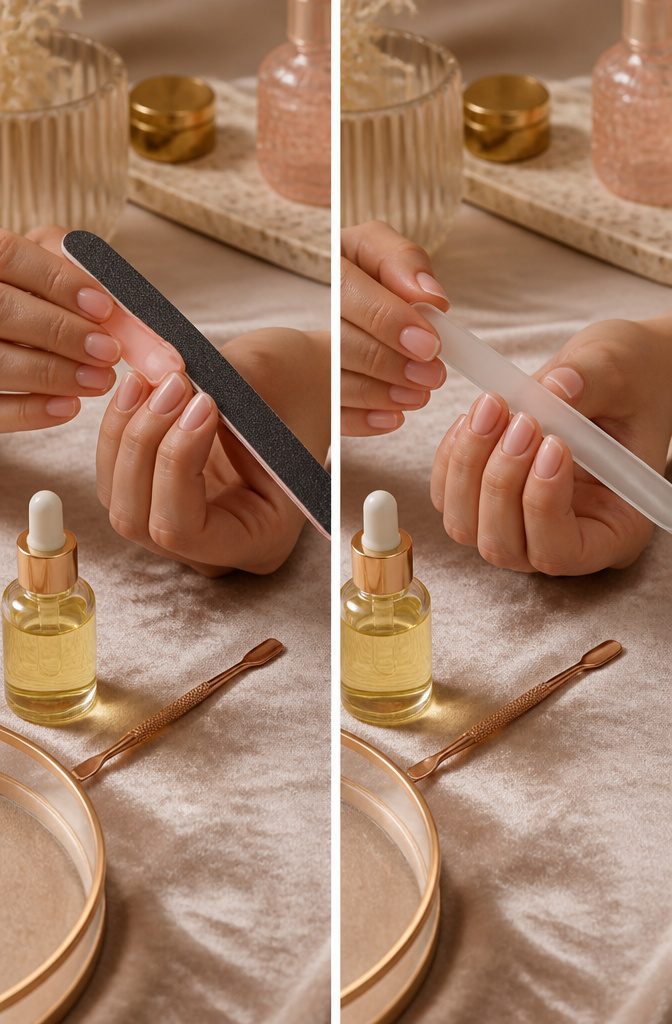
Keratin layers at the nail’s edge act like shingles on a roof, and what you file with determines whether those shingles lie flat or peel back.
Emery boards, with their glued-on grit, tend to catch and lift those layers. The result is the splits and peeling most of us blame on weak nails when the real culprit was the tool.
A glass file works differently. Finely etched peaks and valleys in the glass polish the edge rather than tearing it, pressing those keratin layers back together so water and stress can’t wedge underneath.
That is what sealing the edge means in practice: the nail tip ends up thicker and more uniform, not thinner and frayed.
Metal files sit in between. They cut more aggressively than glass but lack that polishing action, so you get a cleaner edge than an emery board without the sealed finish that prevents future damage.
I switched after watching a split travel halfway down my nail bed in a week.
The glass file didn’t just stop the problem; the new growth at the free edge actually looked denser, not see-through, because I wasn’t filing away the protective closure each time.

Premium Quality Material: Our mini disposable fingernail files are crafted using high-quality sandpaper and wooden sticks, ensuring a healthier and more hygienic nail care experience. The emery board and adhesive tape are of superior quality, guaranteeing long-lasting use. Available in attractive pink and blue colors, these double-sided wooden nail files add a fun element to your nail care routine. They are also washable for enhanced cleanliness.

Material: these disposable nail files are made of rubber, exquisite and delicate, the file surface is sturdy, give you a great nail care experience

Mini Manicure Set: This set includes 40 individually wrapped mini nail files and wooden sticks, providing all the essential tools needed for a perfect manicure and pedicure experience.
Keeping Tools Clean
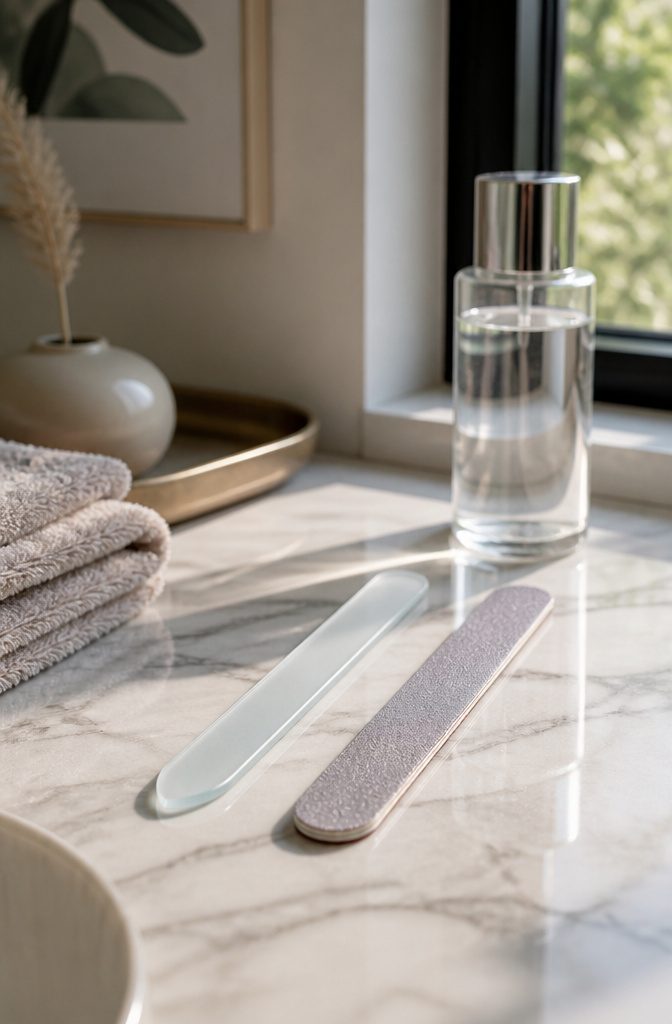
Emery boards collect bacteria in their porous abrasive surface, which is why I treat them as single-use or short-use tools and toss them after a few manicures.
Glass and metal files can be washed with soap and water or sterilized with rubbing alcohol and used again without losing effectiveness, a difference that matters if you share tools or simply do not want a landfill contribution after every filing session.
The porous grit on an emery board makes thorough cleaning nearly impossible, so regular replacement is the only safe move.
A crystal or glass file, sealed and non-porous, lasts and sanitizes; metal offers the same reusability with a sharper edge for thicker nails.
For me the choice comes down to whether I want a disposable routine or one washable file that stays in my kit for years.
What Fits in Your Bag
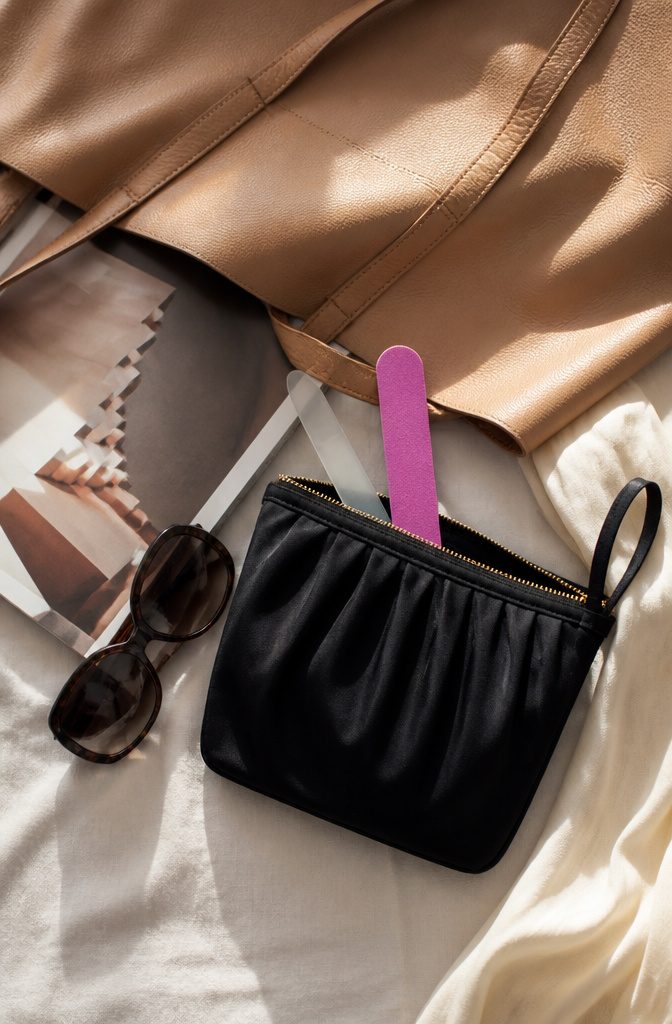
An emery board weighs almost nothing. You can slide one into the back pocket of your jeans, the corner of a clutch, or a desk drawer without a second thought.
That is the whole appeal: it is thin enough to forget until a split nail catches on a sweater.
Glass and crystal files travel differently. They need a case, which adds bulk you will notice.
Most come with one, a slim tube or sleeve that keeps the surface from meeting your keys. Without it, the finely ground edge can snap in a bag.
For a daily carry, the emery board wins on pure disappear-into-your-stuff ease.
A glass file is still portable, just not invisible. You will feel the difference when you are packing light for a weekend and every inch of a crossbody counts.
The Waste Question
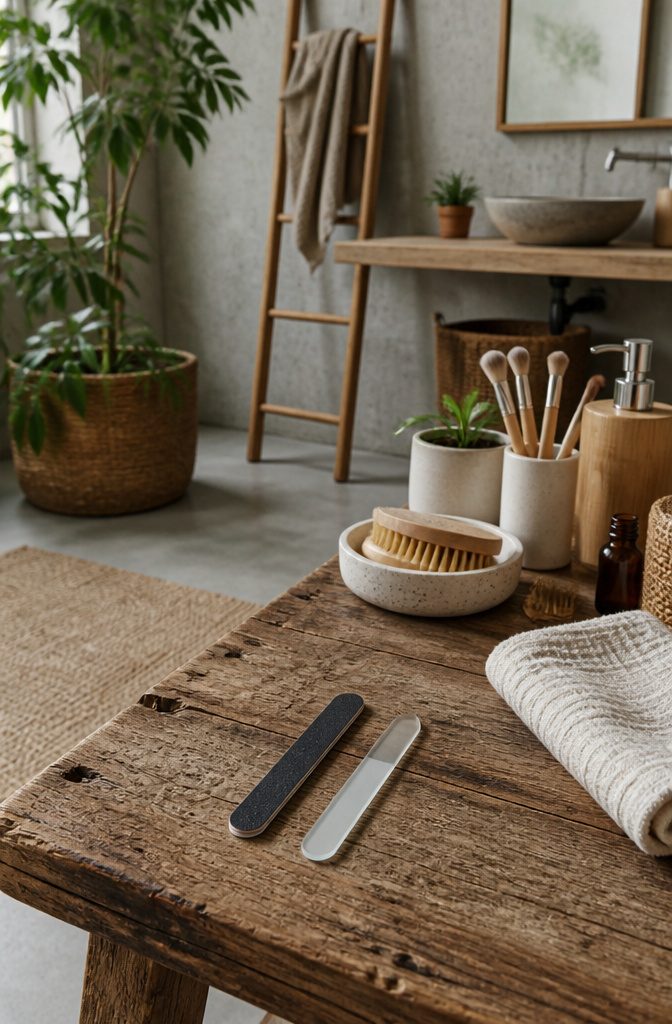
The waste factor is what pushed me to try a glass file.
Emery boards are cardboard or foam with grit on both sides, built to be cheap and tossed after a few uses. They pile up fast if you file weekly or carry one in every bag.
Glass and metal files run higher upfront but can outlast dozens of disposables, and sources now list bamboo or cardboard emery boards as a middle path for buyers who want less trash without switching formats.
The break-even point on waste depends on how often you actually file. Someone touching up gel overlays every ten days will generate more cardboard scrap than a person who only smoothes a split nail on occasion.
If landfill guilt figures into your choice, reusable files cut cumulative trash sharply, while biodegradable boards soften the impact for those who prefer the familiar grow of cardboard grit under the nail.
Frequently Asked Questions
What is the difference between an emery board and a nail file?
An emery board is technically a type of nail file, but the two diverge in material and lifespan. Emery boards use aluminum oxide grit bonded to cardboard or thin wood, making them lightweight, flexible, and disposable.
Other nail files use glass, metal, or crystal as the abrasive surface itself, creating rigid tools that last years with basic cleaning. The real choice is between a throwaway product and a reusable one.
How often should I replace my emery board?
Replace an emery board every month or two, or sooner once the grit dulls and the cardboard softens.
The surface turns pale and edges soften within a few weeks of regular use. Foam-core versions hold shape slightly longer, but the grit still wears smooth and the center warps from moisture.
Are glass nail files better than emery boards?
Glass files outlast emery boards by years and treat natural nails more gently. The etched glass surface polishes keratin layers back together rather than catching and lifting them, which prevents splits and peeling.
A glass file rinsed under tap water after use outlasts a dozen emery boards, though it needs a case for travel and is not as easy to stash in a pocket.
What grit emery board is best for natural nails?
180 grit is the safest starting point for natural nails, with 180/240 double-sided boards covering both shaping and smoothing.
Coarser than 180 removes material faster but leaves the nail plate frayed; finer than 240 polishes more than it shapes. Emery boards packaged for natural nails typically fall in the 180 to 240 range.