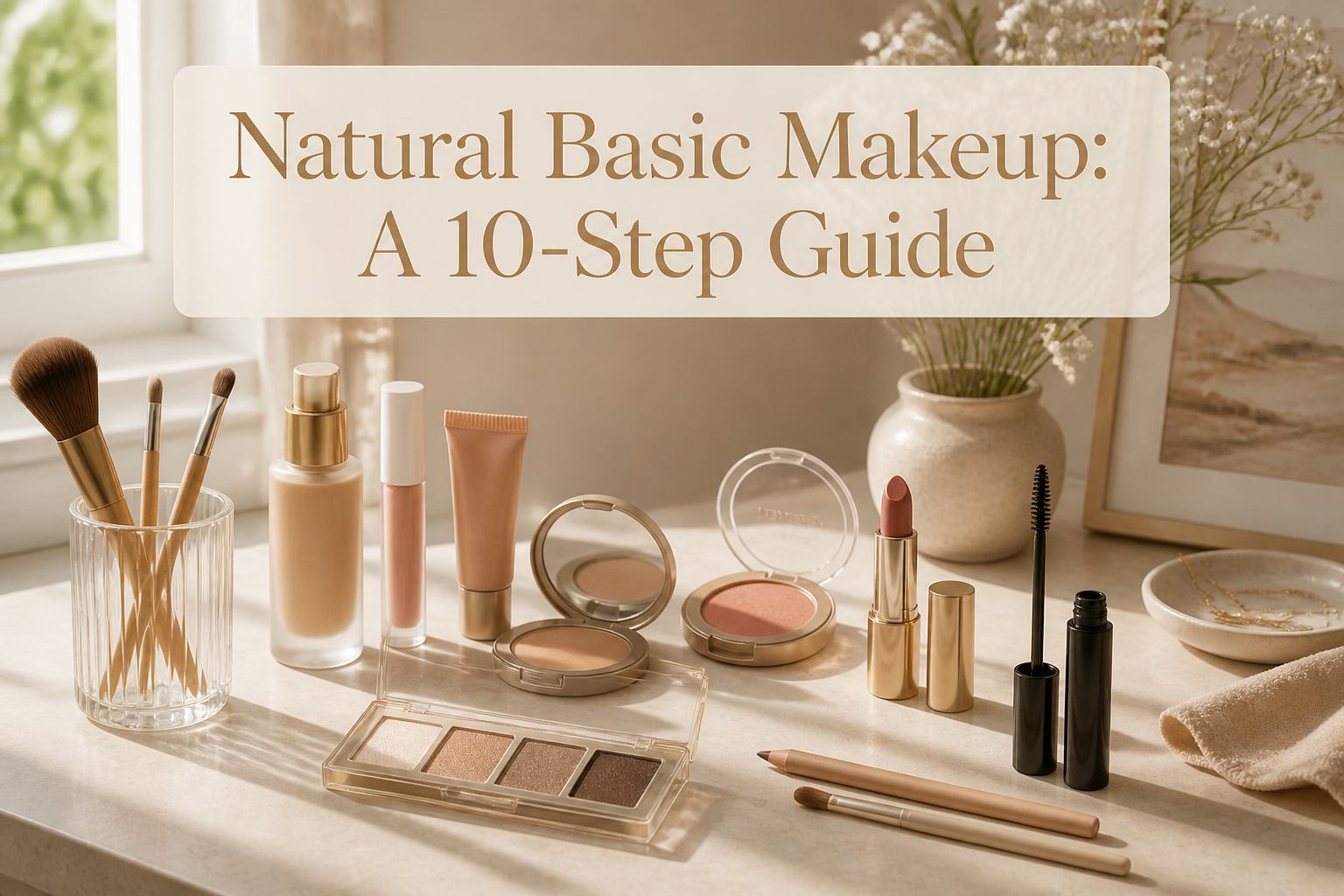
Natural basic makeup is a 10-step routine that uses sheer, skin-like products to enhance rather than mask your complexion.
The catch is that every layer must stay lightweight; heavy foundation or powder kills the effect and reads as obvious makeup by midday.
A single coat of Black Brown mascara, not Blackest Black, keeps eyes quietly awake without the dramatic contrast that betrays effort.
Prep the Skin
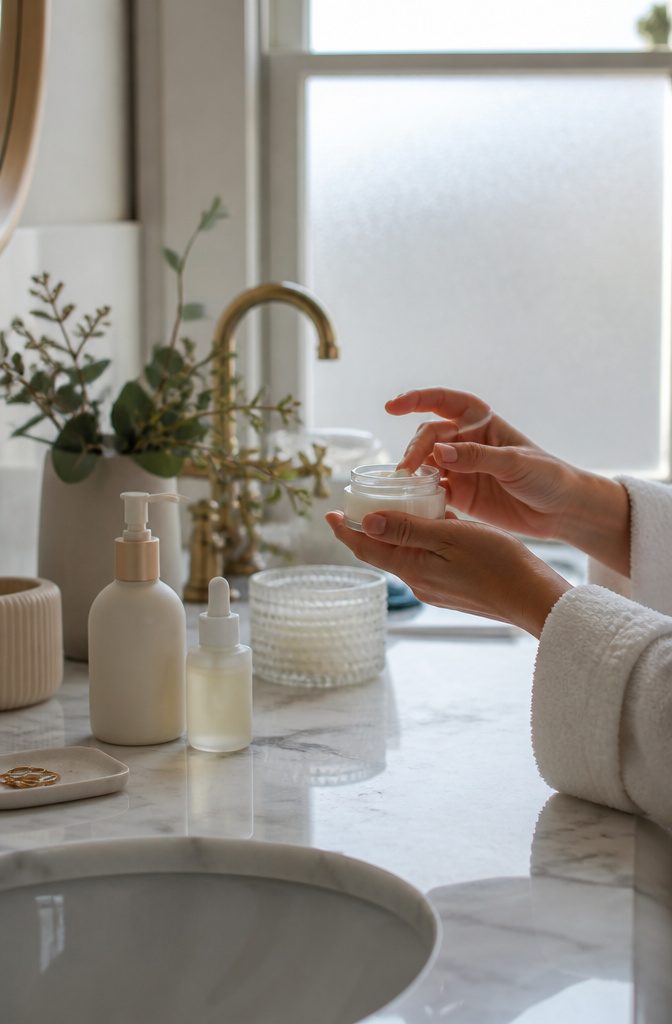
A smooth canvas is the difference between makeup that looks like skin and makeup that sits on top of it. Six references to routine agree: the real work happens before the first drop of pigment touches your face.
Start with a gentle cleanser that removes overnight oils without stripping the barrier.
The sources split on what comes next. Some push for daily exfoliation; the safer read is one to two times a week with a mild exfoliant, enough to lift dead cells that would catch foundation unevenly.
Moisturizer is non-negotiable, and the formula weight matters more than most people think.
Lightweight, non-greasy hydration lets the skin stay dewy without turning the next layer slippery. Oily skin does better oil-free; dry or mature skin wants both moisture and hydration locked in.
If the morning includes sun, SPF sits on top of moisturizer, either blended into it or as a separate layer.
Primer is optional, though a hydrating or illuminating formula can stretch wear time. Well-prepped skin simply uses less product, which is the whole goal of a natural basic makeup routine.

1-oz of Neutrogena Healthy Skin Sensitive Skin Serum Foundation with Pro-Vitamin B5 in shade Light 02, to help keep skin healthy looking, blur imperfections and designed to minimize the look of fine lines and cover pores
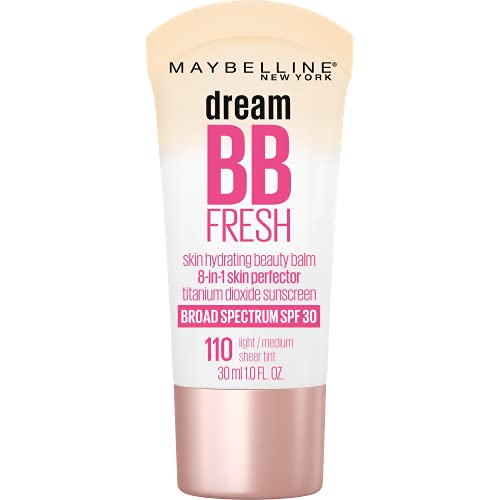
Dream BB fresh 8-in-1 skin perfecting beauty Balm hydrates, protects with SPF 30, brightens, blurs imperfections, smoothens, enhances, is oil-free and available in 5 skin-tone perfecting shades

Tinted Hydrating Serum Vegan Foundation: Formulated with Hyaluronic Acid to leave skin smoother and more hydrated, plus luminous mineral pigments for lightweight coverage and to brighten complexion
Apply Primer
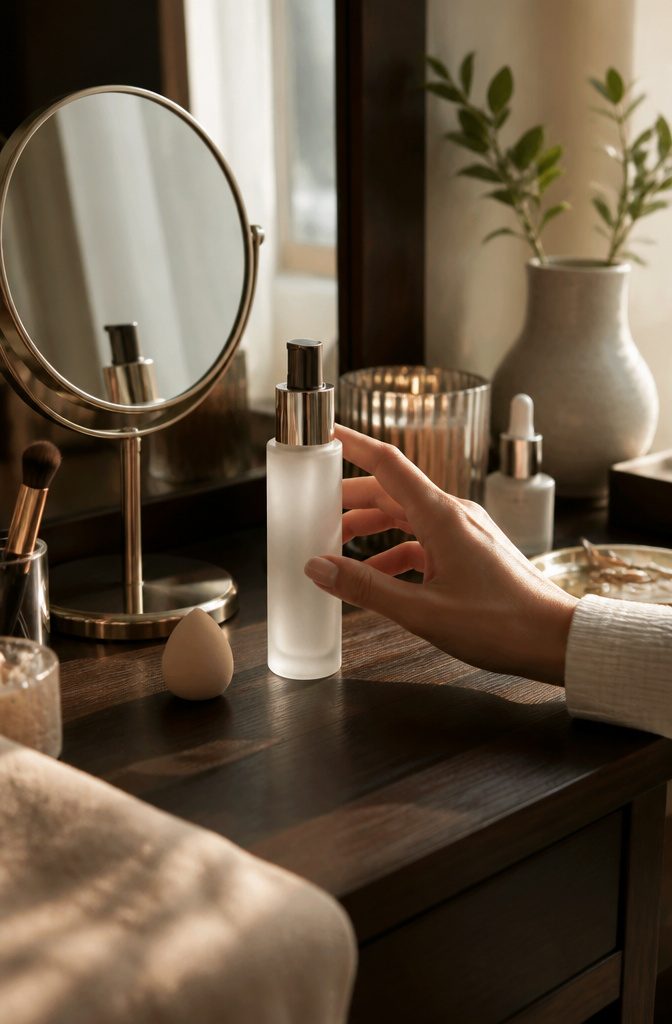
Smooth makeup that still looks like your skin at 3 p.m. starts before the first layer of color goes on.
A thin veil of primer sits between moisturizer and everything else, filling in the canvas so foundation doesn’t settle where you don’t want it to.
The right formula depends on what your skin is doing that morning.
Peptide or ceramide primers add a slight plumping effect that softens the look of fine lines, which matters more as the day wears on and makeup otherwise migrates into creases.
No7 Airbrush Away Primer does this specifically, and at $16.99 for one fluid ounce it sits in the range where trying it doesn’t feel like a commitment.
Cooling textures also help wake up the face, useful if your "natural" look is beginning after a short night.
The real test of a primer isn’t how it feels going on.
It’s whether you notice your base at all by evening. Lightweight layering is the whole point of natural basic makeup; anything heavy enough to remind you it’s there has already failed the brief.

Buildable Coverage: Watch as lines and imperfections fade away. This lightweight hydrator features buildable seamless coverage from sheer to medium.

Buildable Coverage: Watch as lines and imperfections fade away. This lightweight hydrator features buildable seamless coverage from sheer to medium.

LIGHTWEIGHT HYDRATION AND GLOW: This daily tint acts as a breathable face moisturizer that softens, smooths and subtly perfects while supporting skin care benefits, delivering sheer, buildable coverage that feels fresh, not heavy, so complexion looks naturally radiant and comfortably hydrated from morning through night.
Lightweight Foundation or Tinted Moisturizer
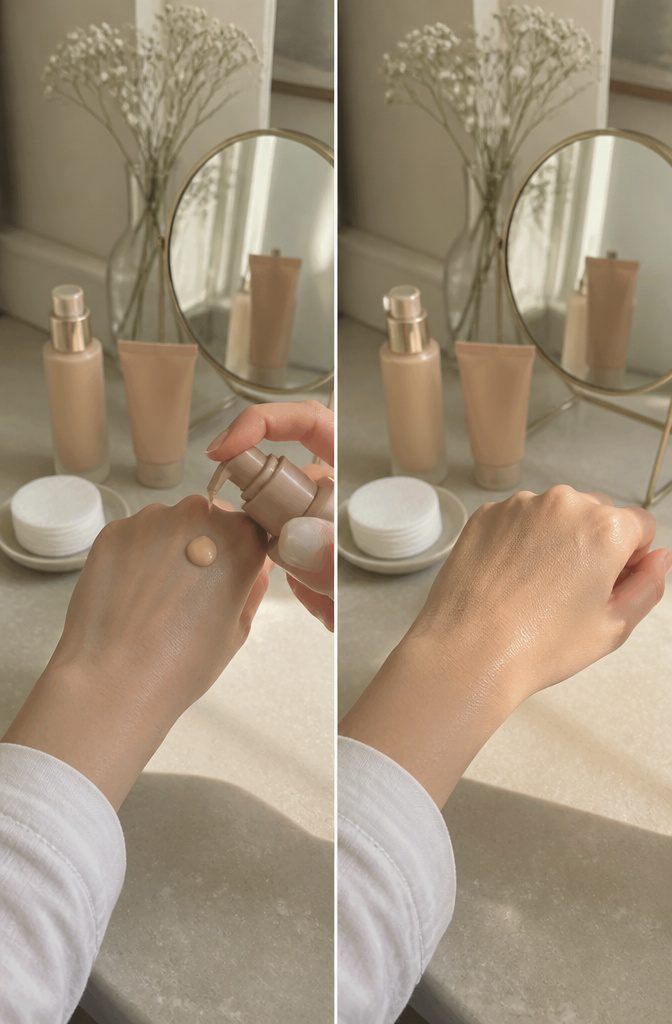
A weightless base makes the difference between makeup that reads as your skin and makeup that sits on top of it. Sheer coverage lets your actual complexion breathe and show through, which is the whole point of a natural look.
The L’Oréal Paris Lumi Le Glow Tint lands in this category with its 82% hydrating serum, reflective pearls, and blurring pigments across 16 shades. Coverage is strictly skin-tint territory, so freckles and natural tone variation stay visible.
"The goal is makeup that enhances your complexion so naturally that people compliment your skin—not ask what foundation you’re wearing."
— Vogue
This means the right product disappears.
Urban Decay’s Hydromaniac Tinted Glow Hydrator uses marula oil and kombucha filtrate for that skin-like finish. Neither option will mask serious discoloration; that’s work for concealer in the next step.

CETAPHIL DERMACONTROL OIL ABSORBING MOISTURIZER WITH SPF 30: Hydrates skin while leaving a matte finish
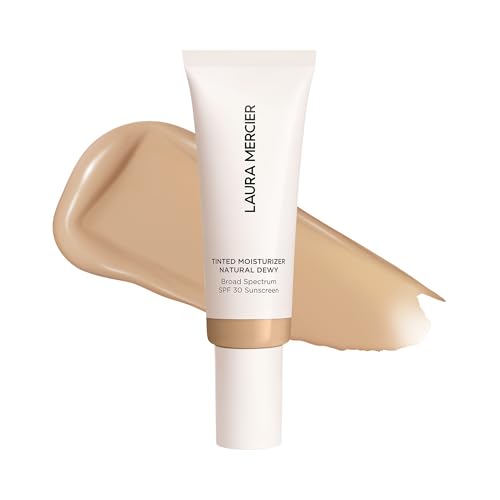
88% skincare-based formula provides 16-hour sheer to light coverage while nourishing skin with clinically proven, 24-hour hydration.

[ MOISTURIZER WITH SUNSCREEN ] A non-greasy sunscreen without white-cast and ultra-light moisturizer for face that hydrates and leaves the skin with a matte finish.
Conceal as Needed
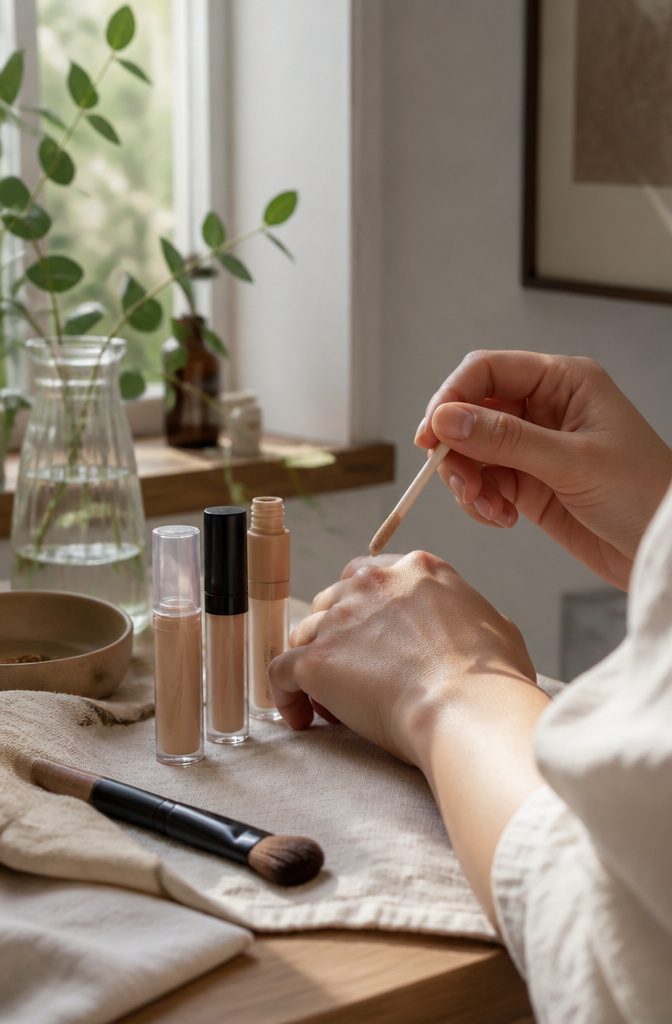
A dab of concealer on the inner and outer corners of the eye is usually enough to brighten without building up texture.
Spot-conceal only the areas that need it, then blend with a damp sponge or fingertip so the edges disappear into skin rather than sitting on top.
If your skin is fairly clear, you can skip foundation entirely and still look finished.
For blemishes, a small, precise brush gives the control to place a tiny dot exactly where coverage is needed rather than spreading it in a circle.
Formulas matter when you’re keeping the rest of the face bare.
Prada Beauty’s Blurring + Micro-Correcting Concealer earns its keep for the softly diffused finish that never turns cakey, and Kosas’s concealer gets votes for clean ingredients plus a lightweight, radiant texture under the eyes.
The L’Oréal Paris Infallible Full Wear Concealer offers the other end of the spectrum: ultra-pigmented, matte, and long-wearing when a breakout truly refuses to cooperate.
The common mistake is treating concealer like eraser, layering until the spot vanishes. Skin under the eyes and over a blemish both sit at different elevations than the surrounding area, so any excess catches light differently.
Stop one blend short of perfect coverage and let the rest of your natural texture do the talking.

12-Hour Grip, All-Day Luminosity: This illuminating makeup primer hydrates skin and locks in your look for up to 12 hours, ensuring makeup stays smooth and crease-free all day long; silicone-free and suitable for all skin types, the glowy gel formula provides a radiant, golden finish

Erase Base Blemish Control Primer with 2% Salicylic Acid

SKIN-SMOOTHING and GRIPPING PRIMER: Your makeup. It’s not going anywhere. Prep skin with this gel-based face primer that has the power to grip your makeup while giving skin a natural finish for a smoother complexion.
Add Blush
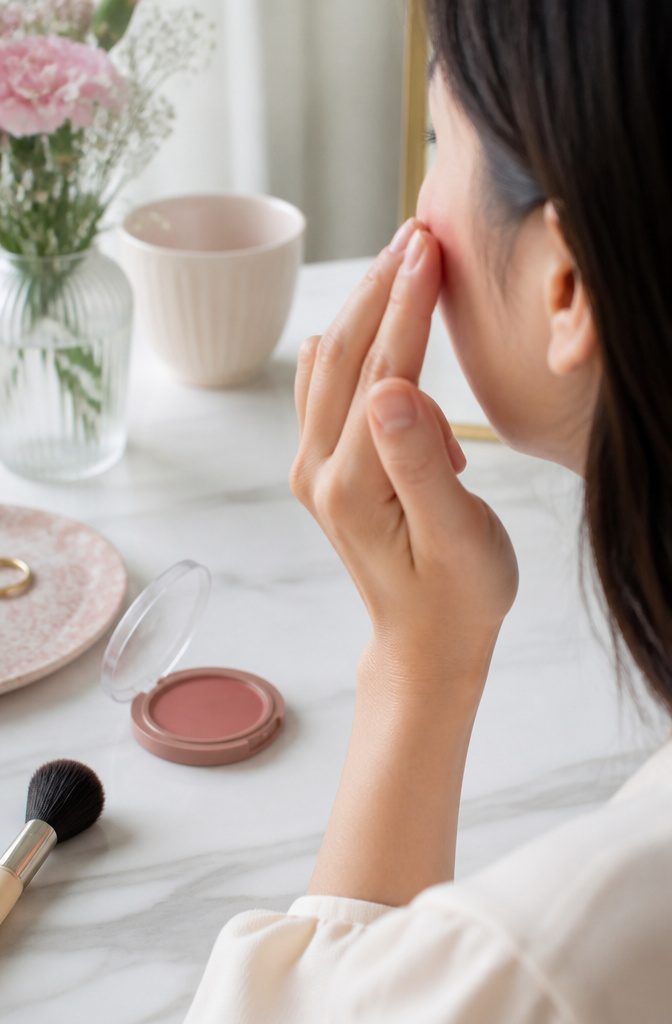
Powder blush sat on my bathroom shelf for years, a reliable habit from my early twenties that read as makeup rather than skin. Switching to cream formulas changed the finish entirely.
Because creams and liquids melt into the skin rather than sitting on top of it, the color looks like it originates from underneath, not painted over it. This matters most for the no-makeup effect "natural basic makeup" aims for.
Cream blush wins specifically for the dewy finish that reads as youthful and hydrated, not flat.
The texture keeps cheeks looking alive, especially under natural daylight. For application, tap onto the apples and blend upward toward the hairline; the upward motion gives a subtle lift to the face shape without contour.
Start with less than you think, since layering preserves that skin-like quality while overloading destroys it.
Liquid options behave similarly if you prefer a more watery consistency.
L’Oréal Paris makes a Lumi Le Liquid Blush in shades including Dewy Worth It, Dewy Bright Pink, and Dewy Rich Coral, each with buildable pigment that washes on sheer.
No7’s Lip & Cheek Tint doubles for both features, pressed in with a ring finger and blended outward for a soft pink flush that never turns cakey. Both formulas avoid the powdery residue that betrays effort.

Lengthening Mascara: Enhance your lashes with intense length and unique lash-by-lash separation; Ophthalmologist tested and allergy tested; Suitable for sensitive eyes and contact lens wearers

GENTLE + BUILDABLE: Nourishing mascara lengthens, lifts + conditions, creating an effortless, long-lash look without clumping, flaking or smudging. All-day wear

Fanned Out Lashes: See corner to corner panoramic lash volume with our Voluminous Panorama Mascara! Our lightweight and long-lasting lengthening mascara formula creates lashes that are so fanned out for eyes that look up to 1.4x bigger
Define Brows
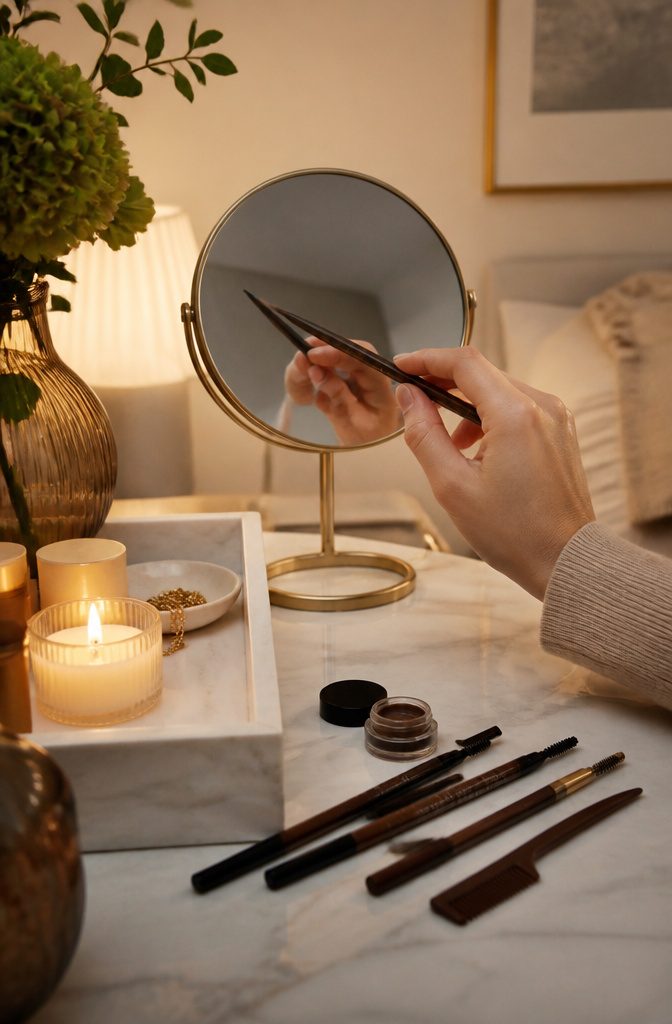
Brows frame the face, and the natural basic makeup look only works if they stay believable.
Sparse patches need a brow pencil with an ultra-fine tip, like the L’Oréal Paris Brow Stylist Definer, to draw hair-like strokes exactly where hairs are missing.
The key is restraint: fill only the gaps, not the whole brow. A built-in spoolie blends those strokes before they harden into obvious lines.
Clear gel finishes the job by lifting and setting without that flaky, stuck-down feel.
Allan Avendaño, who works red-carpet jobs regularly, alternates pencil with gel rather than relying on one product to do both; Victoria Beckham Beauty and Kosas make conditioning gels that hold the fluff without the 2016 block-brow effect.
Sisters, not twins remains the rule here, so match the natural arch and direction rather than forcing symmetry that your face never had.

1-oz of Neutrogena Healthy Skin Sensitive Skin Serum Foundation with Pro-Vitamin B5 in shade Light 01, to help keep skin healthy looking, blur imperfections and designed to minimize the look of fine lines and cover pores
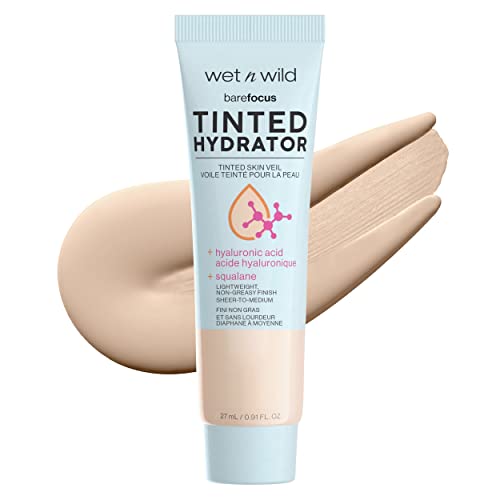
Buildable Coverage: Watch as lines and imperfections fade away. This lightweight hydrator features buildable seamless coverage from sheer to medium.

One Step Makeup + Skincare: This tinted SPF 50 serum combines skin care, makeup & sun protection in one for glowing, protected skin. Applies effortlessly to soften imperfections for a smooth finish.
Neutral Eyeshadow
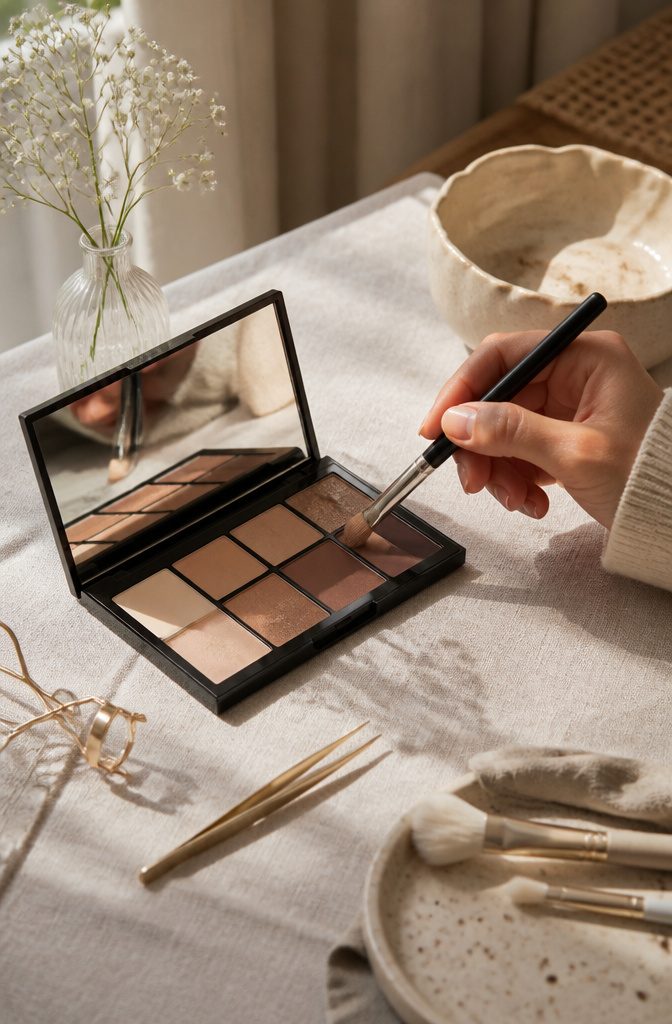
A neutral eyeshadow palette earns its place in a natural basic makeup routine because earthy browns, beiges, and creams sit close to actual skin tone without reading as shadow at all.
I have seen the same recommendation across enough guides that the pattern is clear: matte beiges, soft browns, warm taupe, and neutral pinks build subtle definition when you want it, while a single light wash of color keeps things barely there on days you do not.
Blending is the move that separates natural from obviously done. Harsh lines break the illusion, so a soft, diffused edge matters more than the exact shade you chose.
Some looks skip eyeshadow entirely and still read as polished; when I do reach for one, I favor the soft brown and warm beige family over anything with shimmer, since matte finishes disappear into skin in a way metallics never quite manage.
Brown eyeliner paired with this keeps the definition gentle, and brown-black mascara finishes without the stark contrast of true black.

Hydrating, Buildable Colour: Buildable tinted balm that blurs and evens out skin tone. This multitasking stick instantly blurs imperfections for a smoother look and a fresh-faced glow.

Deep Hydration + SPF Protection: Broad spectrum mineral SPF 30 protects against UVA / UVB rays while the tinted moisturizer hydrates for 24 hours, evens skin tone, and delivers a naturally dewy, healthy-looking glow.

1-fluid ounce tube of Neutrogena Healthy Skin Anti-Aging Perfector All-in-One Tinted Facial Moisturizer with SPF 20 to help reduce the appearance of fine lines and wrinkles
Mascara
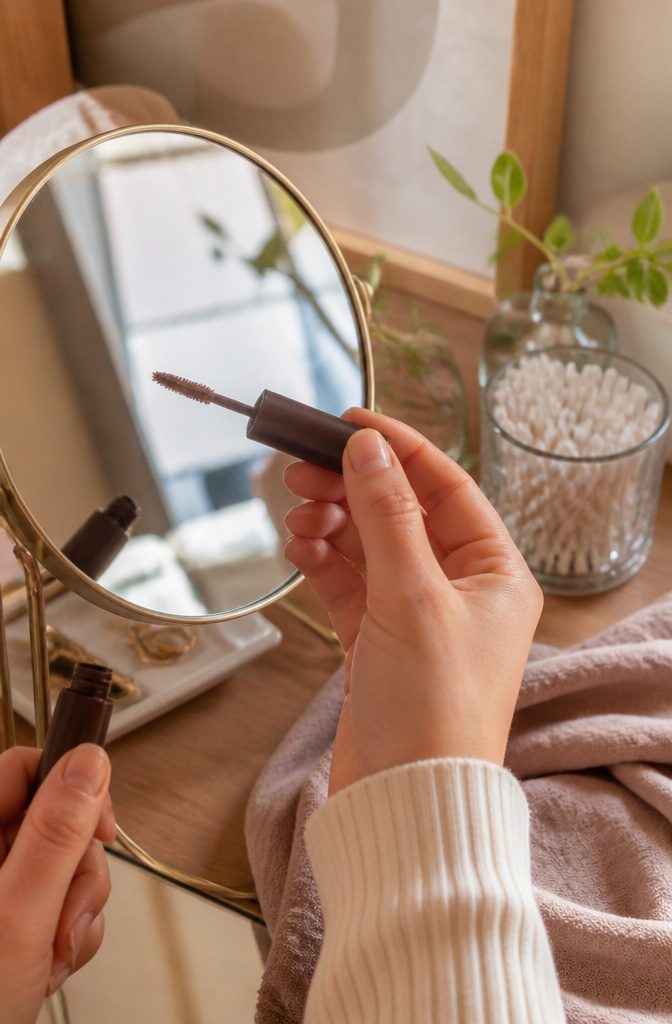
Black Brown mascara wins over Blackest Black when you want eyes that look quietly awake instead of obviously made-up. A single light coat does this, and the clean separation between lashes matters more than any extra length.
Reading through these guides, I noticed two camps on application style. One group votes for curling first, then brushing on a traditional formula so the lashes lift and stay separated at the root.
The other skips pigment entirely and goes with a clear gel over curled lashes for what sources call a ghost-lash effect, barely there but not invisible.
Six recommendations converge on the same warning against anything that builds to a false-lash look or clumps, which defeats the purpose of a natural basic makeup step.
I lean toward the Black Brown, washable, one-and-done approach. The shade reads soft at conversational distance, and a wash-off formula leaves no need for oily removers that can blur the rest of the eye.

Coverage: Buildable Smashbox Halo Tinted Moisturizer with SPF 25 delivers a natural-looking dewy finish while providing 24-hour hydration and lightweight coverage for healthy-looking skin.

Toleriane Double Repair Face Moisturizer UV is formulated with a high concentration of La Roche-Posay prebiotic thermal water, ceramide-3, niacinamide, and glycerin, providing up to 48hr hydration and restoring skin's natural protective barrier

TINTED MOISTURIZER WITH SPF: Sheer tinted moisturizer for face hydrates, perfects, and protects with SPF 25. For all skin types.
Lip Color
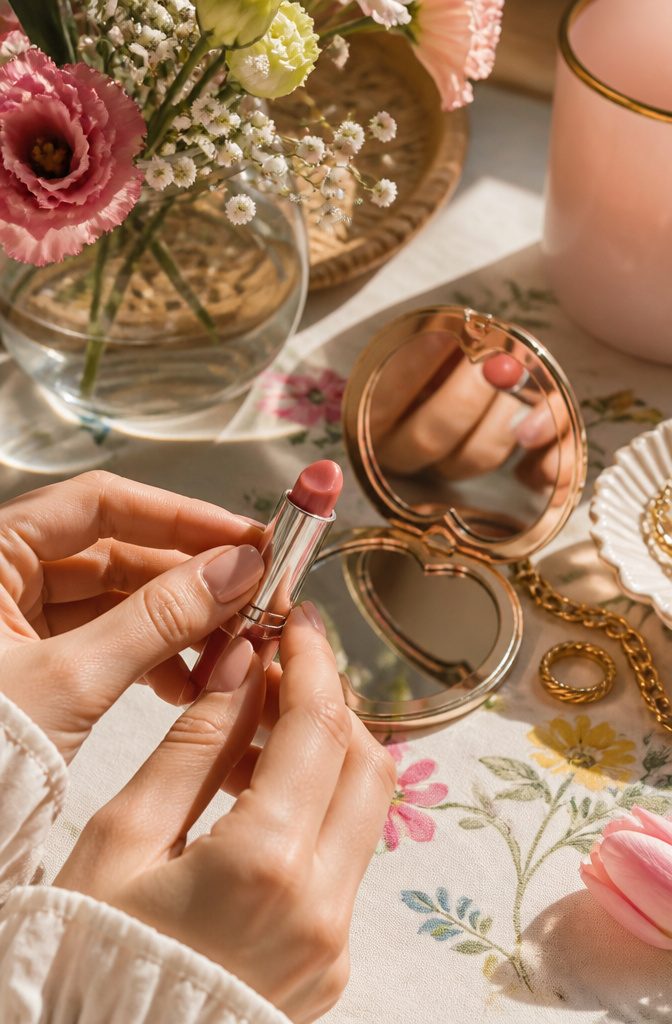
A glossy lip balm or sheer gloss usually finishes a natural basic makeup look better than anything matte or heavily pigmented.
The sources lean hard into hydration: hyaluronic acid shows up in both the L’Oréal Paris Plump Ambition Hyaluron Lip Oil and the No7 HydraLuminous Lip Balm, and that pairing of moisture plus light color is what keeps the effect from reading like lipstick that got tired halfway through the day.
The ColorScience tip of pressing tint to the center of the lips and blending outward with a finger is worth the extra ten seconds.
It deposits the most color where lips naturally look fullest and feathers the edge so there is no hard line to betray the "no-makeup" claim.
A shade close to your own lip color wins over nude-for-the-sake-of-nude every time.
How close? Close enough that someone standing conversation-distance away would need a second look to register that anything is on at all.
A tinted balm like L’Oréal’s Glow Paradise or a simple clear gloss both hit that mark; bright or flat-matte formulas break the illusion entirely.
On cost, No7 prices its HydraLuminous Lip Balm at $9.99. That sits comfortably below most department-store alternatives without feeling disposable, which matters if the whole point of a natural look is reaching for the same reliable product most mornings.

RADIANT ROSE GOLD GLOW: Creates a luminous, dewy finish with light-reflecting particles for a fresh, healthy-looking complexion and a natural glow that enhances everyday makeup, giving skin a soft, lit-from-within appearance

Welcome to the glowiest, lightest weight luminizer. This lightweight, non-comedogenic illuminator is your forever first step under makeup for a hydrated, glowy radiance.

Infallible Prow Glow Lock Primer for Face Makeup prepares, perfects, and illuminates while it hydrates skin for better makeup application; This Illuminating L'Oréal makeup primer leaves skin with a healthy-looking, radiant glow that lasts all day
Set with Spray
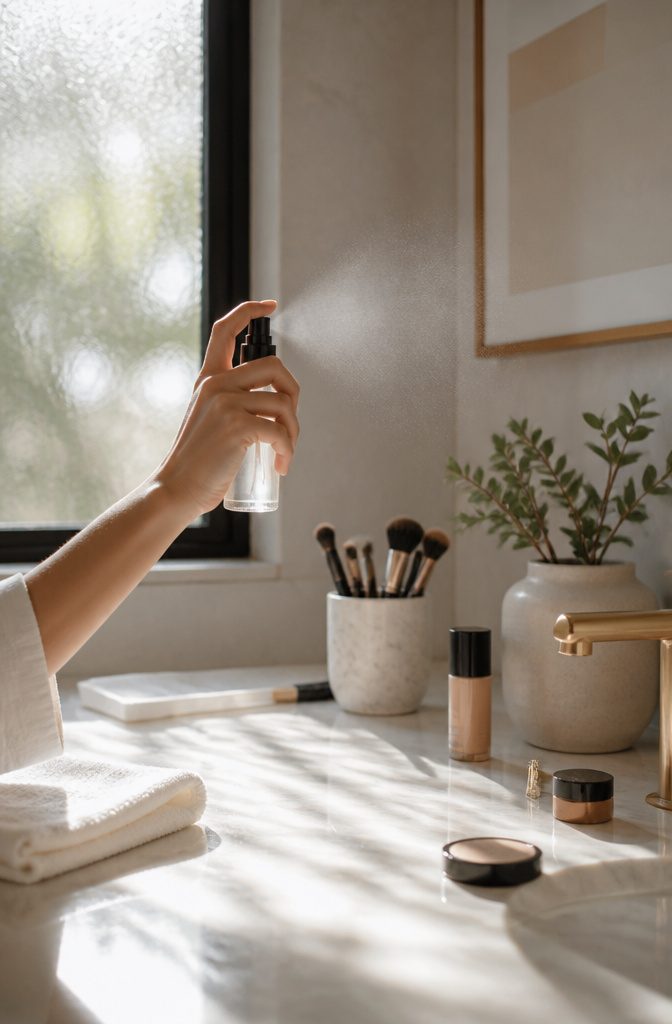
A matte face kills a natural look faster than anything else at this stage.
Powder magnifies texture and kills the dewy finish that reads as youthful skin, so the move here is a setting spray held six to eight inches away and misted in a circular motion for three to four seconds.
That distance matters: too close and you get wet spots that streak, too far and you miss the lock entirely.
Spray beats powder for beginners because one product does two jobs.
It seals the makeup against heat and oil, and it leaves that fresh finish intact rather than flattening it. Keep your eyes closed for about a minute after; the dry time is when the film forms.
If you’re oily through the T-zone, a light touch of translucent powder on just those zones before the spray is the compromise that works, but skip it entirely if you want the dewier end of natural.

Bold, volume building mascara

YOUR FAVORITE MASCARA, NOW IN BROWN! Enhance your natural lashes with the iconic essence Lash Princess False Lash Effect Mascara, now available in a Black Brown shade!

Lengthening Mascara: This volumizing washable mascara formula is infused with bamboo extract and fibers for long, full and lightweight lashes that don't flake or smudge
Essential Products
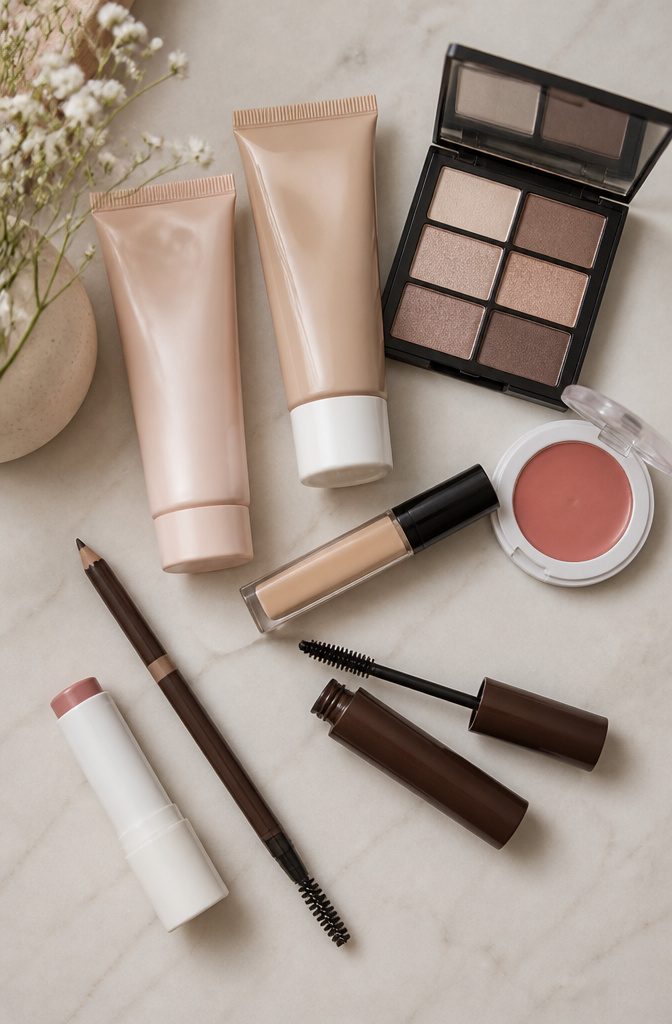
The core lineup for a natural basic makeup kit is small and deliberate. Each piece earns its spot by doing one job well without adding weight.
- Primer creates a tacky base that keeps the rest from sliding, so you can use less of everything that follows.
- A lightweight foundation or tinted moisturizer blurs without masking; the goal is skin that still reads as your own.
- Concealer stays close to your natural tone and covers only what needs covering, blemishes or dark spots, not every variation.
- Cream blush blends into a dewy finish that powder rarely matches, especially on drier skin.
- A brow pencil or gel fills sparsely for soft, fluffy definition rather than drawn-on arches.
- A neutral eyeshadow palette in champagne, pale pink, or light brown replaces color with quiet dimension.
- Brown mascara keeps lash definition subtle rather than dramatic.
- Lip balm or gloss brings sheer tint and hydration; lipstick sits this one out.
- Setting spray locks the look, but reach for a dewy finish to keep the effect consistent from start to end.
Sheer Against Full Coverage
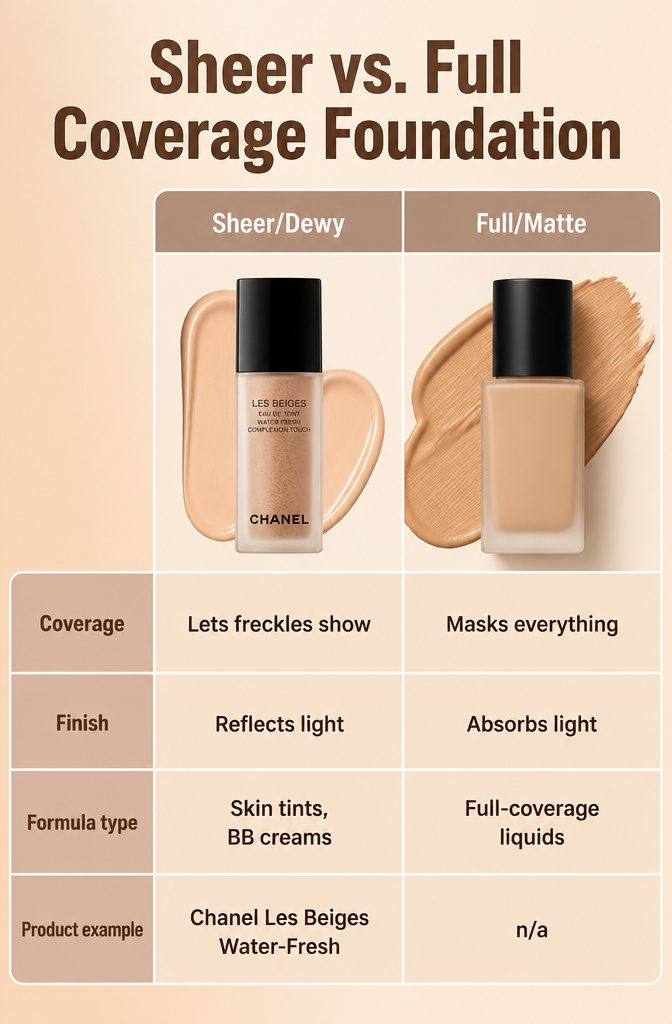
Full-coverage foundation used to be my default until a makeup artist pointed out what happens in daylight.
The heavier the layer, the more it sits on top of the skin catching shadows, and suddenly people are asking which foundation you wear instead of complimenting your skin.
| Sheer/Dewy | Full/Matte | |
|---|---|---|
| Coverage | Lets freckles and natural texture show | Masks everything, including the skin’s own radiance |
| Finish | Reflects light, mimics hydrated skin | Absorbs light, reads flat without careful highlighting |
| Formula type | Skin tints, serum foundations, BB creams | Traditional full-coverage liquid or powder |
| Product example | Chanel Les Beiges Water-Fresh Complexion Touch | n/a |
The shift is practical, not just aesthetic.
Jason Hoffman’s rule of thumb is to use the least product that still evens you out. Cream blush melts in where powder would sit on top; dewy setting spray keeps the finish alive where translucent powder kills it.
The goal is skin people compliment, not product they identify. That only happens when the makeup is doing less work and your actual complexion is doing more.
Application Techniques
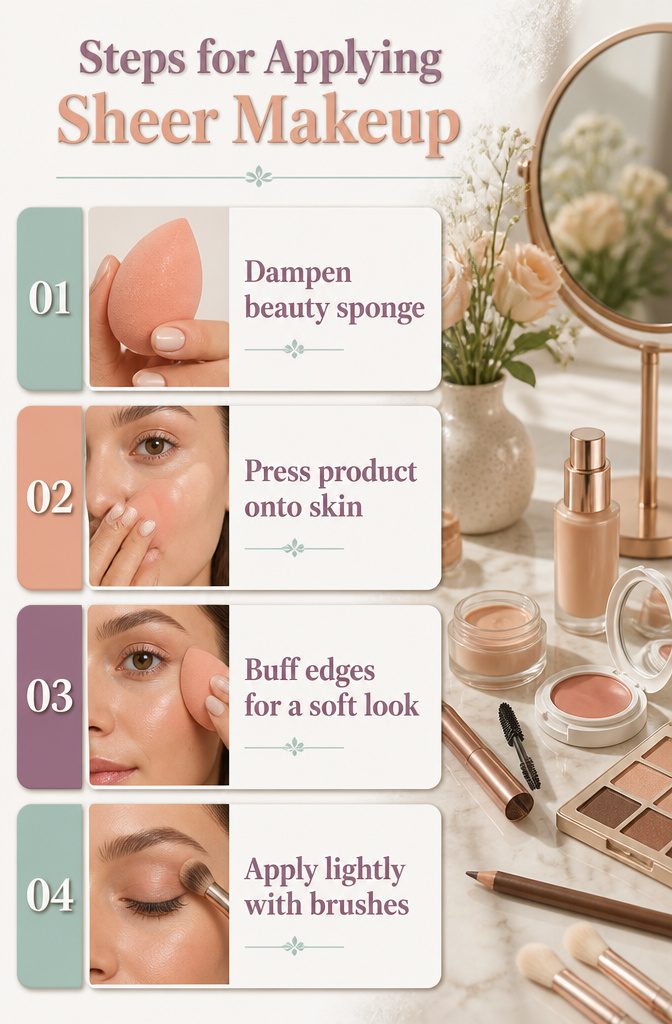
Sheer formulas melt into skin only if you force them there.
I learned this the slow way: a damp beauty sponge, pressed rather than dragged, turns a thin layer of tinted moisturizer into something that actually looks like your face, only more even.
Dry sponges and brushes both leave marks, and with light-coverage products there is nothing hiding the streaks.
Powders fight this whole goal.
They sit on top, pool in pores, and age you by noon. Liquid and cream textures, buffed in with a sponge or a finger, give the skin-like finish that reads as bare-faced from three feet away.
Brown mascara, neutral shadow in earthy tones, a brow pencil filled in with short strokes rather than drawn lines, all behave the same way: applied lightly, softened at the edges, never packed on.
Blending brushes matter here, but technique matters more.
Tap product on, then use the tool to erase the border, not to redistribute. What remains should look moisturized and soft, not glossy, not pigmented, just yours.
Common Mistakes
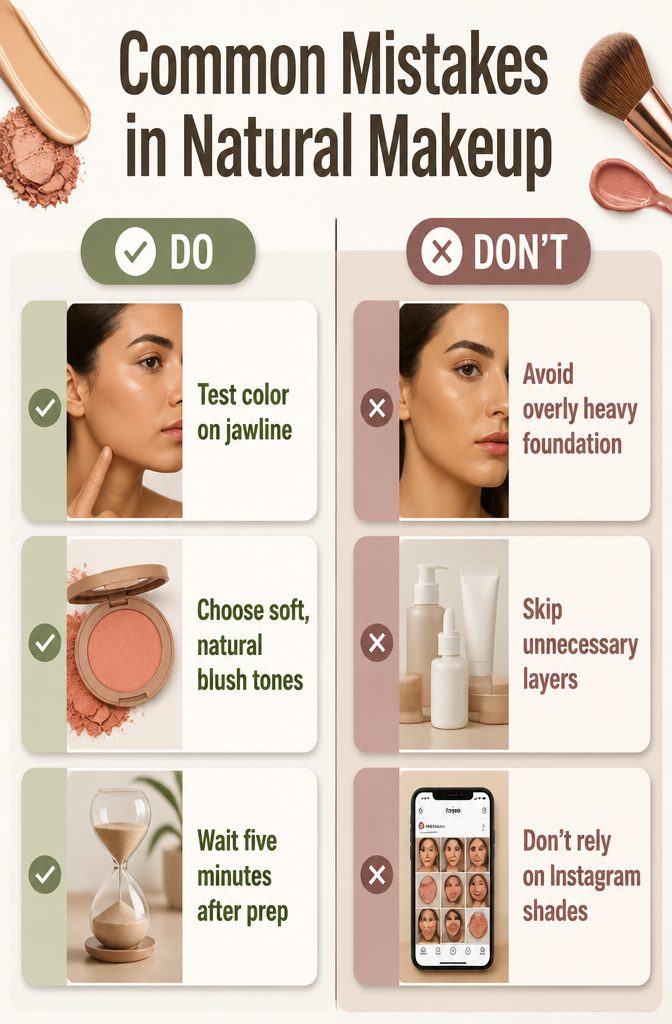
The heaviest product I’ve ever applied was a full-coverage foundation I bought because the shade looked right in the store. Under fluorescent lights it matched; under daylight it sat on my skin like a mask.
Wrong color match is the fastest way to turn natural basic makeup into obvious makeup. The fix is testing on your jawline, not your hand, and stepping outside before you buy.
Blush follows the same trap.
Those deep berry compacts photograph beautifully on Instagram, but on most faces they read as stage paint. Soft peach and warm pink suit medium to deep skin; cool pink and mauve read naturally on lighter complexions.
I learned this after a coral shade that looked innocent in the pan turned me into a Raggedy Ann doll by noon.
Over-prep wastes product too. Derma Blair Murphy-Rose once described Ilia’s milky toner as so deeply hydrating that normal to oily skin types might skip moisturizer entirely.
Layering both, plus primer, plus sunscreen that hasn’t sunk in yet, gives you a slick that pushes foundation around. The skin feels thirsty, so we keep adding, when hydration is already there.
The simplest test: after your routine, wait five minutes.
Touch your cheek. If it still feels wet or tacky, something needs to drop out.
Frequently Asked Questions
What do I need to create a natural makeup look?
A natural basic makeup kit needs nine core products: primer, lightweight foundation or tinted moisturizer, concealer, cream blush, brow pencil or gel, neutral eyeshadow palette, brown mascara, sheer lip balm or gloss, and dewy setting spray.
The article emphasizes that each piece should do one job well without adding weight, and cream or liquid textures beat powders for the skin-like finish this look requires.
How can I make my makeup look natural?
Use sheer, lightweight products and blend them until the edges disappear into skin rather than sitting on top. A damp beauty sponge pressed rather than dragged turns tinted moisturizer into something that looks like your actual face.
The article stresses that liquid and cream textures buffed in with a sponge or finger give the bare-faced finish from three feet away, while powders pool in pores and age you by noon.
What is the no-makeup makeup look?
It is a style that enhances natural beauty with minimal products for a fresh-faced appearance, landing between full glam and bare skin.
Sources call it "minimalist makeup," "natural makeup style," or "natural looking makeup," and the article notes it focuses on lightweight layering so people compliment your skin rather than ask what foundation you wear.