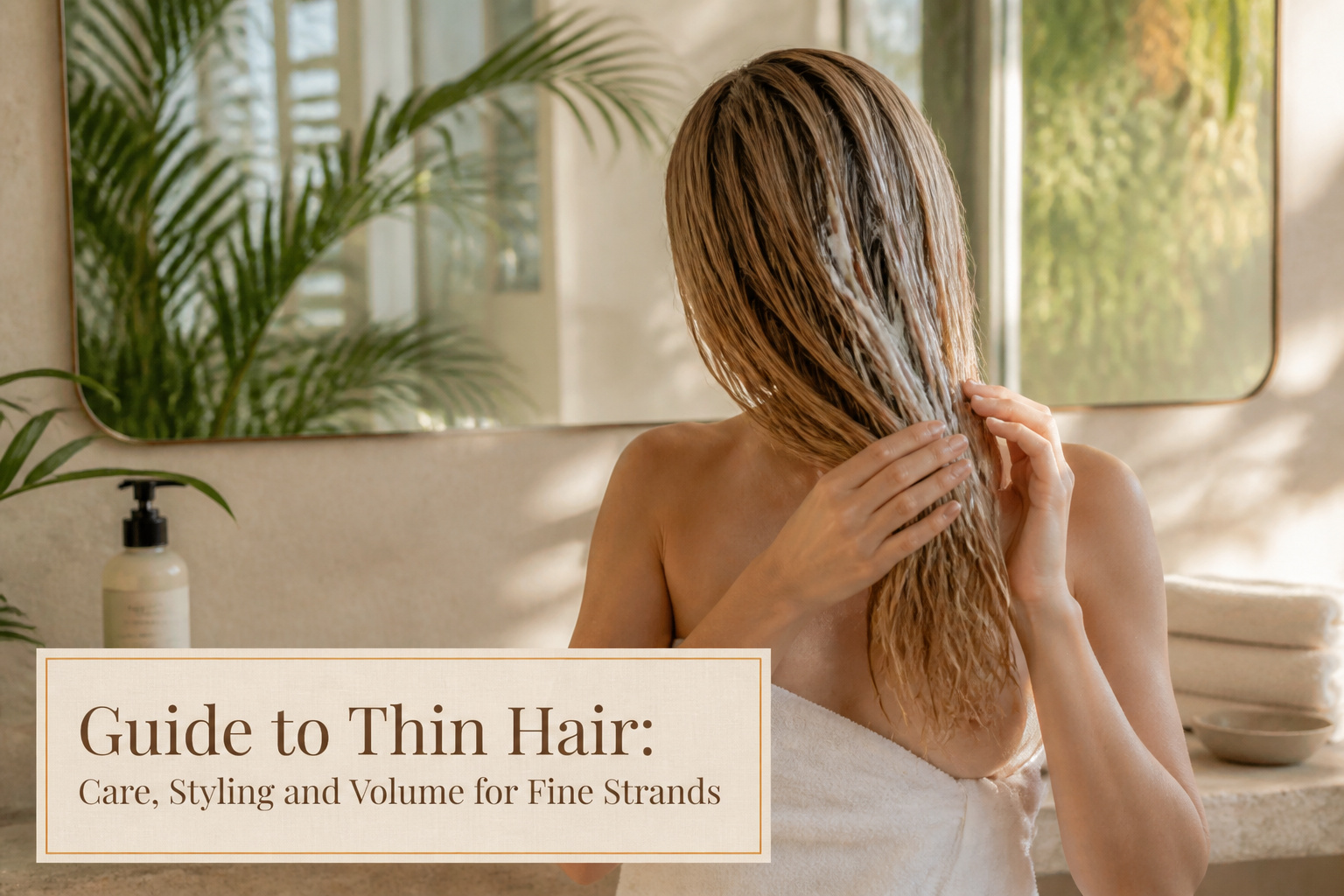
Thin hair is hair with a strand diameter smaller than a piece of sewing thread, a distinction that determines whether you need weightless formulas or scalp coverage. Most people mistake fine strands for sparse density, then buy thickening creams that flatten everything before lunch. The real fix starts in the shower: a lightweight, sulfate-free volumizing shampoo, conditioner kept strictly off the roots, and the knowledge that "rich" or "hydrating" on a label means oils your hair will drink and sink under.
Volumizing Shampoo and Conditioner
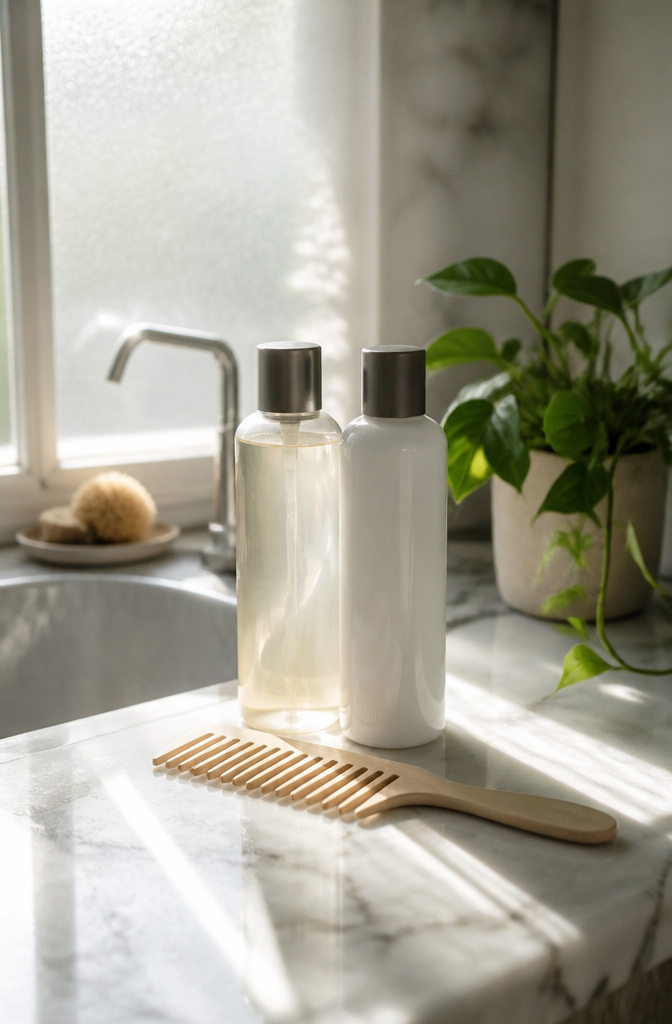
Heavy conditioners flatten thin hair before noon. Lightweight, volumizing formulas are the only option if you want lift that survives blow-dry through dinner. ROGAINE Thickening 2 in 1 Shampoo + Conditioner claims 2x fuller-looking hair after a single wash by stripping buildup rather than coating strands. That buildup claim matters: most standard formulas leave residue that fills the gap between hairs where volume lives.
When I scan labels for my own shower, I look for words like "lightweight" and "sulfate-free" and run from anything labeled "rich," "hydrating," or "repairing." Those code for oils and butters that thin hair drinks like a sponge, then sinks under. One rule that took me too long to learn: apply conditioner only from mid-lengths to ends, never at the root. The ends need the moisture; the roots need the opposite.
Dry Shampoo Between Washes
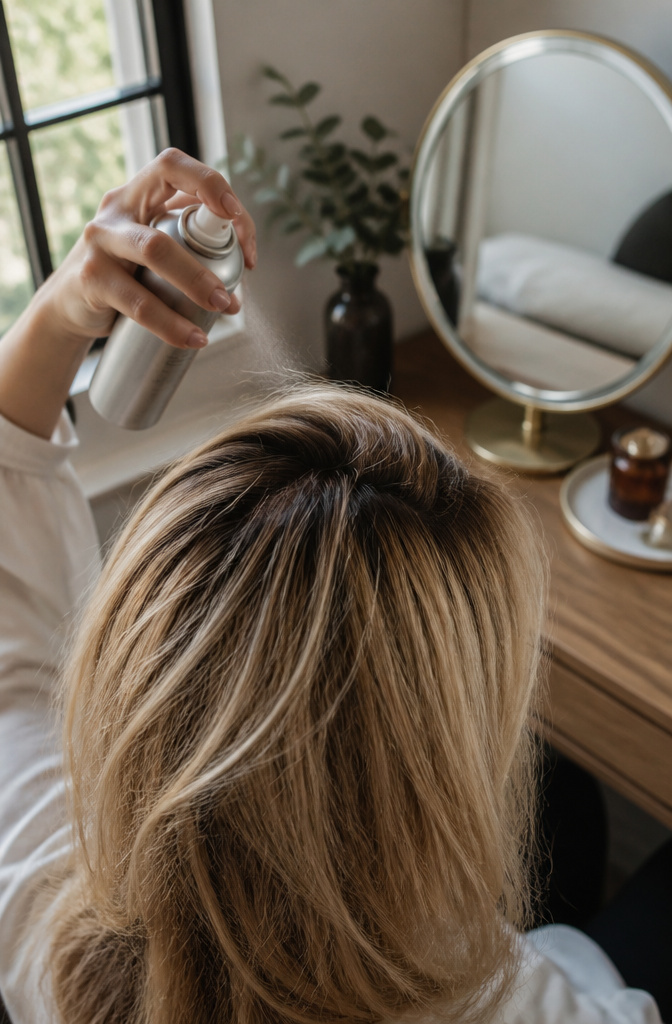
Dry shampoo absorbs oil at the scalp with starches like cornstarch or rice starch, which keeps fine hair from falling flat between washes. The residue also adds grip and lift at the roots, turning the product into a styling tool rather than just a refresher. Spray it on dry hair, let it sit for a minute, then massage through to avoid any white cast. A volumizing formula works best for thin strands because it builds body without the heaviness that wet styling products can leave behind. Letting residue settle before brushing it out is the difference between flat day-two hair and something that holds a comb.
Gentle Detangling
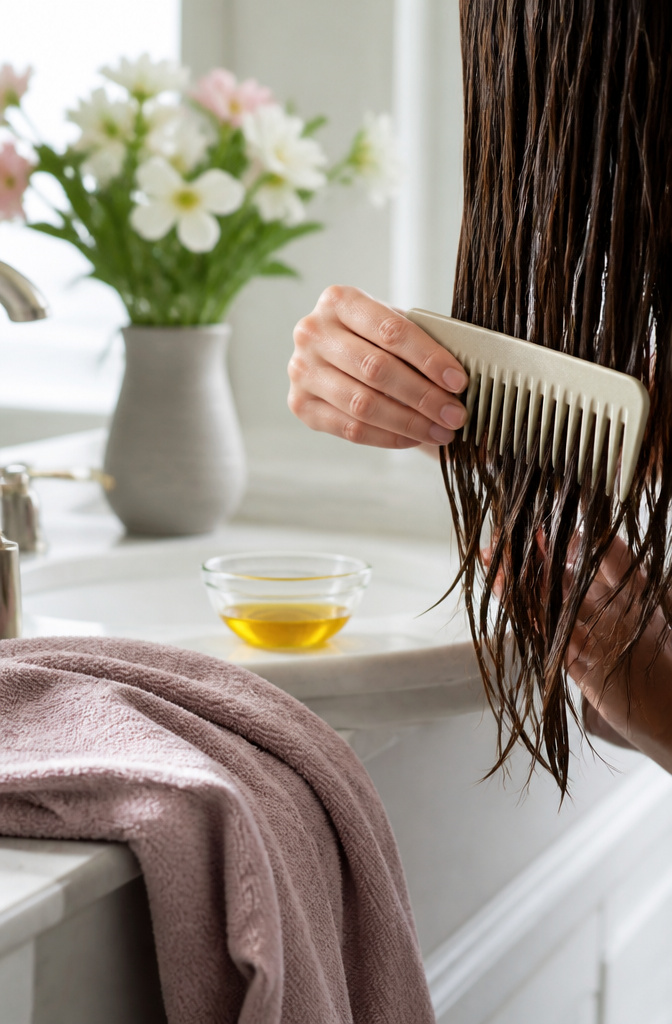
Wet hair snaps under tension more readily than dry hair, so the tools you reach for out of the shower matter more than whatever sits on your vanity shelf. A wide-toothed comb works through tangles from the ends upward with less drag on each strand, while brushes with flexible, soft bristles suit straight hair without the ripping force of fine-toothed alternatives. Curly or wavy patterns especially need that gap between teeth, or the coil structure fights back and breaks.
For drying, a standard terry towel roughs up the cuticle exactly where it can least afford it. Microfiber fabric absorbs water quickly with almost no friction against the strand, which matters when your hair is already at its stretchiest and most fragile. I spent years grabbing the nearest bath towel before I noticed how much less lint and fewer snapped hairs collected on the microfiber one I bought on a whim. The switch costs maybe fifteen dollars and saves the fullness you are trying to preserve at every other step of the routine.
Regular Haircuts
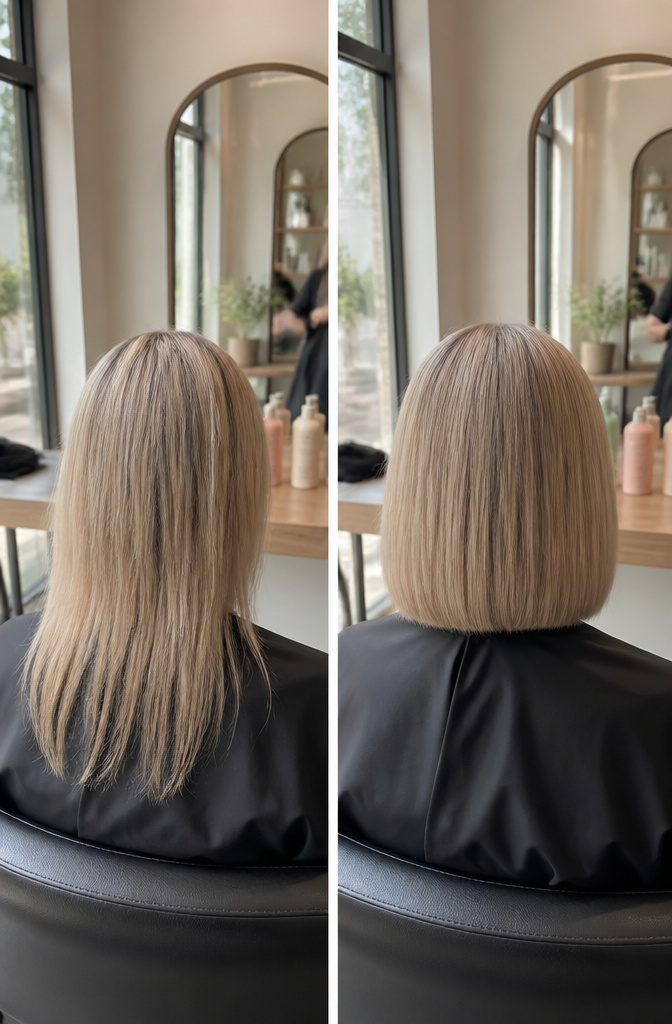
Split ends are a quiet enemy of volume. In thin hair, even a little fraying at the tip makes the whole strand lie flatter and look weaker, so a trim every six to eight weeks keeps the visual bulk intact. The cut itself matters just as much as the schedule. A blunt one-length style, or a blunt bob, stacks the ends so they read as denser than they are; layers, by contrast, can remove the last of the weight fine hair needs to hold its shape. I held onto layers for years thinking the movement would help, but the real volume came after switching to a blunter line. Cost is the sticking point, since frequent cuts add up, but the alternative is letting broken ends undo whatever your products and styling built.
Heat Protection
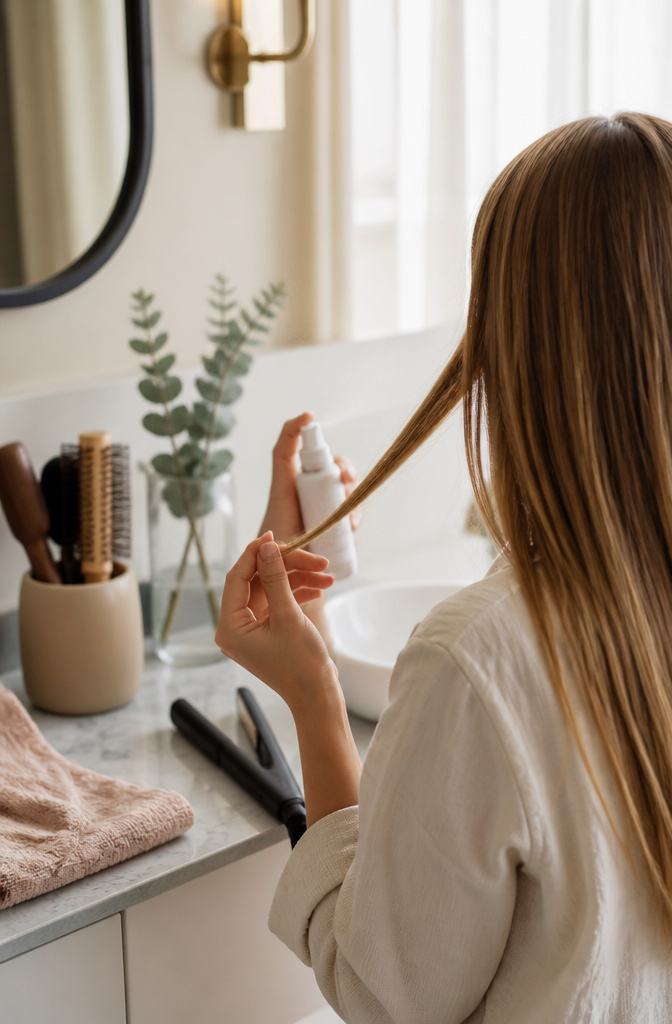
Fine hair doesn’t just scorch faster than thicker types; the damage shows more dramatically because there’s less strand to hide behind. Heat protectant is nonnegotiable before every pass of a tool, even at the lower temperatures thin hair needs.
I keep mine at or below 450 degrees Fahrenheit, which is where the L’Oréal Paris Elvive Dream Lengths Heat Slayer Leave-In tops out for protection. That ceiling sounds high, but the point is buffer, not license to crank it there. The cuticle on fine hair shatters more easily, and breakage from a single overhot session can make a whole section look sparse for months.
Spray formats win here over oils, though a half pump worked through wet hair can save drier ends if the rest of the length needs the weight kept off. Paul Mitchell’s Clean Beauty Heat Styling Spray at $25 sits in that same lightweight category, adding shine without the flattening that defeats the purpose of styling thin hair at all.
Scalp Care
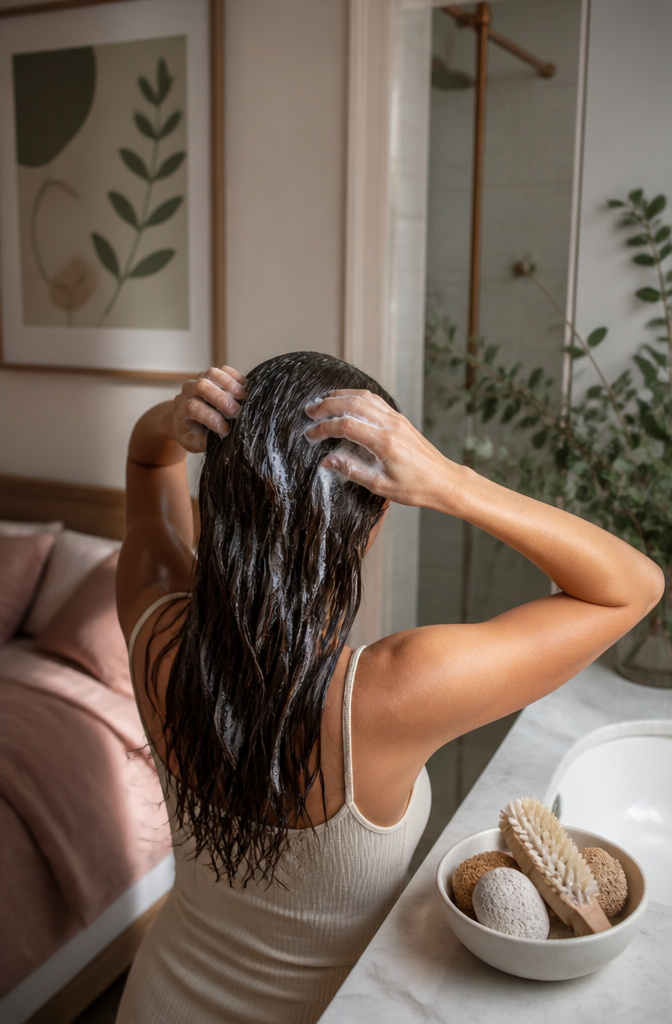
The scalp gets ignored until it becomes a problem, which in fine hair means flat roots that won’t hold a style past noon. A two-minute massage before shampooing changed how my wash days go; the pressure increases blood flow to the follicles and lifts product buildup that standard rinsing misses. I use my fingertips, though a dedicated massager works the same way and exfoliates as it goes.
Clarifying shampoo became necessary once I realized my regular formula was leaving residue that pulled my hair down against my head. The switch to a weekly deep clean, something like Ouai’s Anti-Dandruff or Olaplex No.4, removed that invisible weight and gave back half the volume I thought I’d lost to humidity or age.
Overnight protection matters too. Fine strands snap easily against cotton, so a silk or satin pillowcase reduces the friction that weakens hair while you sleep. No tangles in the morning, fewer split ends by month three, and the change costs less than most styling products you’ll replace it with.
Styling Techniques for Volume
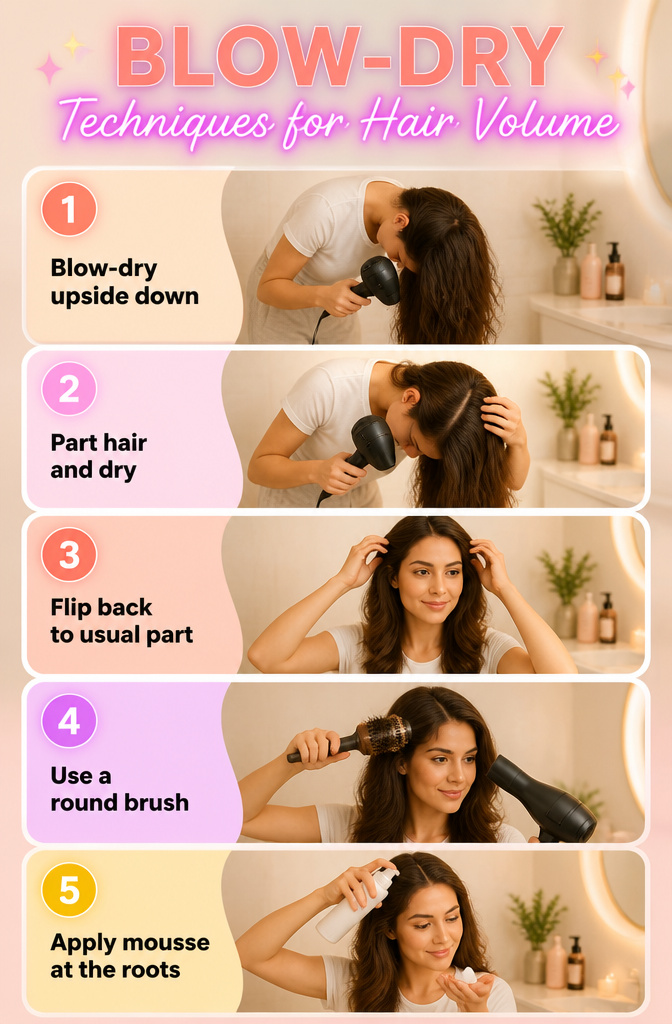
Blow-drying upside down still works better than any product I’ve tried for lift at the root, and the trick translates differently depending on how much hair you have to move. On a pixie or short bob, the goal is keeping the crown from going flat, so tipping forward and aiming the dryer straight at the roots for about thirty seconds before standing upright builds enough memory to hold. With medium-length hair, the weight starts working against you around hour four, which is where the opposite-direction trick earns its keep: part your hair on the left, dry everything swept right while your head is still upside down, then flip back and settle it into its usual part once the roots are fully cool. The over-direction creates hollow space underneath that reads as fullness.
Longer hair presents a tougher physics problem. The ends pull downward on the roots all day, so upside-down drying alone tends to collapse by lunch. I’ve found that finishing with a round brush after the initial lift is what makes the difference between hair that looks big for twenty minutes and hair that stays credible through evening. Mousse applied only at the root area before you start, not mid-lengths, keeps the build-up paraffin warns against from weighing you down. A heat protectant blow dry spray with a light formula should go on first, since upside-down raking with your fingers still exposes strands to direct heat. That second pass with the round brush after flipping right side up is non-negotiable for lengths past the shoulders; without it, gravity wins.
Coloring for Thickness
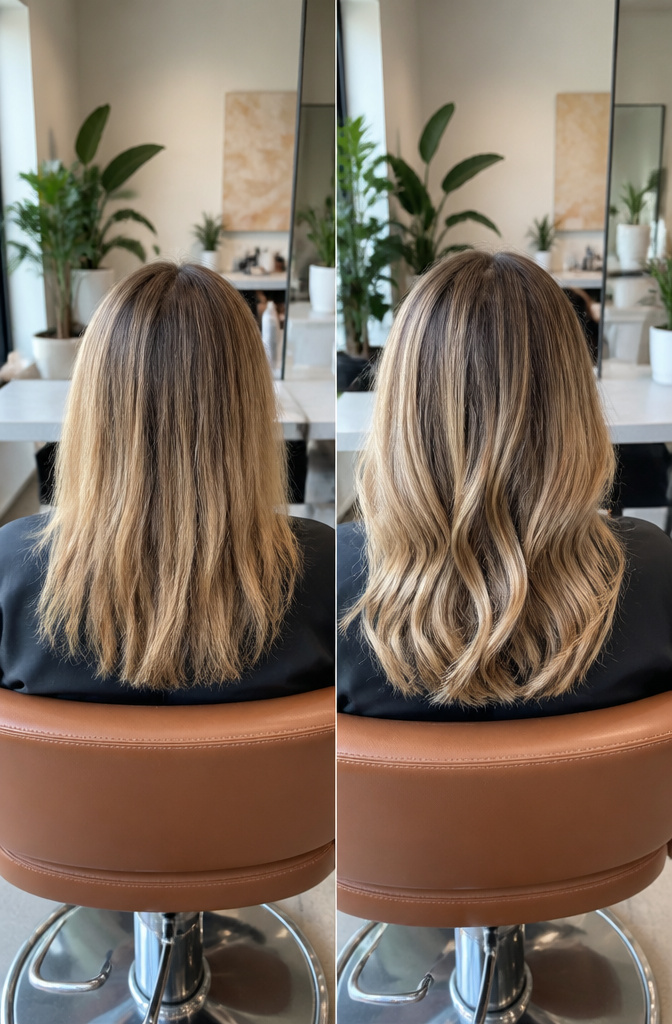
Subtle highlights or lowlights can give fine hair the visual depth it reads as thickness. When strands of slightly different tones sit next to each other, they catch light unevenly and create the illusion of density that single-process color rarely achieves. I spent years in all-over blonde that left my hair looking flatter than it started; the shift to hand-painted pieces near the crown was the first time a stylist explained the trick out loud.
What to ask for at the salon
Request balayage or face-framing highlights rather than heavy foils that can overprocess. The goal is dimension, not lift, so the color should stay within two shades of your base. Semi-permanent or demi-permanent formulas deposit tone without the ammonia and peroxide that weaken already-fine strands. If your hair is actively thinning, avoid bleach entirely, rich natural-looking permanent or semi-permanent dyes add body without the damage that accelerates shedding. Skip same-day chemical treatments if you use any topical hair-growth product; the combination stresses the scalp.
The maintenance catch: colored hair can look over processed fast, and fine hair shows that damage immediately. Stretch appointments to every eight to ten weeks if possible, and condition aggressively between visits.
Fine Hair vs. Thin Hair
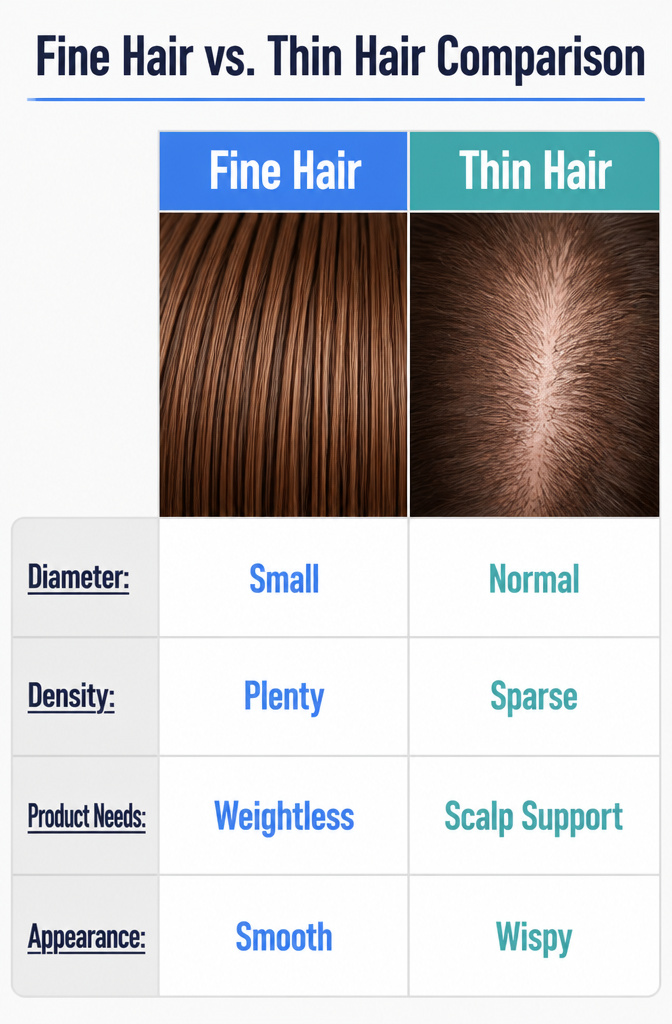
Fine hair and thin hair are two different problems that happen to feel the same on a bad mirror day. Fine describes the strand itself: each hair is small in diameter. Thin describes density: fewer follicles per square inch of scalp. You can have fine strands and still pack plenty of them. A hairdresser might say you have fine hair but lots of it, and that changes what you actually need.
The distinction matters because the product aisle treats them as one. Fine hair needs weightless formulas that do not crush already-small strands. Thin hair needs scalp support and styles that cover visible scalp at the root. Someone with both, the wispy or sparse look the sources describe, needs both at once and rarely gets that combination off a single bottle.
I spent years treating my fine hair as thin, piling on thickening creams that left me flat before lunch. What convinced me, reading through a dozen of these breakdowns, was the simple diameter test: one strand against a thread of sewing cotton. Smaller than the thread means fine. Seeing scalp between strands means thin. Both are fixable once you know which you are fixing.
What Causes Thinning
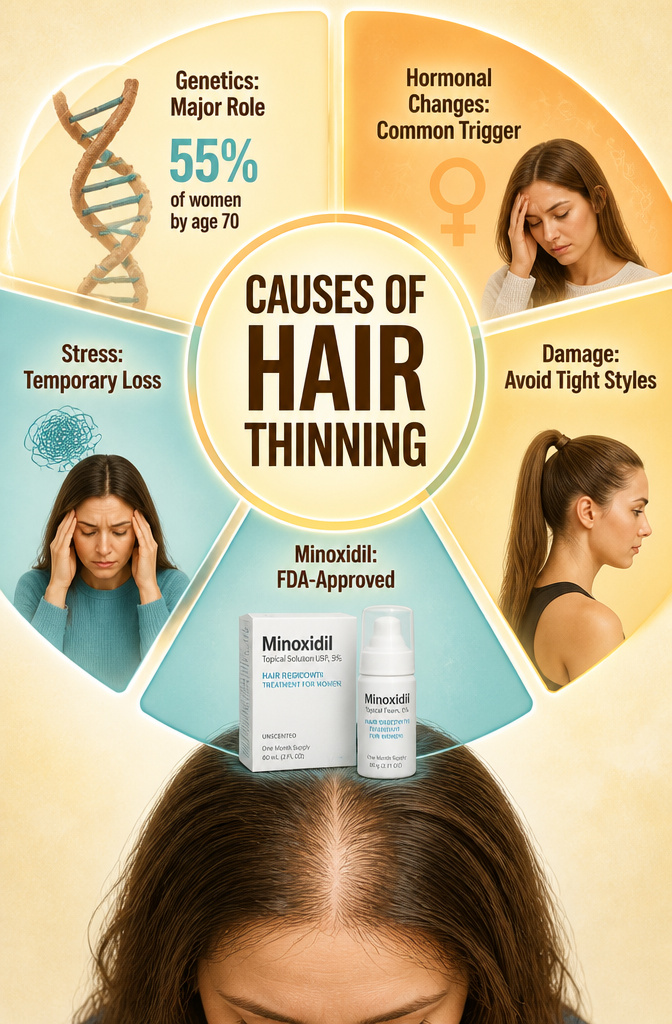
Hair thins for more reasons than most product labels admit. Genetics play the largest long-term role: androgenetic alopecia, the pattern baldness passed down in families, affects 55 percent of women by age 70. The shift is gradual, and many of us notice it first as a wider part or a ponytail that keeps getting smaller.
Hormonal changes hit next. Pregnancy, menopause, or any major drop in estrogen can trigger telogen effluvium, where more strands than usual enter the resting phase and fall out. Stress does the same: a difficult month at work or a period of poor sleep can show up in the shower drain weeks later. Age itself shifts the balance of hormones and slows growth.
Then there is damage we choose. Tight ponytails pull at the root. Certain products build up and clog follicles. Heat styling without protection weakens what is already fine.
For actual regrowth rather than just the appearance of it, minoxidil is the FDA-approved option. It is available over the counter in 5 percent foam or solution, and the clinical data backs it for thickening hair that has genuinely thinned rather than just flattened.
Products That Work
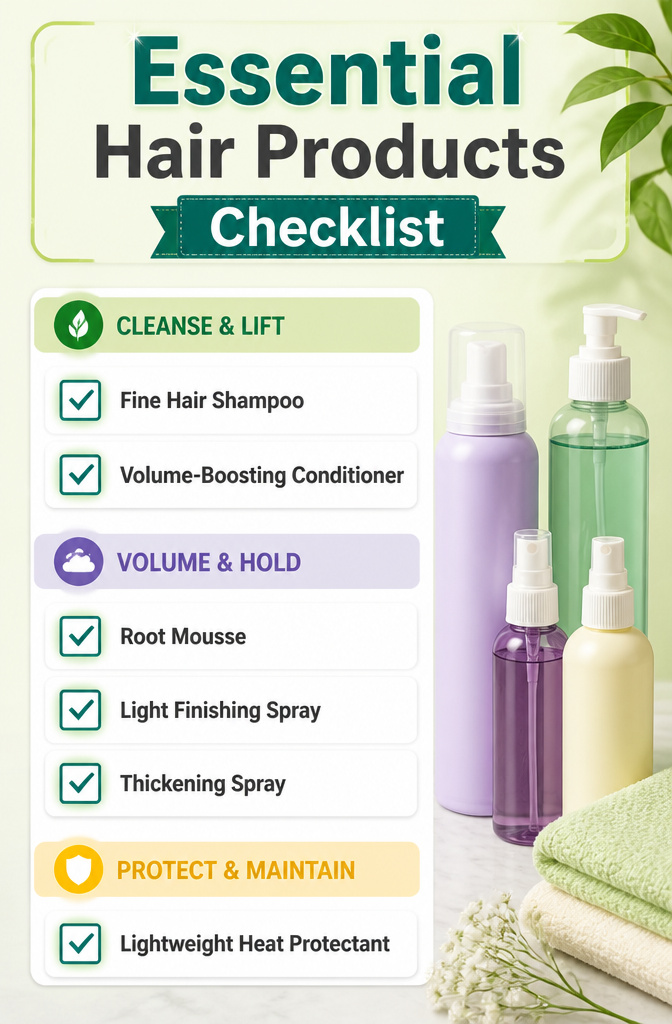
"Volumizing" printed on a bottle does not mean the formula inside is light.
What convinced me, reading through a dozen of these guides, was how many recommend the same move: start in the shower with a shampoo and conditioner pair built for fine hair specifically, then treat everything else with suspicion. The EverPure Volume Sulfate-Free Shampoo gives instant root lift. Its matching conditioner keeps ends conditioned without pushing down the scalp. Anything too heavy, anything designed for thick or coarse hair, will flatten what you just lifted.
Mousse goes at the roots to give the blow dryer something to grip. A light finishing spray holds the shape. Foams, root lifters, and thickening sprays do the visible work. Creams and oils sit this one out; paraffin-based products in particular leave buildup that breaks strands.
Withdraw the product from your scalp. Conditioners, masks, and treatments belong on mid-lengths and ends only. When flatness creeps back, a clarifying shampoo scrubs the residue away and resets the volume.
Diet and Hair Health
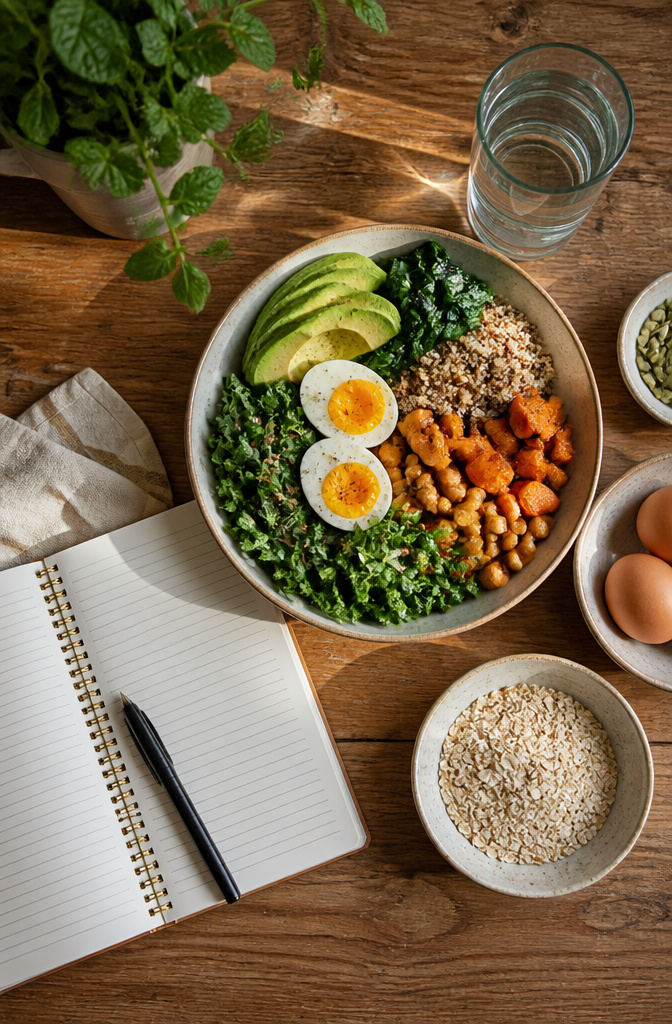
Iron shortages show up in your hair before they show up anywhere else you would notice. A ferritin level below 70 ng/mL can push strands into a shedding phase even if you are not anemic by standard blood-test thresholds, and the hair that grows back comes in finer. Biotin deficiency is rarer, but the same low-iron patients often run low on it too, since both nutrients sit in the same food groups: eggs, fish, leafy greens, legumes. Menstruating women are the most frequent ferritin-drop cases, which is worth knowing if you have noticed more hair in the shower since starting a new eating pattern.
A balanced plate for hair looks like any other balanced plate, which is the point. Half vegetables and fruit, a quarter protein, the rest whole grains, with enough fat that the fat-soluble vitamins actually absorb. The sources I read kept circling back to the same list: fresh produce, eggs, fish, and enough protein overall because hair is built from it. No one source endorsed popping a multivitamin on your own; the consensus was to check with a doctor first, especially with iron, because overload does damage too. I came away thinking food first, blood test second, pill third if at all.
Heat Tools and How to Use Them

Blow dryers are generally forgiving for fine strands, but flat irons and curling irons sit right against the cuticle and will break what they touch. Air-drying is the better choice most mornings, especially if volume is the goal. Flip your head upside down while you dry on a cool setting and the roots lift on their own without the brittleness that high heat leaves behind.
When you do reach for tools, keep the temperature low and never skip protection. A lightweight thermal spray works better than anything oil-based on thin hair; half a pump of oil in wet hair can help if the texture is parched, but more than that turns fine strands greasy and limp before noon. The protectant you choose should shield up to 450 degrees Fahrenheit, though you will not need half that heat to get the job done. The real damage comes less from one session and more from the cumulative count, so the fewer hot-tool days in your week, the fuller your hair stays over months.
Frequently Asked Questions
What is the difference between fine hair and thin hair?
Fine hair refers to the diameter of each strand, while thin hair describes how much hair you have overall. A single strand smaller than a thread of sewing cotton means fine; seeing scalp between strands means thin. You can have fine strands and still have plenty of them, or thick strands with low density.
How can I add volume to my thin hair?
Blow-dry upside down on a cool setting for lift at the roots, then finish with a round brush after flipping right side up for lengths past the shoulders. Use mousse only at the root area before drying, and keep heat at or below 450 degrees Fahrenheit with a lightweight thermal spray. A blunt one-length cut or bob also stacks ends to read denser than they are.
What are the best products for fine hair?
Lightweight, volumizing shampoos and conditioners labeled sulfate-free, plus foams, root lifters, and thickening sprays that do not weigh strands down. Run from anything labeled rich, hydrating, or repairing, which code for oils and butters that fine hair drinks like a sponge then sinks under. Apply conditioner only from mid-lengths to ends, never at the root.