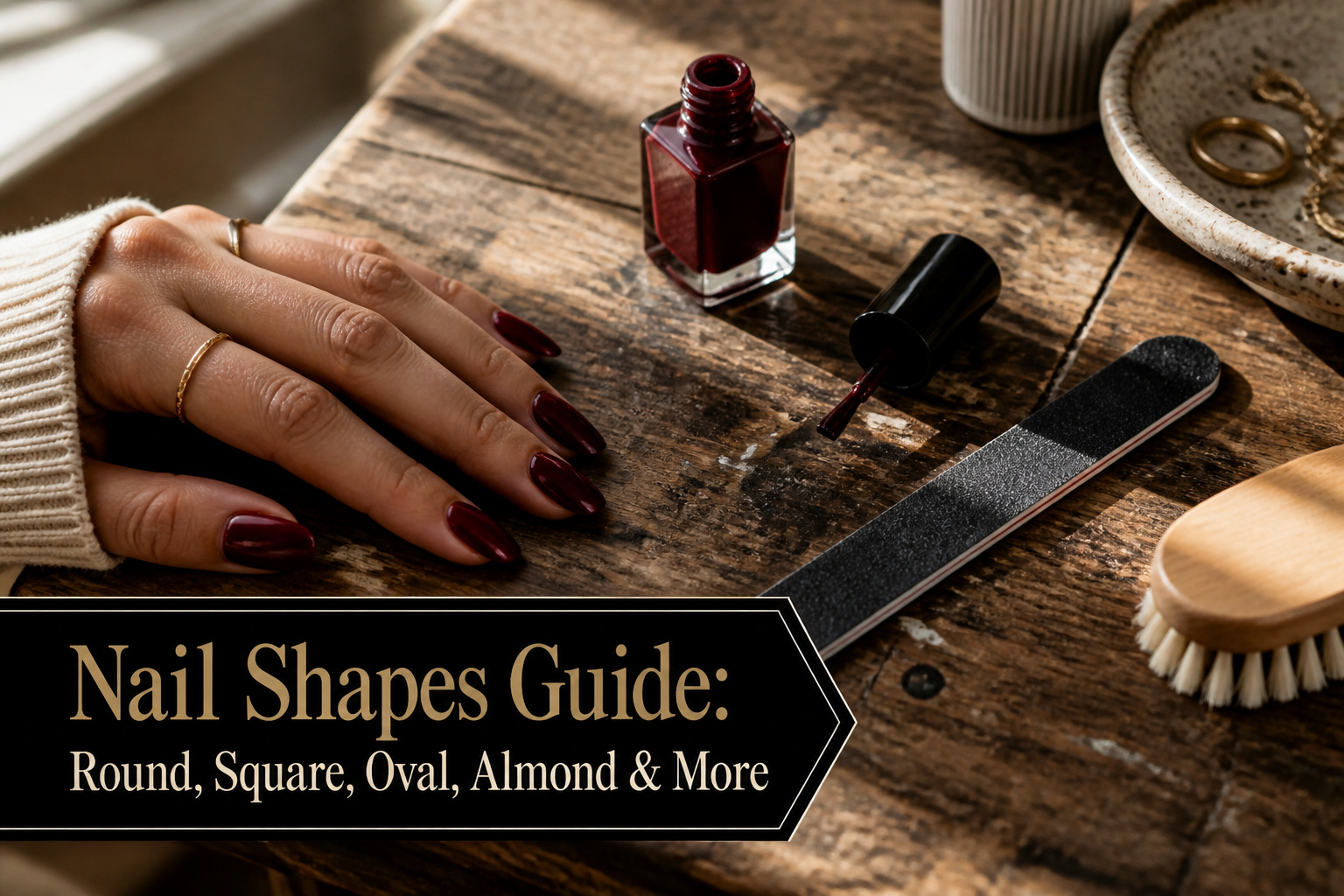
Nail shapes are the silhouette you file into your free edge, and that silhouette decides whether your manicure lasts a week or chips by Wednesday.
The strongest everyday choice follows your fingertip’s natural curve, while the sharpest points demand acrylic extensions and a tolerance for snagged sweaters.
Almond, coffin, and stiletto currently dominate salon menus, though the shape that trends on Instagram rarely matches the one you can type through on Monday morning.
Round Nails
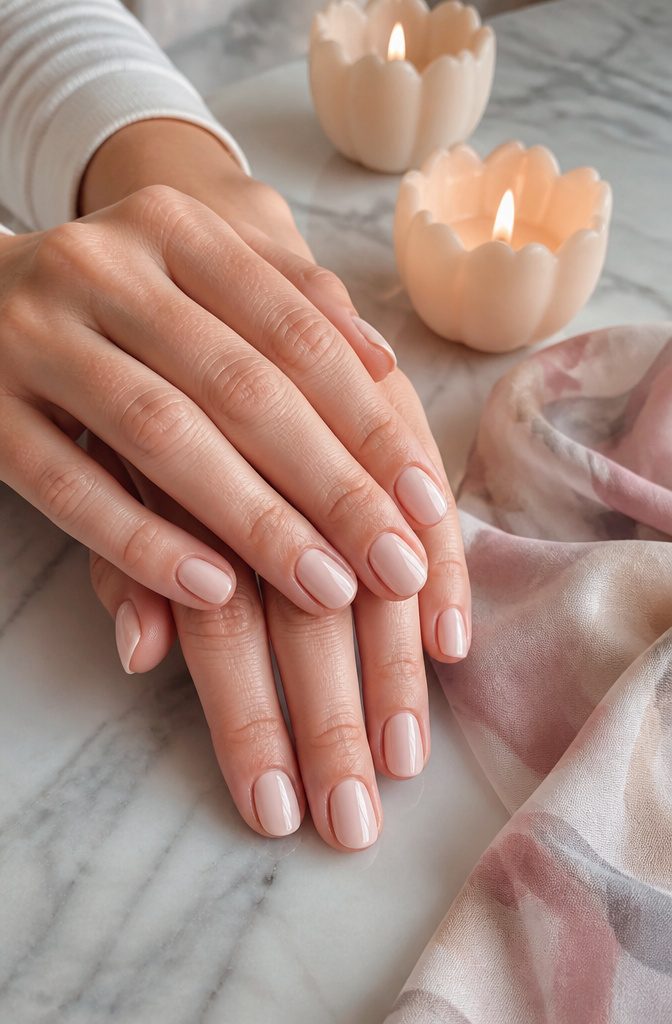
Round nails follow the natural curve of your fingertip, and that built-in obedience to biology is what makes them the strongest everyday shape you can wear.
I used to file mine into squared corners the minute they grew past the nail bed, then wonder why chips appeared by Wednesday. Once I let the edge stay curved, maintenance dropped to almost nothing.
Even when a nail catches on a drawer, you lose a millimeter of length and the shape survives.
This softness works on shorter nail beds in a way that louder shapes do not. The continuous curve creates the illusion of added length while drawing the eye away from width, so wider beds look balanced rather than blunt.
Shorter fingers appear more slender too, which is why I keep coming back to this shape when my polish sit calls for something that reads chic rather than attention-seeking.
Round nails whisper; they do not shout, and that restraint feels more expensive than it costs.
Square Nails
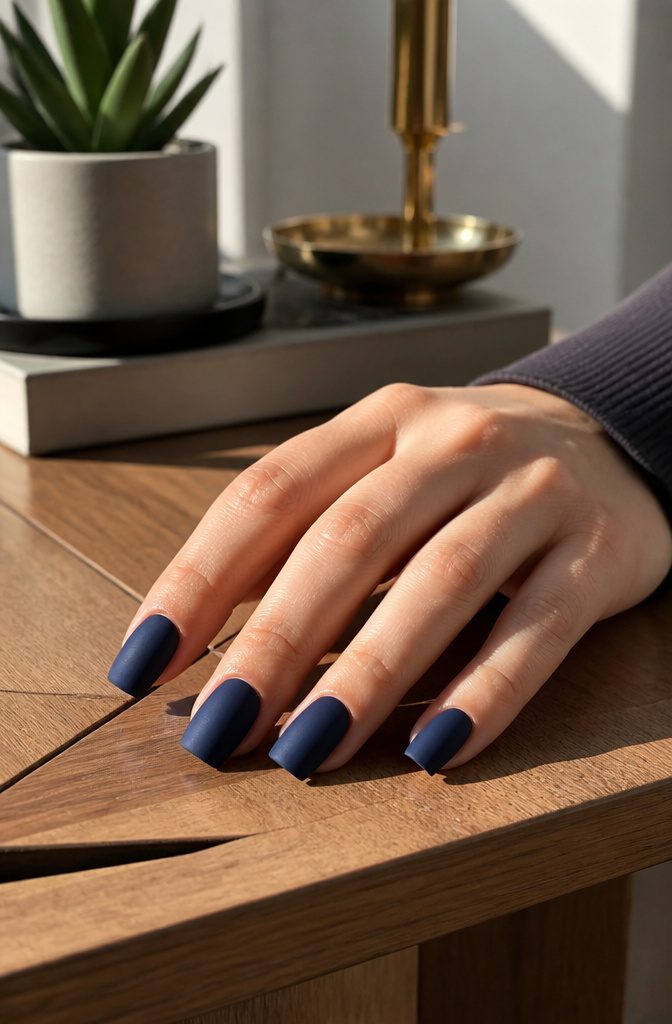
Square nails run straight across the top with sharp 90-degree corners that give them their crisp, architectural look.
The sides stay parallel from base to tip, which makes this shape one of the lowest-maintenance options in the lineup: file flat, check your line, and you’re done. No tapering, no rounding, no second-guessing the curve.
That same geometry is why the corners become weak points. If your natural nails tend to split or peel, the squared edge will catch on door handles, jean pockets, keyboard edges, everything.
The sources disagree slightly on whether modern square keeps those corners fully sharp or softens them just slightly to reduce the snagging; either way, the look stays bold and flat-topped rather than rounded in.
The shape adds visual width, so it balances long, narrow nail beds well. On shorter fingers or shorter nail beds, though, the horizontal line can make the whole hand look stubbier than it is.
I have made this mistake myself with short fingertips, and the effect is real. Strong nail beds are almost a requirement here; without them, the corners chip fast and the whole look goes ragged.
A clean square nail reads polished and professional, especially in solid colors or a French manicure where the flat top gives the white tip a graphic frame.
Just know what you’re signing up for maintenance-wise before you commit to those corners.
Oval Nails
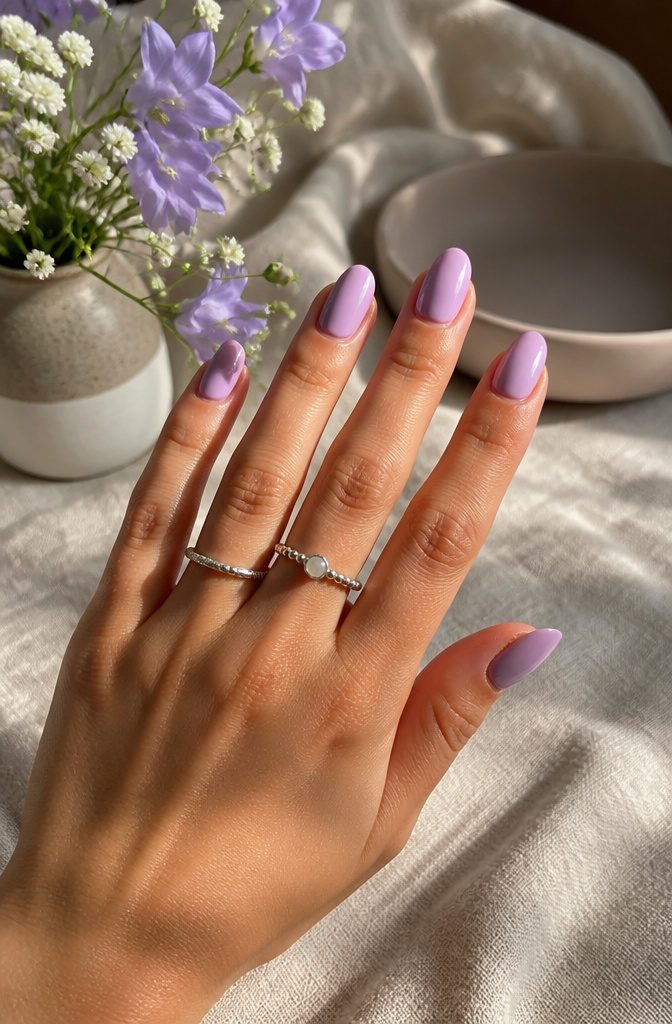
An oval nail keeps the curved free edge of a round nail but stretches it slightly, tapering the sides so the finger itself looks longer and slimmer.
The difference is enough to notice: round nails stop where the fingertip stops, while oval extends just past it, creating that elongated silhouette without the sharp point of an almond shape.
Maintenance is where the two shapes really split apart. Round nails forgive a quick file across the top; oval needs those sides tapered evenly or the whole hand looks lopsided.
The shape also demands more length to look intentional. File it too short and it reads as a round nail that got away from you, not a deliberate choice.
The payoff is balance. Wide nail beds look narrower with that side taper, and shorter hands gain proportion without veering into dramatic territory.
It is the shape I would suggest for a week where you type all morning and have dinner plans after, feminine without the high-maintenance reputation sharper shapes carry.
Almond Nails
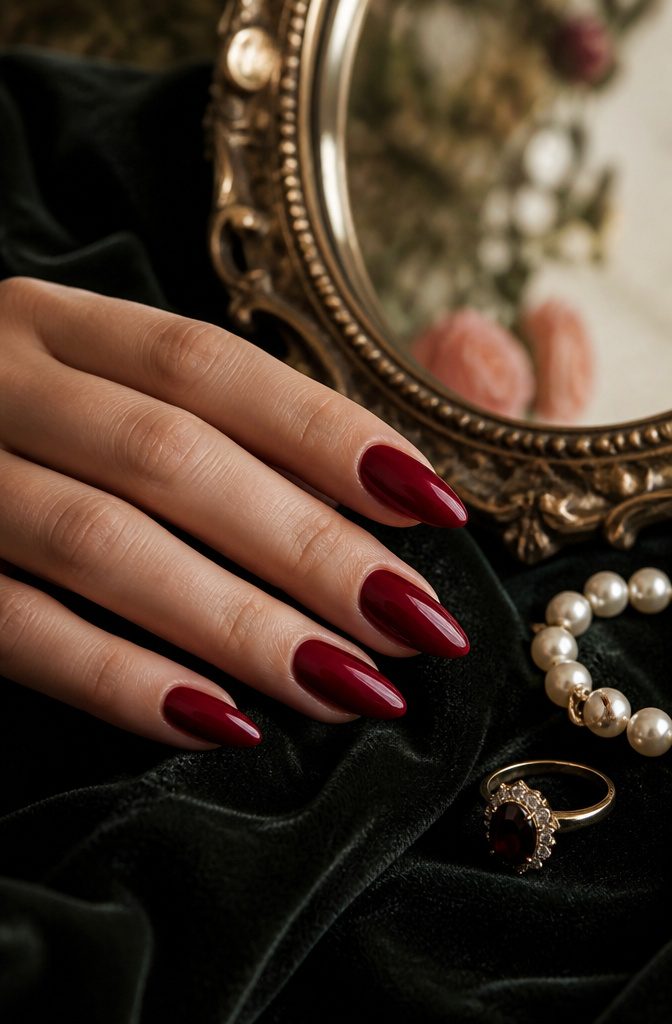
Almond nails taper to a soft point that draws the eye along the finger, and the effect is noticeably lengthening on hands that feel wider or shorter than they’d like.
Three different manicurists called this the most popular request they’re seeing right now, and it is easy to see why: the shape reads as expensive without reading as effort. The catch is breakage.
The same tapered sides that slim the finger also thin the nail wall, so corners chip if you’re rough on your hands or typing with purpose all day.
One artist put it plainly: they will break if you look at them wrong. Maintenance means filing the sides back into line every two weeks, minimum, or the whole silhouette goes blunt and strange.
European salons have favored this shape for years, and the American shift toward it tracks with the same move to lower-effort glamour in clothes: you want the look, not the labor.
If you can keep a standing appointment or handle a glass nail file yourself, the payoff in finger length is real. If not, a rounder shape keeps polish longer for less.
Coffin Nails
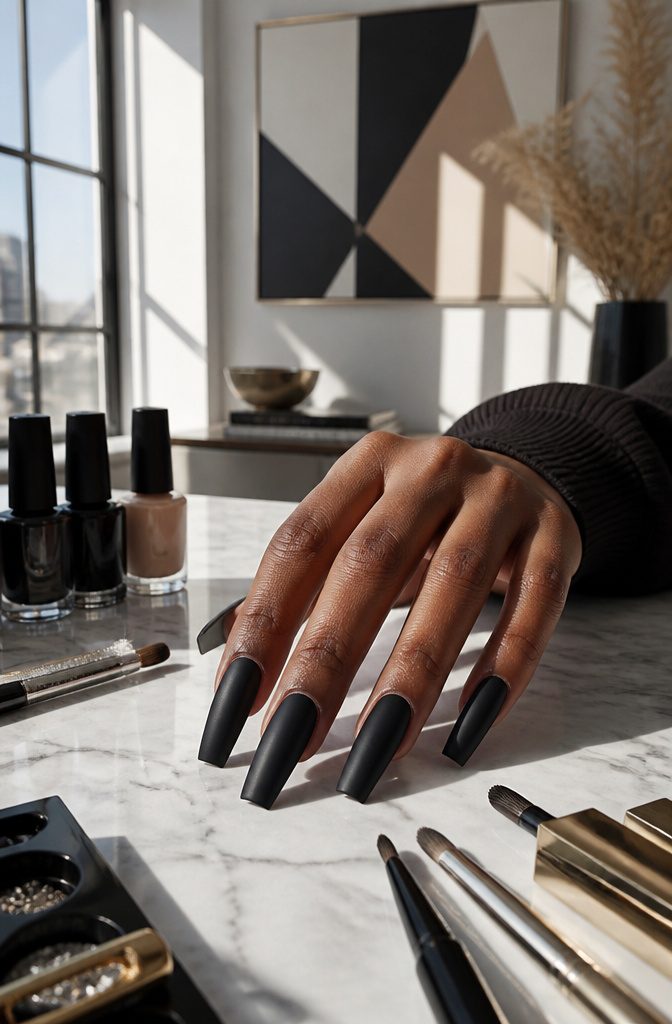
Coffin nails, also called ballerina nails, combine the tapered sides of an almond shape with a flat, squared-off tip that looks like a pointe shoe.
I’ve seen this shape take over Instagram feeds for good reason: the broad surface acts like a little canvas, so negative-space designs and ombré gradients actually show up instead of getting lost on a narrow nail.
The shape only works with length. Short nails crack too easily at the corners, and the taper needs enough runway to look intentional rather than accidental.
Most people building this shape need acrylic or gel extensions, not just natural growth, because the free edge has to carry the geometry without splitting.
Salon upkeep runs every two weeks if you want the lines crisp and the length even. Shorter nails can attempt the style, but the taper should stay subtle so the proportions don’t look off.
FILE each side lightly and alternate left-to-right so the angle stays symmetrical, then finish the tip edge either sharp or softly rounded, whichever reads cleaner against your cuticle line.
Stiletto Nails
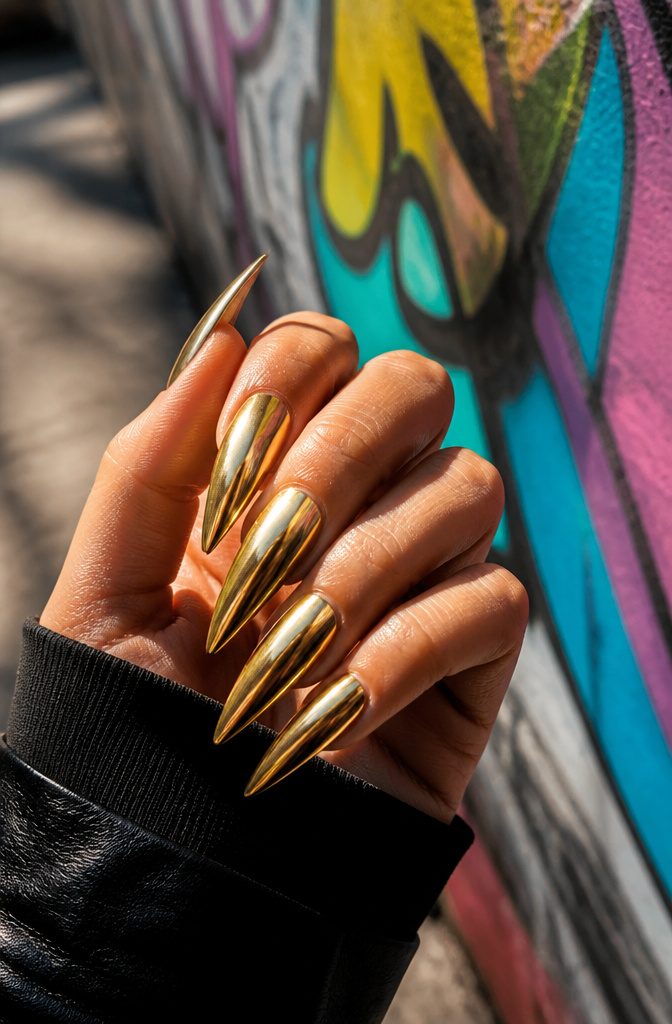
Stiletto nails taper to a sharp point dramatic enough to snag a sweater from across the room, which is partly the point.
The shape mimics the heel it is named for, long and spiked, and it reads as bold because it genuinely is.
What convinced me, reading through the sources, is that this is not a shape you grow from your own nail bed without trouble.
Extensions are the standard route, since natural nails at this length and point tend to split or break before the polish dries.
The maintenance lands at the top of the standard shapes. Stiletto demands length to read as stiletto rather than just slightly pointy, and that length makes every daily task a negotiation.
Typing, opening a can, even pocketing your phone requires adjustment. The payoff, for those who choose it, is the statement: sources tied this shape to personalities described as extroverted and trend-starting, the people who pick dare in truth-or-dare without blinking.
Lady Gaga and Rihanna made it famous; Khloé Kardashian, Saweetie, and Cardi B kept it current.
Color and art go loud on stiletto because quiet would waste the canvas. This is the shape for the boldest statement you can think of, not a nude wash that disappears.
Squoval Nails
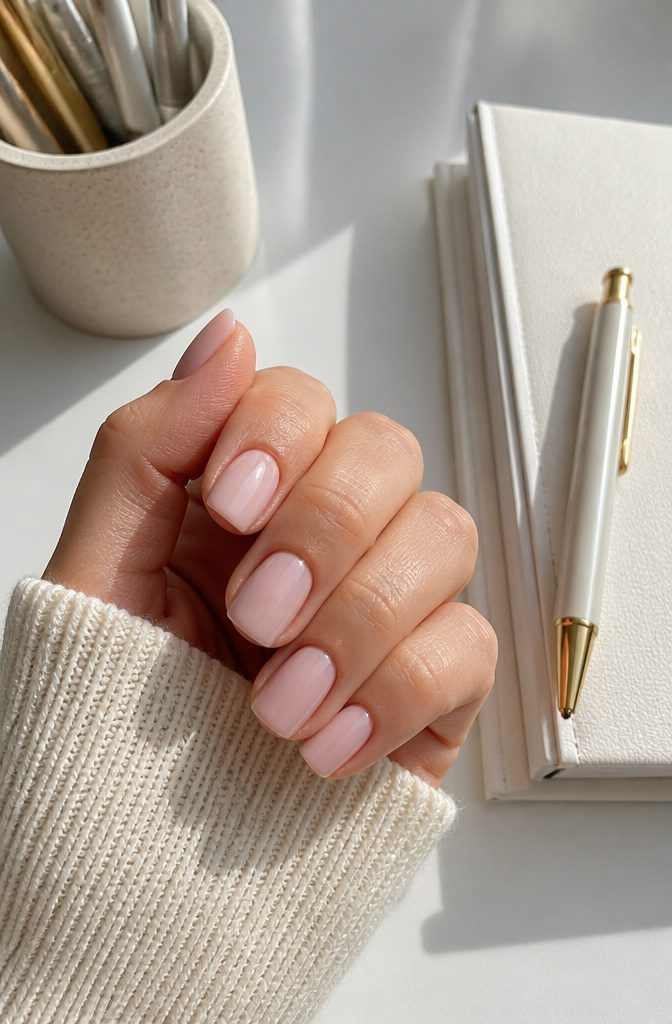
Squoval nails keep the straight free edge of a square shape but soften the corners into a gentle curve, and that small change is what makes this hybrid work for almost everyone.
The squared-off top still gives fingers a clean, elongated look, yet those rounded corners avoid the harshness that can widen shorter nail beds.
Deborah Lippmann calls it the most modern choice, and the shape holds up on both long and short nails without the high drama or high maintenance of pointier styles.
What convinced me, reading through the filing guides, is how forgiving the upkeep is: a few passes with the file straight across, then rounding off just the edges.
The mistake that ruins a squoval is filing back and forth in a sawing motion, which weakens the nail and eventually turns those soft corners into either full oval or accidental nubs. Lift the file with each stroke instead.
The practical payoff is real: squovals look polished in any color, keep their shape through daily wear, and barely register as a decision at all, which might be why they read as effortlessly elegant.
Lipstick Nails
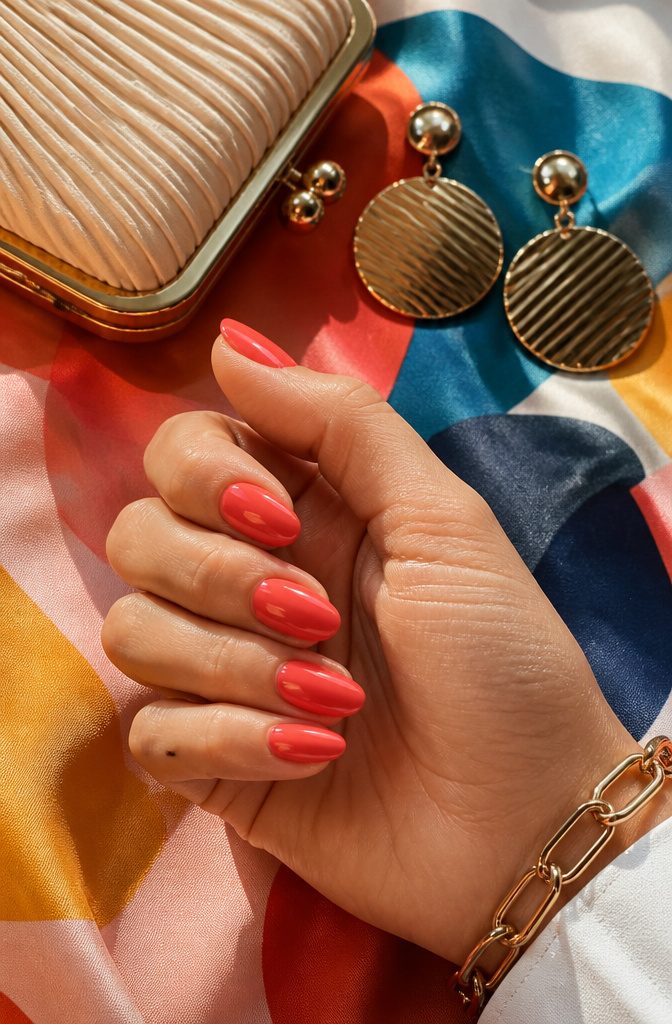
Only a couple of guides I found even mention lipstick nails, which tells you how niche this shape still is.
The look mimics a fresh tube of lipstick, with that angled, slightly slanted cut across the top rather than a straight-across square edge.
It reads as square from a distance, but the diagonal twist catches light differently and looks deliberately offbeat in a way that straight lines never quite manage.
The sources that do cover it frame lipstick nails almost exclusively around trendsetting, and that feels about right. This is the shape you pick when you want someone to ask about your manicure.
It works best on longer nails where the angle has room to show, and the asymmetry means one hand will always look a little different from the other at certain angles, which some people love and others will find maddening by day three.
Wearability is the tradeoff. The slanted tip is more prone to catching and chipping than a classic square, and not every nail tech has filed this shape enough times to get the angle consistent.
I would not book this for a week when I need my hands to look understated or professional; I would book it for a single event, a vacation, or a season when I want my nails to do the talking.
Matching Shapes to Hands
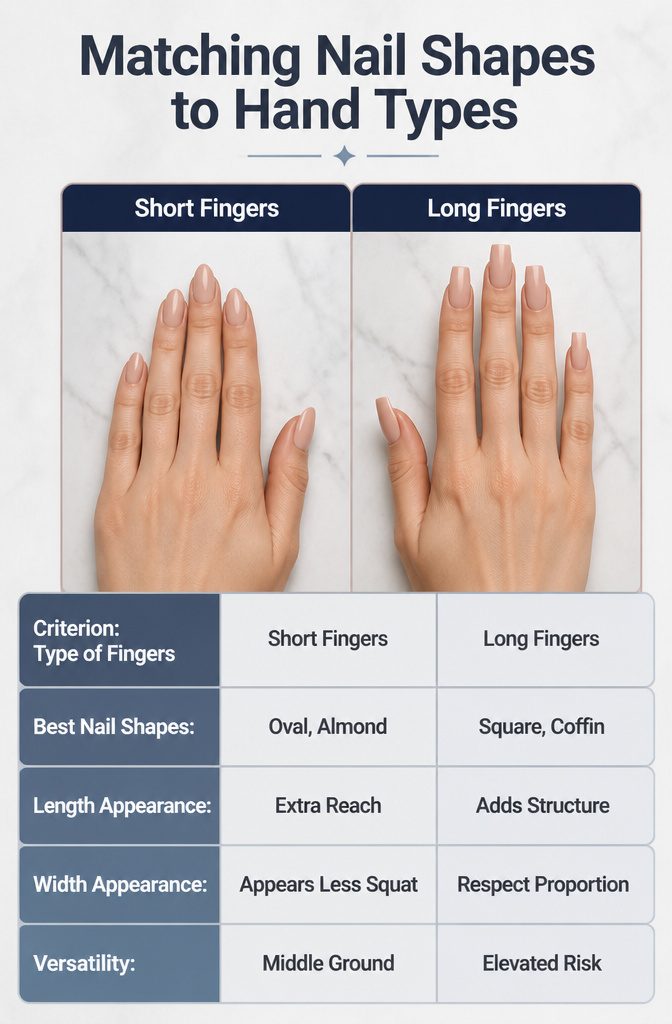
Short fingers disappear into oval and almond shapes more reliably than anything else I’ve tested. The tapering edge pulls the eye lengthwise, so the same hand looks like it has an extra knuckle’s worth of reach.
Round nails do something similar for width; filing to follow the natural fingertip curve, then flipping the hand to check symmetry, keeps a wide nail bed from looking squat.
I give that flip-check to everyone who asks what nail shape suits me and has felt boxed in by their own palms.
Long fingers carry square and coffin better because the blunt edge adds structure rather than exaggerating what is already there.
Slim hands in almond look like they are trying too hard, pulling narrow into needle territory, while square or oval respects the proportion already present.
The oval shape lands in the middle ground most often: slightly more tapered sides than round, longer in the tip, elegant without reading as costume.
Women with shorter hands and wider beds get the confidence hit of seeming reach they did not budget for.
Lifestyle and Maintenance
Round and square nails survive the weekday grind because they forgive a chip or a snapped corner, you can file down a little length and still keep the shape.
Stiletto and coffin demand more, they are a lifestyle choice, dramatic and high-maintenance, catching on zippers and keyboard edges until you learn to move differently.
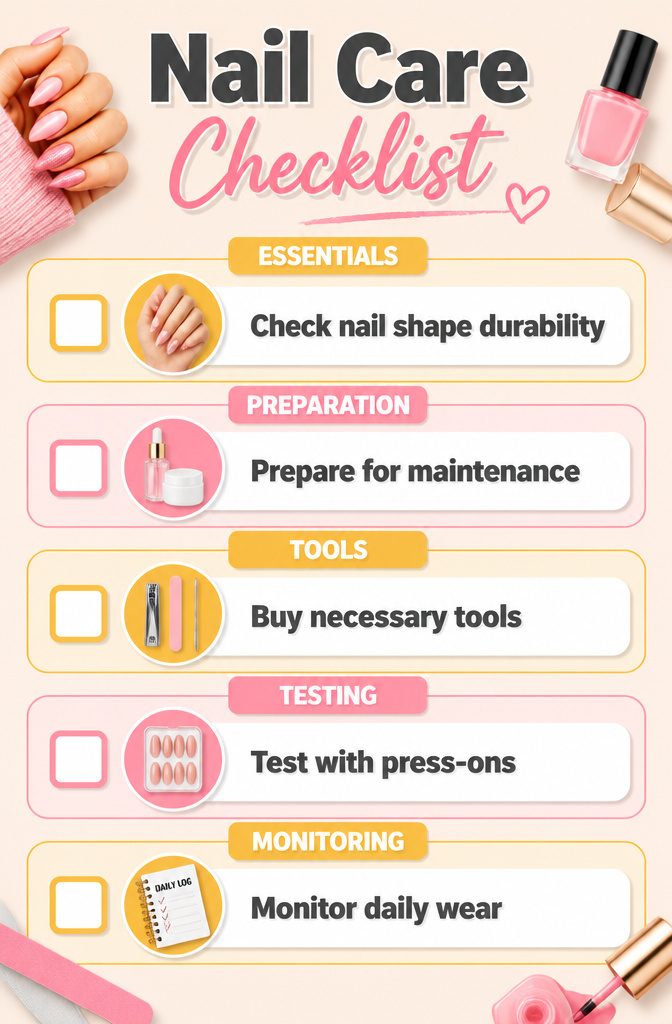
Three days is the minimum to know if a shape fits your actual routine. Press-ons let you test the commitment before your natural nails pay the price.
Notice what annoys you after wearing stilettos through a normal Saturday: the typing, the hair-washing, the fifth time you scratch your own cheek. If you are still in love, you have found your shape.
What Is Popular Now
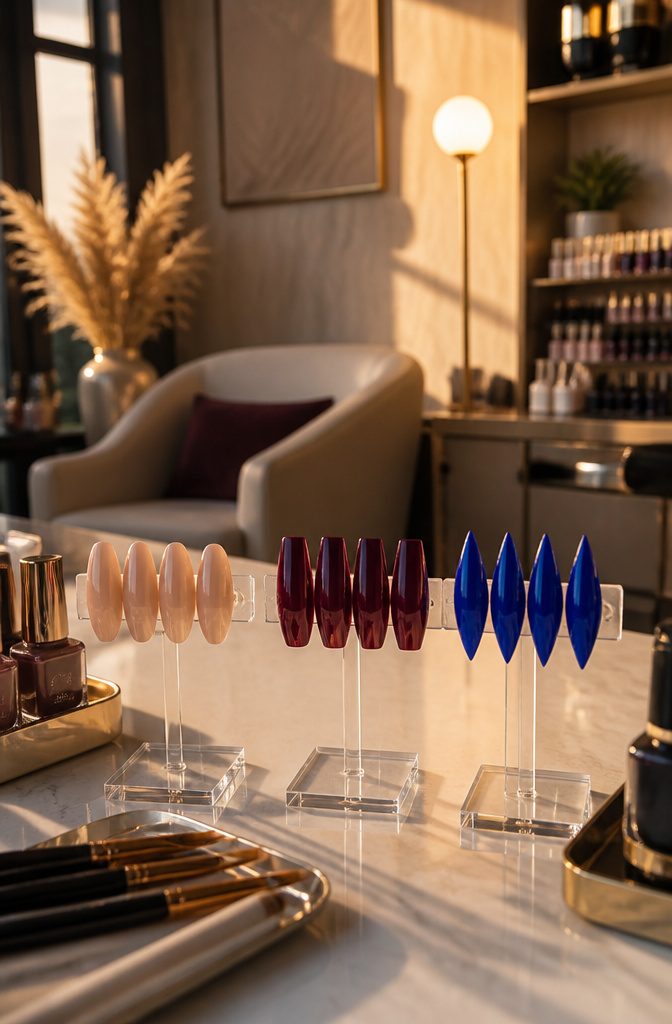
Right now, almond, coffin, and stiletto are the shapes dominating Instagram feeds and salon menus. Almond nails taper softly at the sides and come to a rounded peak, which visually lengthens fingers without the commitment of a harsh point.
Coffin nails, named for their straight-across tip and tapered sides, read as edgier and usually demand longer nail beds and slimmer fingers to look balanced.
Stiletto takes that drama further with a sharp point that channels Lady Gaga and Rihanna energy but risks chipping if your job involves typing all day.
What surprised me, looking at what actually gets booked, is how little trend alone decides the outcome.
A nail artist can file the trending shape, but the hand wearing it still has to live with the result through two weeks of dishes, emails, and whatever else Tuesday holds.
The people who stay happiest with their manicures treat popularity as one data point and their own nail bed width, finger length, and tolerance for upkeep as the others.
So if a shape is everywhere this season, notice it and let it inform you. Let it override your own fit only if you enjoy the maintenance more than you mind the compromise.
Testing Before Committing
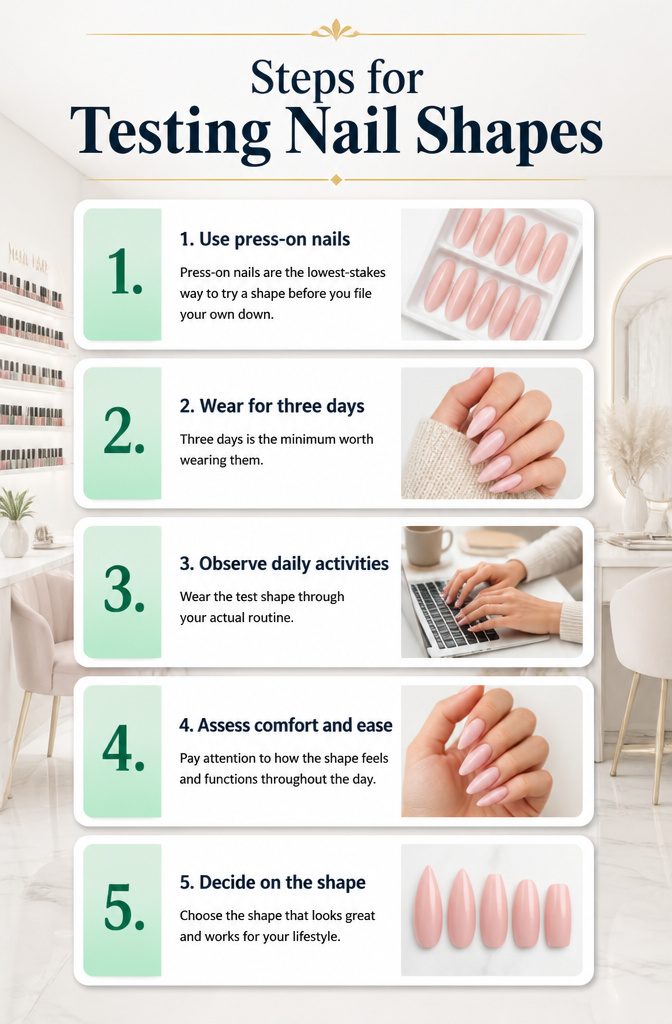
Press-on nails are the lowest-stakes way to try a shape before you file your own down.
A weekend of wearing stiletto press-ons through normal activities reveals pretty quickly whether you’re someone who will fall in love with the drama or just end up scratching yourself for the fifth time and giving up.
Three days is the minimum worth wearing them; anything shorter and you won’t catch the annoyances that actually matter, like whether you can still type or if the tips catch on everything you own.
Nail caps and temporary extensions work too if press-ons feel too thick or obvious. What matters across all three methods is that you’re testing something you can peel off, not something that needs acetone and patience to undo.
The cost of a bad shape choice drops from weeks of growing out damaged nails to the price of a single set you throw away.
Wear the test shape through your actual routine, not just a dinner out where the lighting flatters everything.
The shape that looks stunning in a photo and the shape you can live with through a Monday of emails and packed lunches are rarely the same thing.
Frequently Asked Questions
What nail shape suits me?
The best nail shape depends on your finger length, nail bed width, and how much upkeep you will tolerate.
Short or wide hands usually look balanced with round, oval, or almond shapes because the curved or tapered edges draw the eye lengthwise.
Long, narrow fingers carry square and coffin shapes better, since the blunt edge adds structure rather than stretching what is already slim.
Match the shape to your actual routine, not just the mirror: a stiletto that photographs well can chip by Tuesday if you type all day.
How do I choose the best nail shape for my hands?
Start by measuring your nail bed width and finger length against the shape you are considering.
Round nails follow your natural fingertip curve and need almost no maintenance; oval and almond taper the sides to make fingers look longer but demand more filing to stay even.
Square and coffin shapes add visual width, so they work best on longer nail beds where the flat top does not crowd the finger.
Test any unfamiliar shape with press-ons for at least three days of normal activity before you commit your natural nails.
What are the most popular nail shapes right now?
Almond, coffin, and stiletto dominate Instagram feeds and salon menus heading into 2026. Almond nails taper to a soft point that lengthens fingers without the fragility of a full stiletto.
Coffin nails, also called ballerina nails, pair tapered sides with a squared-off tip and usually require acrylic or gel extensions to carry the geometry.
Stiletto nails push the drama further with a sharp point that reads bold but catches on almost everything and needs extensions to survive.
Popularity helps you notice a shape; your own hand proportions and patience for upkeep should decide whether you book it.