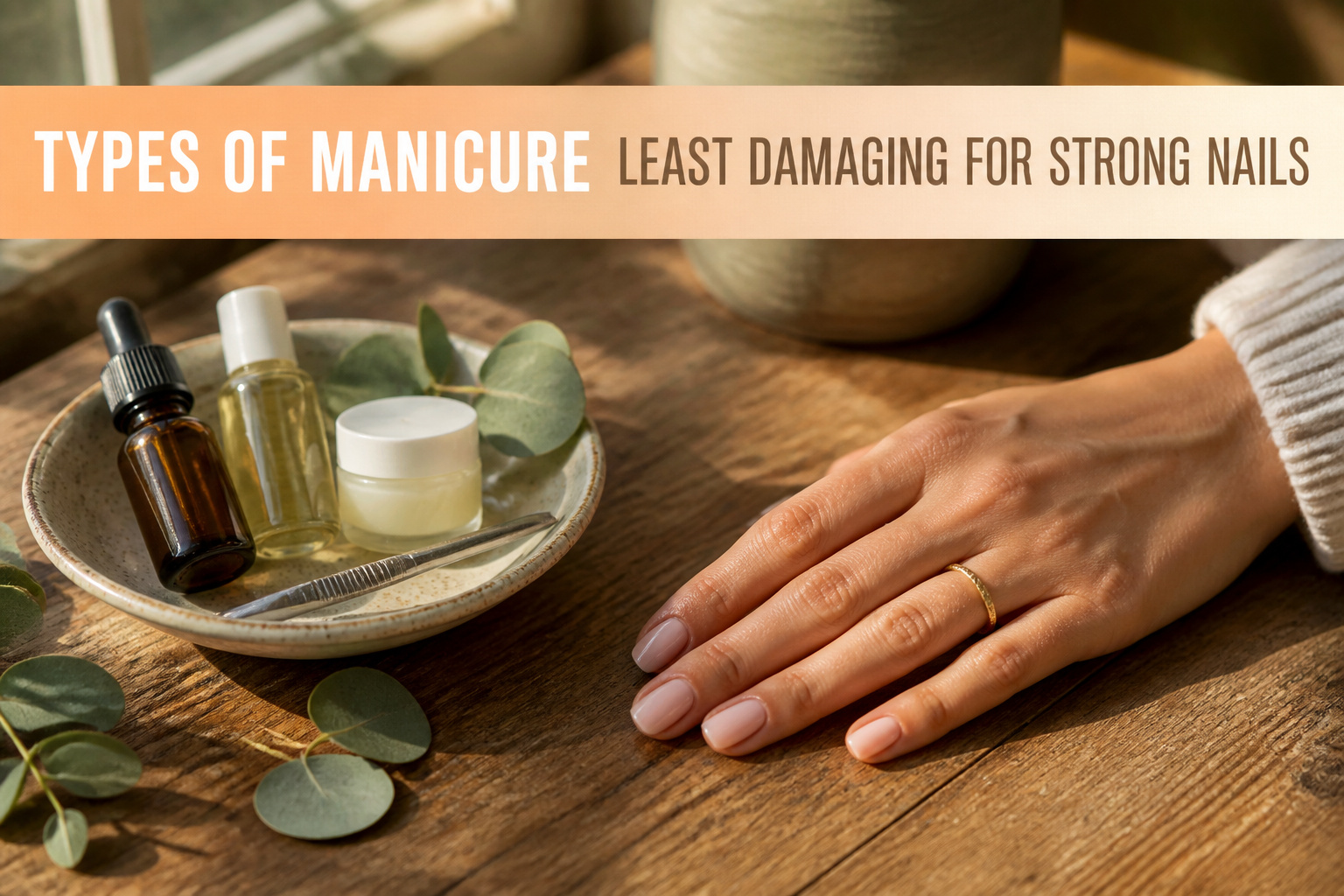
The type of manicure least damaging for strong nails is whichever one you remove properly.
Gel, acrylic, and dip powder all coexist with healthy nails if you soak the product off instead of peeling it, but that patience adds ten to fifteen minutes most people skip.
BIAB builds the most strength with the least filing, yet it still demands the same gentle takedown.
1. Classic Air-Dry Polish
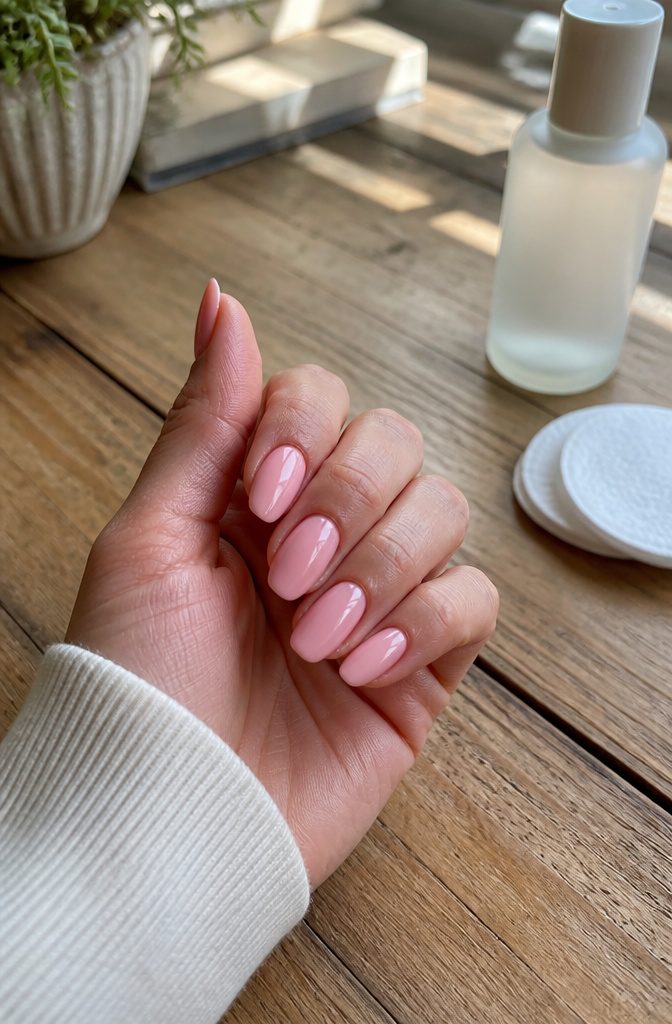
Classic air-dry polish sits at the top of the list for one simple reason: it asks almost nothing of your nail plate.
No UV lamp cures the layers, no acrylic powder bonds to the surface, no aggressive adhesives grip the free edge. The polish simply pigments and seals, then lifts away with non-acetone remover when you are done.
That minimal contact translates to the gentlest daily option for nails that are already thin or splitting, which is why most nail techs start here when a client’s nails need a break.
The tradeoff arrives fast. Most chips appear within three to five days, sooner if you type hard or wash dishes without gloves.
The short wear means you remove and reapply often, and that cycle can stress struggling nails more than the polish itself. For that reason, traditional polish works best as a temporary reset, not a long-term solution.
A little balm and gentle care every day will do more for your nails than any quick-fix enhancement.
— Vogue
The cuticle hydration matters as much as the polish choice. Layering color on dry, cracked nail beds only highlights the damage underneath.
2. Buffed Manicure
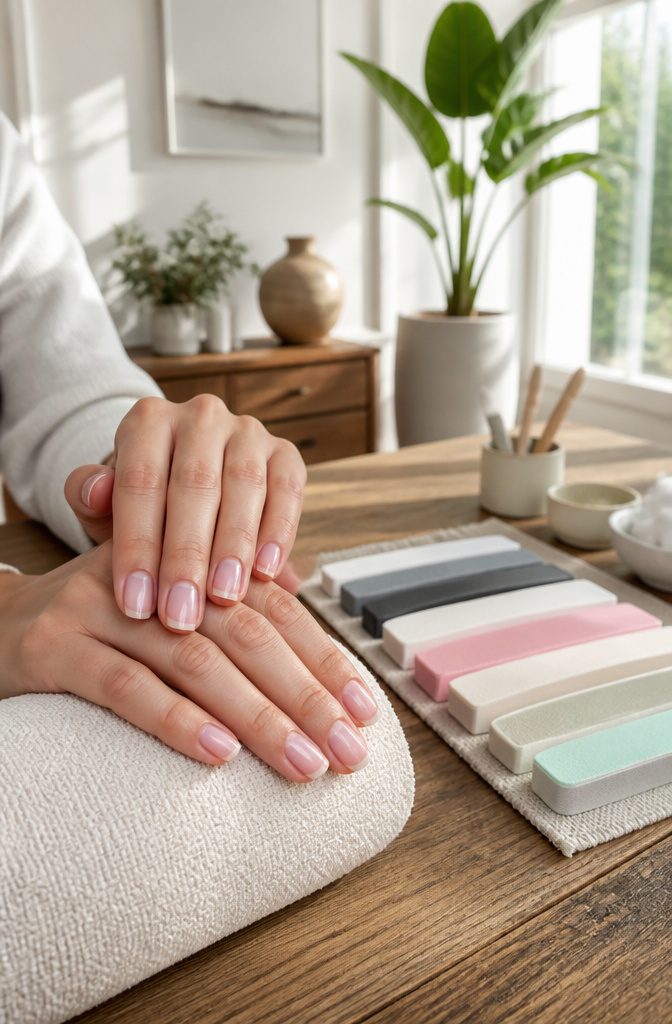
Buffing removes nothing but the uneven surface of the nail itself.
A technician works through progressive grits, smoothing ridges and dull spots until the natural plate catches light like a clear top coat, no polish required. The finished nail stays bare, glossy, and flexible.
Experts steer brittle or weak nails toward this option specifically because the process stimulates the nail bed without introducing adhesion, curing lamps, or soak-off removers. The only threat to recovery gets removed entirely.
The catch is upkeep at home.
A hydrating cuticle treatment applied daily does the heavy lifting between appointments, and a small buffing kit kept in a drawer extends the shine. Go without that consistency and the nails revert to their previous state fast.
For anyone who wants color, a strengthening base coat with a slight tint adds the healthy sheen plus a layer of encouragement for growth.
The buffed manicure works as both a reset and a long-term strategy; it just demands patience most other types of manicure don’t ask for.
3. Gel Manicure
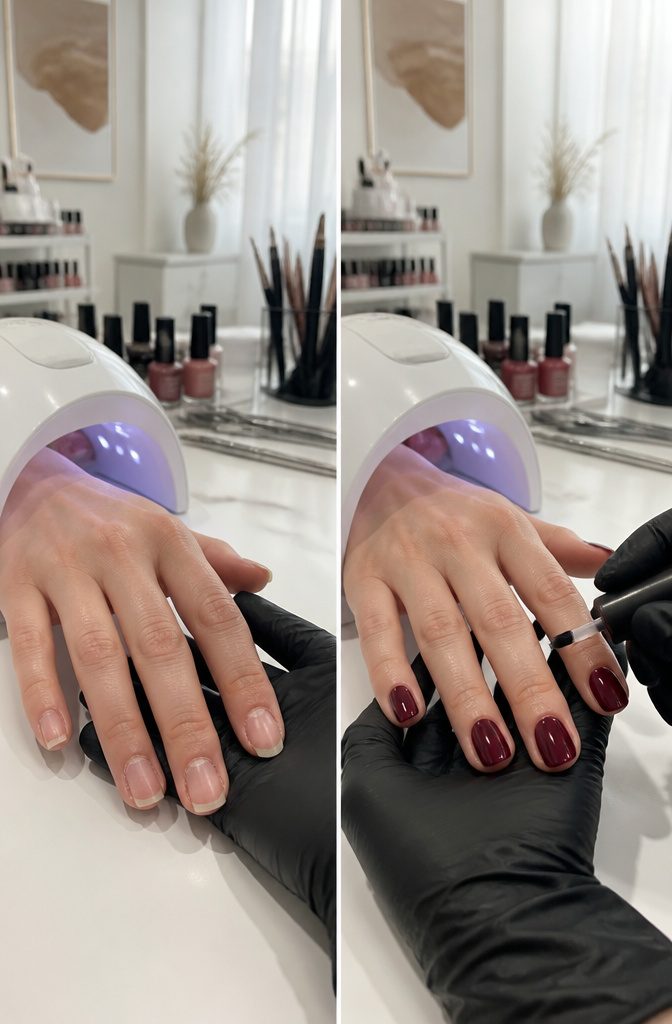
A gel manicure cured under UV light lasts two to three weeks, which is the main reason busy women keep coming back to it.
The polish system layers a base coat, optional builder, color, and top coat, each hardened under the lamp in a process that takes about an hour from start to finish.
The UV exposure is real, though. I used to skip this step until I saw the research on hand aging; sunscreen or fingerless gloves before your hands go under the lamp is non-negotiable now.
Gel strengthens nails only when applied and removed properly. The protective layer does the work during wear, but the removal process is where the damage happens.
Acetone soaking takes ten to fifteen minutes to melt the gel so it lifts without force. Peel or scrape it off and the nail plate comes with it, leaving weakness that compounds over every cycle.
Compared to acrylics, gel is generally less damaging when removed correctly.
Acrylic removal involves filing the product down, which thins the natural nail underneath no matter how careful the technician is. Gel skips that aggressive filing if you stick to the soak-and-lift method.
4. Soft Gel and BIAB
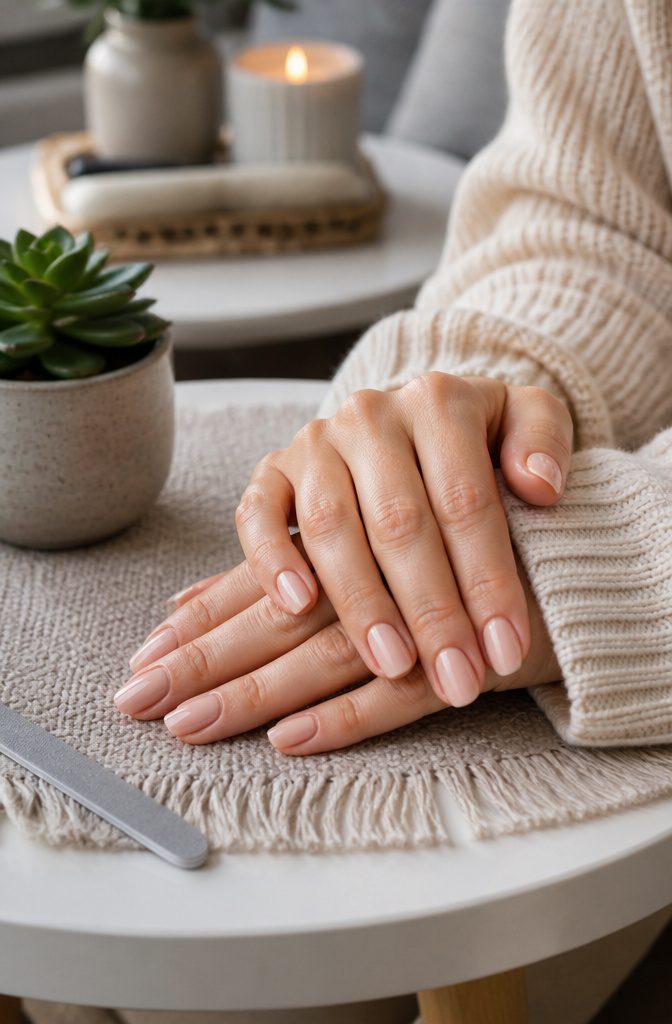
Builder in a Bottle, or BIAB, lands in a sweet spot between polish and structural gel.
The self-leveling formula strengthens weak or damaged nails with far less filing than traditional gel requires, which matters because every pass of the file thins the natural plate.
Where hard gel overlays add a rigid layer on top, BIAB works more like rebuildable scaffolding; it bonds to the nail while still flexing enough to move with it.
A BIAB manicure lasts three to four weeks, comparable to standard gel, and can be worn nude or layered under color. The catch is removal.
Proper takedown demands soaking and gentle lifting, not peeling, so budget extra appointment time or learn to do it patiently at home. Skip that step and the strength benefit disappears into splitting and white spots.
For hands that see water, chemicals, or typing marathons, keep cuticle oil within reach and gloves within arm’s reach. BIAB thrives on hydrated nails.
5. Dip Powder Nails
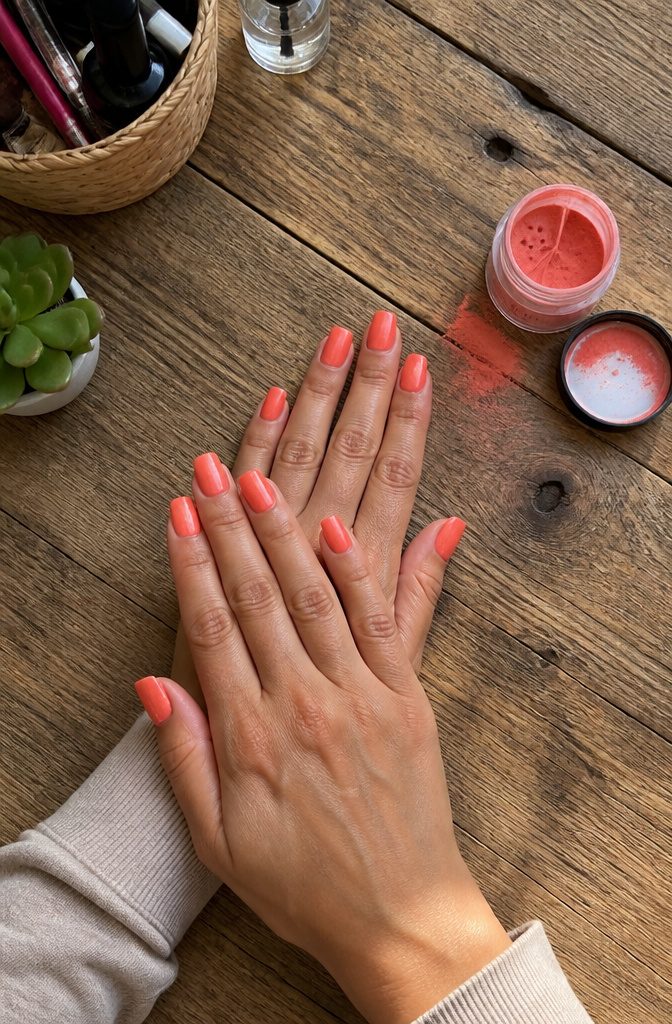
A dip powder manicure lasts three to four weeks, which is longer than most other options, but the removal process is where damage actually happens.
The nail gets a base coat, then is dipped into pigmented powder or has powder sprinkled over it, then sealed with activator and topcoat. No UV or LED lamp is required, which some people find easier on the hands.
What convinced me, reading through how salons handle this, is that soak-off removal matters more than the application itself.
Acetone soaking is the only way to dissolve the bond, but aggressive filing beforehand, too long in the acetone, or peeling the dip off once it lifts will strip layers from the nail plate. Moisturizing after removal is non-negotiable.
The shared powder containers are the other concern. Dipping multiple fingers into the same jar is one approach; sprinkling powder from a separate vessel onto each nail is the cleaner one and worth asking for.
Back-to-back dip applications without a break leave nails dry and thin, even when removal is done correctly.
6. Traditional Polish Wraps
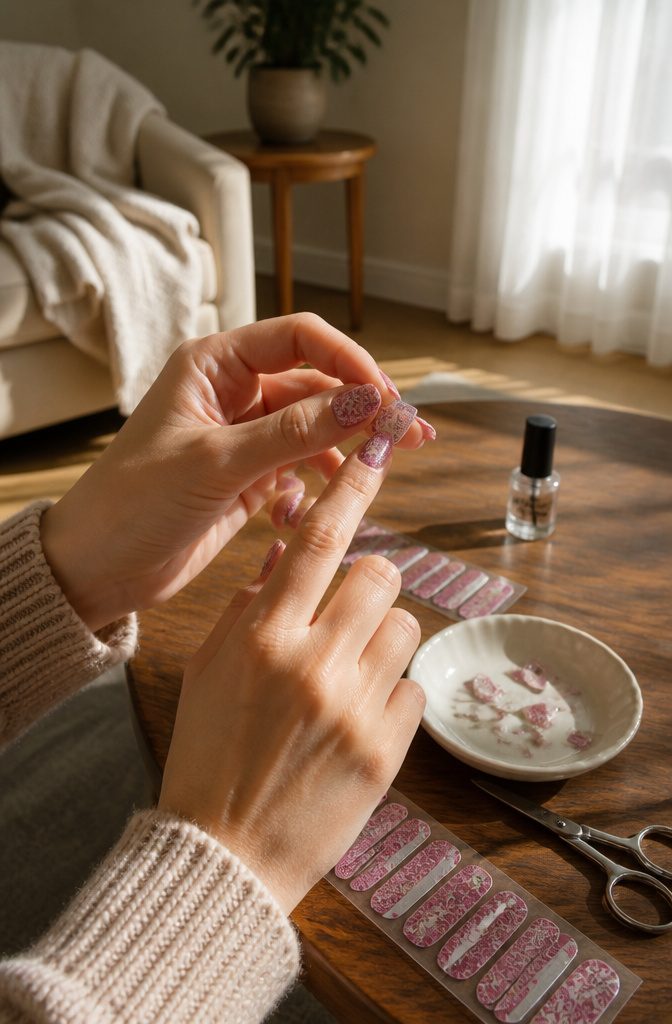
Pre-made strips made from real nail polish changed how I think about quick manicures.
You peel one off the backing, press it onto the nail, and seal it with a top coat. No dryer needed, no smudging, and no acetone to strip the nail plate when you’re ready for something new.
The strip itself lasts about seven to ten days, which is shorter than gel but without the soak-and-scrape cycle that thins nails over time.
Removal is completely solvent-free; you lift the edge and peel it away, the same motion you’d use for a press-on sticker. That gentler process matters more than I used to realize.
Repeated acetone soaks draw out the natural oils that keep nails flexible, and even careful scraping after a long soak leaves micro-layers of keratin behind. These wraps sidestep both problems entirely.
For anyone whose nails have already been weakened by gel or acrylic cycles, the tradeoff feels clear: you give up the two-week wear time, but you stop the cumulative damage at the removal stage.
7. Dazzle Dry
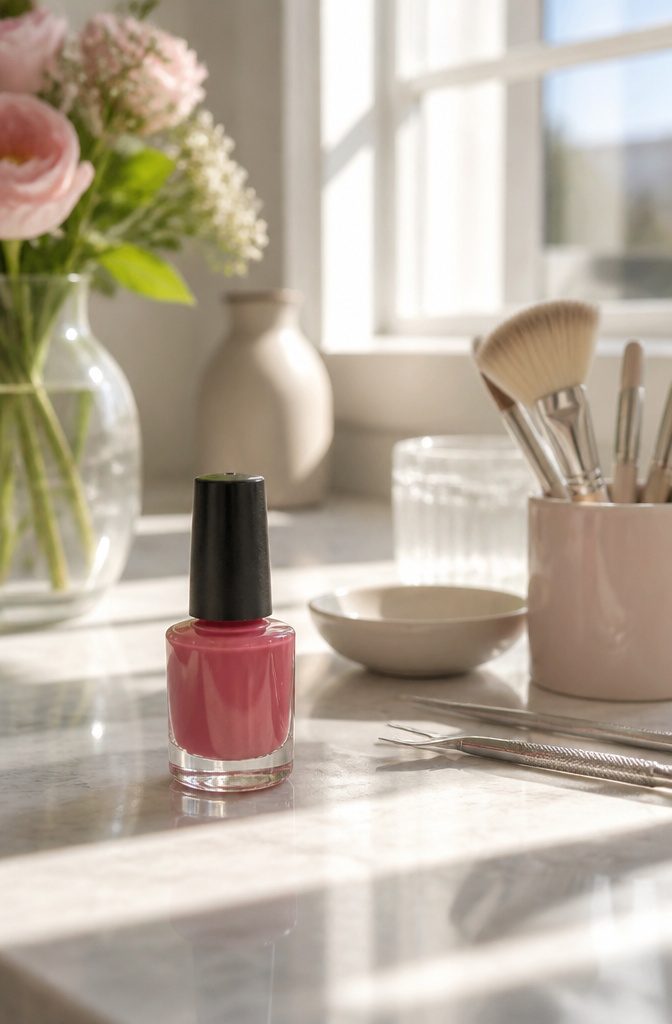
A bottle of Dazzle Dry sits on my desk right now because I kept reading its name in every roundup of the type of manicure least damaging for strong nails.
The formula skips nitrocellulose, formaldehyde, camphor, and toluene entirely, which matters more than I expected once I started checking labels on ordinary polish.
What drew me in was the vitamin-enriched base coat: it is designed to strengthen nails while the color sits on top, not weaken them underneath.
The drying time is genuinely fast. Five minutes under a fan hardens the finish to a smudge-proof surface, and that claim held up when I tested digging through a purse immediately after.
The vegan formula lasts up to four weeks with ordinary wear, putting it in rare company among polishes built to be less damaging rather than simply less toxic.
I still feel skeptical of any polish promising nail health, but this one at least puts the vitamins in the base layer where they contact the nail plate directly rather than treating non-toxic color as the same thing as fortifying it.
What Damages Nails During a Manicure
Peeling off a chipped gel manicure in front of the TV last October taught me exactly how fast a nail plate strips.
The top layer came away with the polish, leaving white patches that took three weeks to grow out. That physical removal, more than the manicure type itself, is where most damage starts.
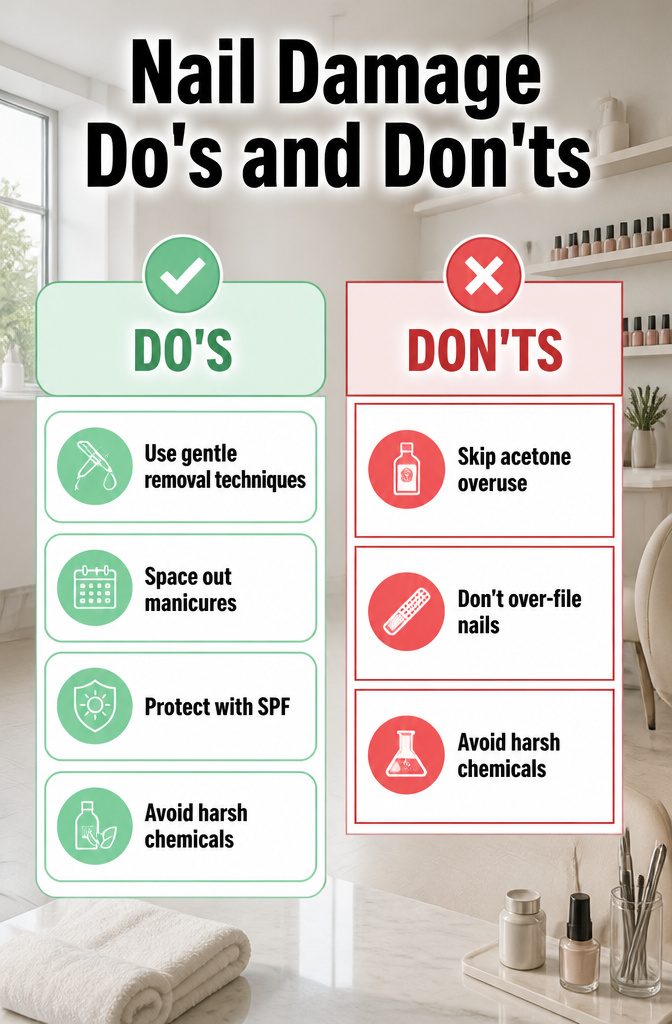
Harsh removal techniques rank first because they tear away keratin layers the nail needs for thickness.
Soaking in acetone is gentler than picking, but even repeated acetone soaks dry the nail plate and the skin around it by stripping natural oils.
Sources note that more removal cycles equal more damage overall, which is why spacing manicures out helps only if the removal method itself changes.
Over-filing or buffing thins what remains. Each pass of the file removes material that does not grow back in that spot; the nail becomes flexible, then fragile, then prone to splitting at the free edge.
UV exposure during gel curing damages too, particularly the skin on hands and around cuticles. Without SPF protection, repeated sessions under those lamps stress tissue that protects new nail growth.
Strong chemicals finish the list. Acetone, adhesives, and low-grade products in some dip powders or acrylics weaken the nail bed with repeated exposure.
The chemical load matters as much as any single appointment, which is why switching to formulas that lift with oil alone, or cure without UV, changes the long-term math.
Why Proper Removal Changes Everything
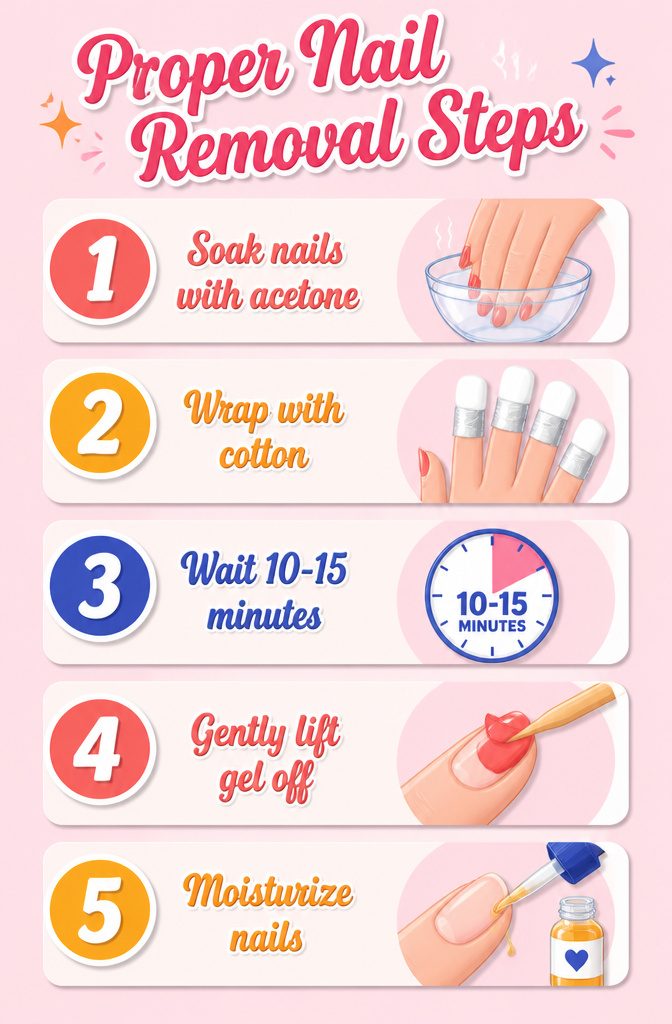
The manicure itself rarely causes the real damage. Gel polish, acrylics, and dip powder can all coexist with healthy nails if you break one habit: peeling the product off instead of soaking it off.
I learned this the hard way after watching a friend pick at her gel edges until the nail plate came up with the color.
The acetone soak feels tedious, but ten to fifteen minutes wrapped in remover-soaked cotton breaks the bond without stripping healthy layers underneath.
Skipping that patience reverses everything the right type of manicure least damaging for strong nails was supposed to protect.
Acrylic removal is harder to fix.
Filing down the product thins the natural nail no matter how careful the technician, so the cycle of weakness keeps feeding itself. Dip powder splits the difference, still needing acetone but sparing you aggressive filing.
Gel sits in the middle ground, which is why the soak matters so much. UV curing gets blamed often, yet prolonged acetone exposure and improper lifting do the actual harm.
Soft lifting after a full soak, not force, is what separates a harmless manicure from one that leaves you with brittle nails two weeks later.
Non-Toxic Polish Options Worth Knowing
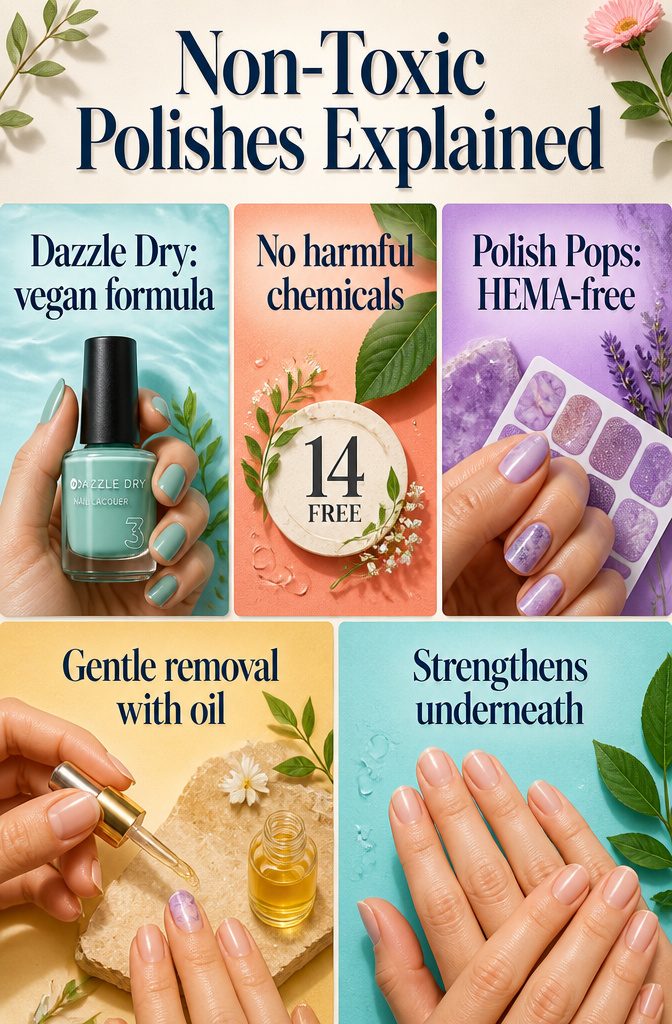
Traditional polish formulas rely on a cocktail of hardeners and solvents that leave nails brittle over time.
Dazzle Dry skips the nitrocellulose, formaldehyde, camphor, and toluene that standard polishes lean on, replacing them with a vitamin-enriched base that actually conditions while it colors.
The formula is vegan, if that matters to you, but the real draw is that the nails stay stronger and clearer underneath instead of yellowing or splitting.
Polish Pops takes a different route entirely. Their wraps are 14-free and HEMA-free, meaning they sidestep the acrylic monomers and common allergens that trigger reactions in salon gels and dips.
No acetone soaking, no filing down the nail plate, no harsh removal at all: they lift off with cuticle oil. For someone rebuilding nail strength, that matters more than wear time, which is where non-toxic polish often falls short.
Traditional polish is gentler than gel or acrylic, but the constant repaint-and-remove cycle still wears on fragile nails. Wraps cover and protect while they recover instead of stripping them down every two weeks.
How I Choose Based on Nail Condition
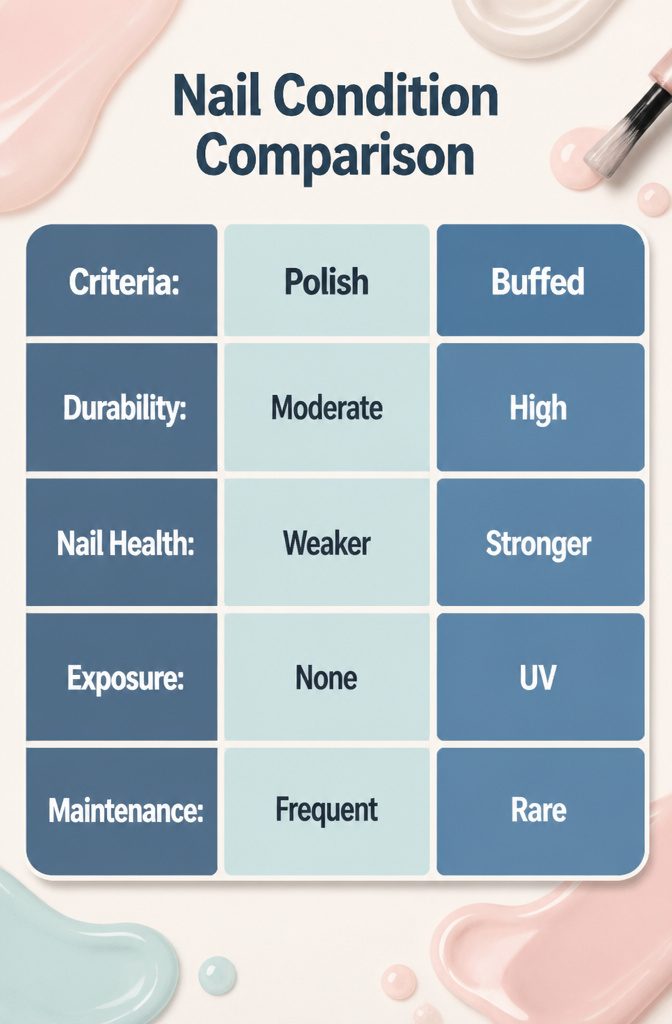
Weak nails changed the calculus for me this past winter. Three weeks of press-on tips left mine splitting at the free edge, so weak or brittle nails point back toward classic polish or a buffed manicure until the plate recovers.
The buffed option, worked with progressive grits, smooths surface imperfections without any sealant that traps moisture out. Pair it with daily cuticle balm and the nail bed gets the circulation and hydration it actually needs.
Stronger nails that hold length open up different choices. Soft gel, including BIAB, lasts three to four weeks and adds structural support if your job or habits chip regular polish within days.
Dip powder offers comparable durability without UV exposure, though soaking it off in acetone will dry the plate.
The damage I feared most came from back-to-back applications and rushed removal, not the product itself. Space either out, moisturize aggressively after acetone, and the same manicure type sits on the healthy rather than harmful side of the line.
Frequently Asked Questions
What’s the healthiest manicure?
The healthiest manicure celebrates and protects the natural nail rather than covering it up.
A traditional natural manicure, buffed with progressive grits to a mirror-like shine, stimulates blood flow to the nail bed and encourages stronger growth. Pair it with daily cuticle serum or balm to lock in moisture and nourish the surrounding skin.
Which manicure lasts the longest without damaging nails?
Dip powder typically lasts the longest at three to four weeks, but the removal process determines whether it stays gentle.
Acetone soaking dissolves the bond without force; peeling or aggressive filing beforehand strips layers from the nail plate. Moisturizing after removal and spacing out applications keeps the damage minimal.
Can frequent manicures damage my nails?
Frequent manicures do not damage nails when done professionally with breaks between applications and proper removal every time.
The real harm comes from peeling off product, over-filing, or repeated acetone soaking that strips natural oils. Spacing appointments and changing removal habits matter more than how often you visit the salon.
What manicure type should I choose if I have weak, brittle nails?
A natural buffed manicure using progressive grits is the best starting point for weak or brittle nails.
The process smooths surface imperfections and stimulates the nail bed without introducing adhesives, curing lamps, or soak-off removers. Follow with daily hydrating cuticle treatment; that consistent care rebuilds strength faster than any enhancement.
Are gel nails healthier than acrylics?
Yes, gel nails are generally less damaging than acrylics when removed properly. Gel lifts away with acetone soaking and gentle scraping, while acrylic removal requires filing the product down, which thins the natural nail underneath regardless of technique.
The protective layer gel provides during wear also helps, but only if you resist peeling it off.