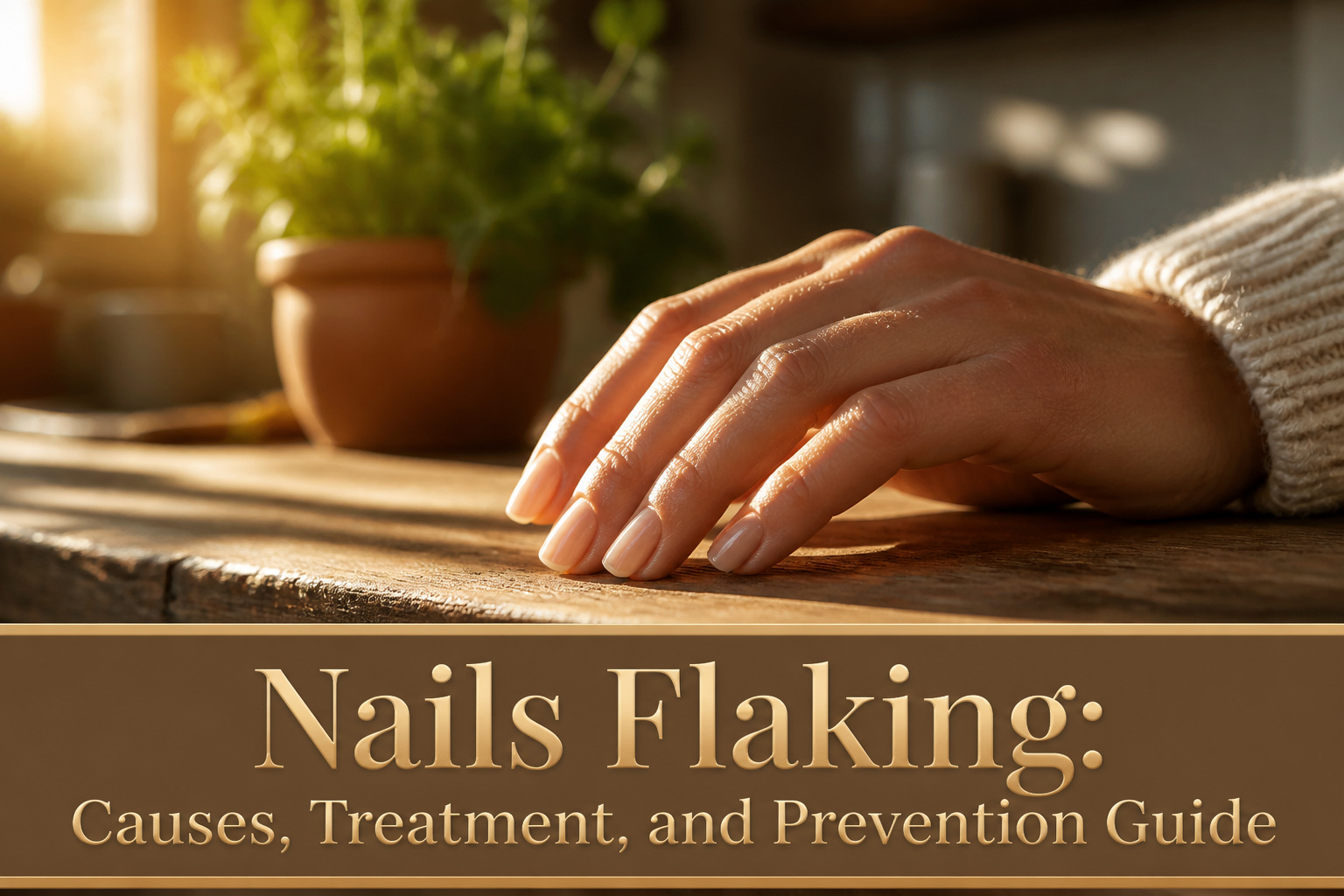
Nails flaking, or onychoschizia, is the horizontal peeling of the upper layers across the nail plate, caused by weakened keratin bonds between layers.
The nail you see today took roughly six months to reach full length, so damage at the free edge started months before you noticed it.
What Nails Flaking Means
A fingernail is basically a sheet of keratin, the same protein that builds hair and the outer skin layer.
What makes nail keratin different is its high cysteine content, which forms disulfide bonds that act like tiny cross-bridges between protein chains.
These bonds give the nail its stiffness and keep the layers locked together in the plate you paint or file.
The nail plate grows outward from the matrix, a strip of tissue tucked under the proximal nail fold at the base of each finger.
A fingernail advances about 3 millimeters per month, which means the nail you see today took roughly six months to reach full length.
This timeline matters because any damage visible at the free edge happened months ago, and repair means nurturing the new growth still emerging from the matrix.
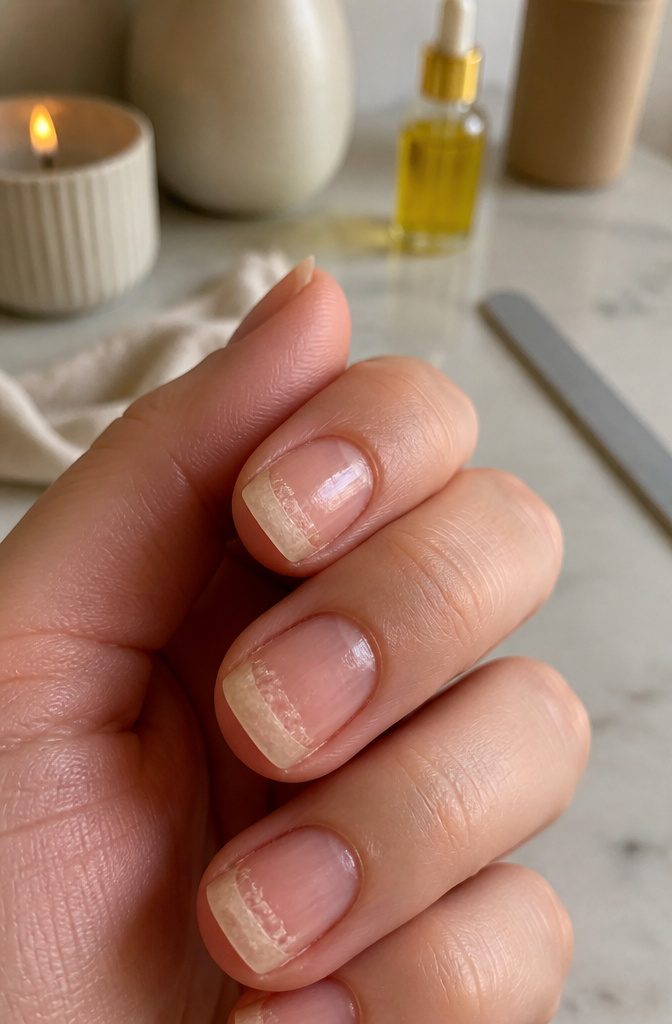
Healthy nails look smooth, semi-translucent, and hold a consistent curve without visible separation between layers. Flaking, or onychoschizia, is the horizontal peeling of the upper layers across the nail plate.
It differs from splitting, which runs lengthwise and typically starts at the free edge, and from ridging, which shows up as vertical raised lines running from base to tip.
Split nails crack deeper into the plate; ridging is often normal with age; flaking stays superficial but signals that the keratin bonds between layers have weakened enough to let them separate.
Water Damage
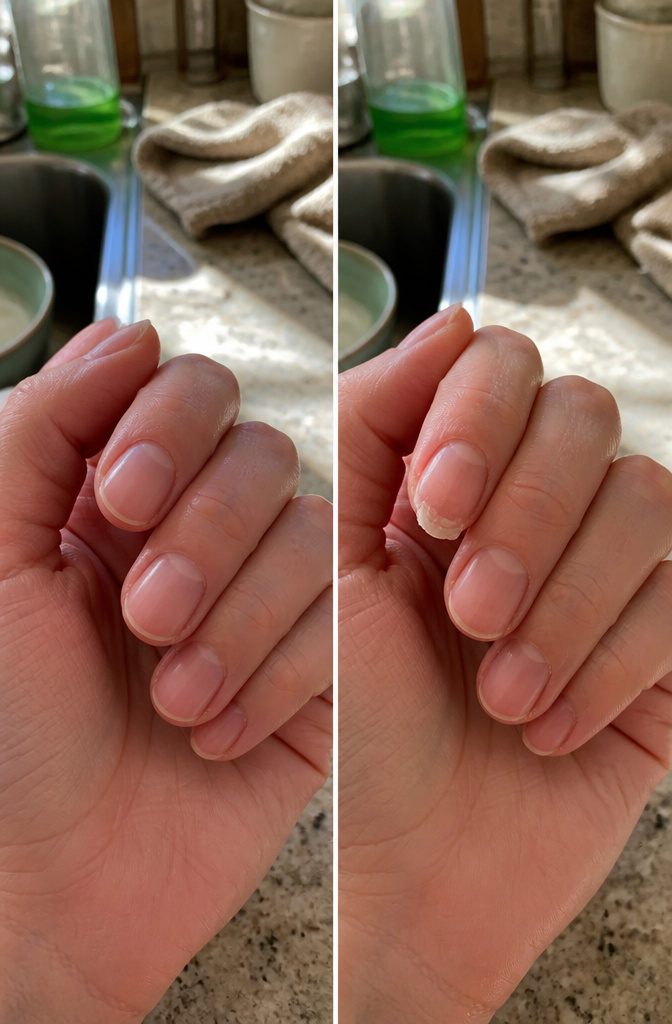
Water gets into nails the same way it gets into a sponge. Keratin, the protein that makes up the nail plate, is porous enough to absorb moisture on contact.
Each soak makes the nail swell, and each dry shrinks it back, and after enough of those cycles the layers simply stop holding together.
The technical term for this splitting is onychoschizia, though most people just notice the flaking at the free edge and wonder what changed.
The jobs that wreck nails fastest are no surprise: healthcare, hospitality, food service, hairdressing. Anyone whose hands go from wet to dry dozens of times a shift is basically stress-testing their nail plate on repeat.
Hot or humid environments make it worse, since prolonged moisture softens the whole structure and leaves it prone to trauma from even light contact.
Rubber gloves are the obvious fix for dishes and scrubbing, but the real habit to break is the casual dunking.
If your nails are already peeling, every unprotected soak is widening the gap between keratin layers that a treatment is trying to seal.
Over-Buffing
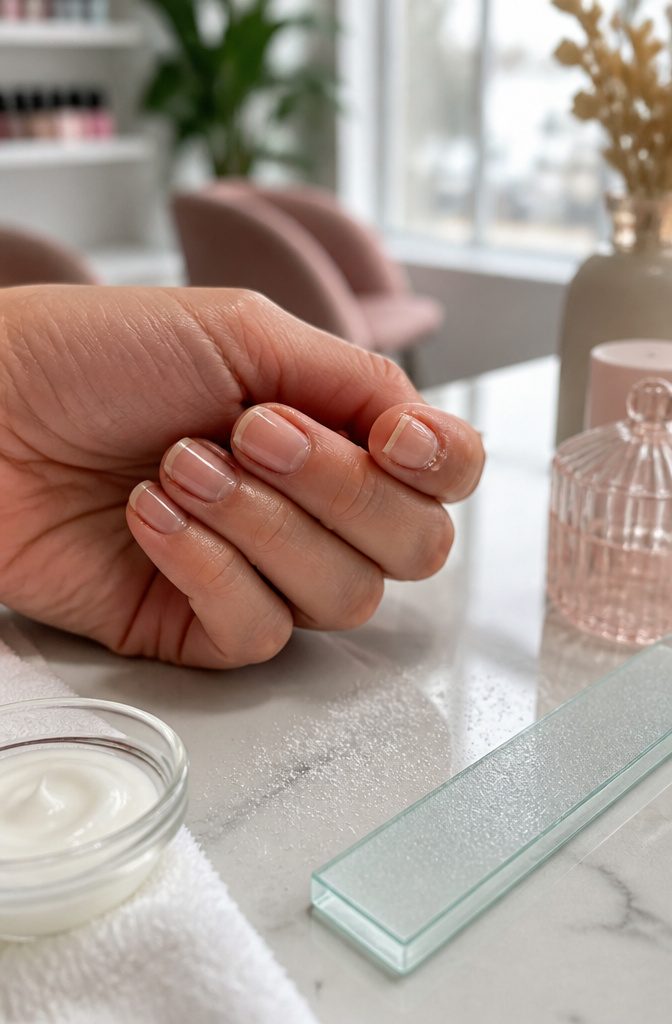
Aggressive filing feels productive in the moment, especially when you’re chasing that glass-smooth surface before polish.
The trouble is that buffing removes keratin layers faster than the nail plate replaces them, and once those layers are gone, the nail starts separating at the edges like pages of a wet paperback.
There is a real difference between gentle surface smoothing and stripping the nail down.
Smoothing evens texture; stripping thins the protective barrier until minor trauma, a drawer edge or a tight jar lid, splits the nail rather than just nicking it.
Safe buffing means light pressure, moving in one direction rather than sawing back and forth, and keeping it to maybe once a month, not every manicure.
A rich moisturizer or nail oil afterward helps offset the dryness buffing causes, since parched nails turn brittle far faster than hydrated ones.
The real damage multiplier is rhythm. The cycle of buffing, adhesive application, acetone soaking, and removal gradually thins the plate even when each step looks careful on its own.
If your nails are already peeling, skip the buffing entirely for a few weeks and let the keratin bonds recover instead of polishing them thinner.
Harsh Chemicals
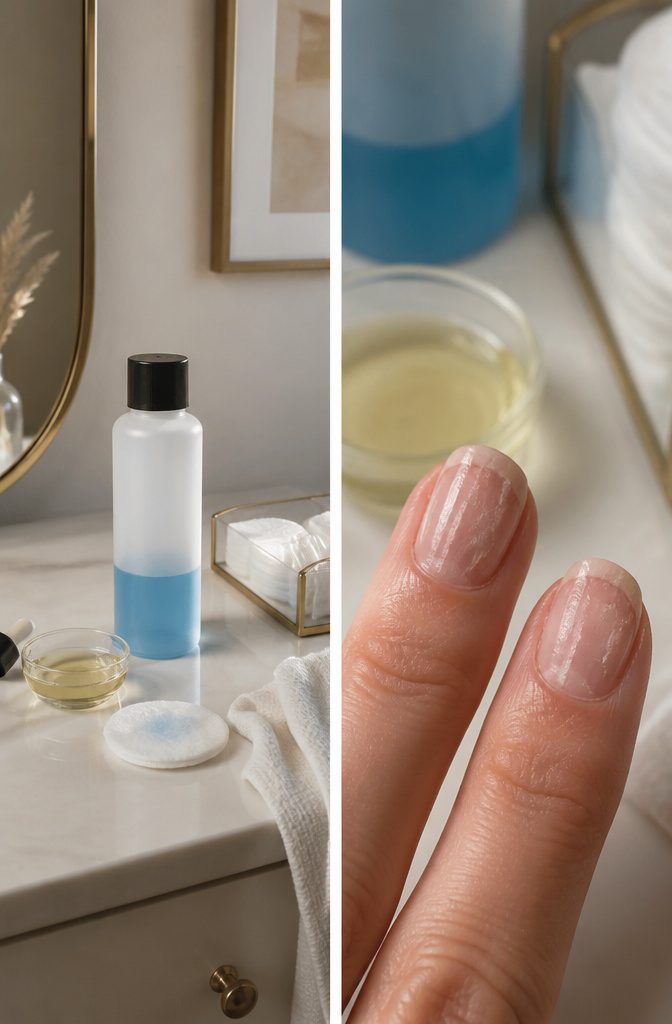
Acetone-based nail polish remover was the first thing my dermatologist asked about when she saw the horizontal splits running across my nail plates.
That solvent strips away the natural oils that bind nail layers together, and using it more than once a week can leave nails brittle enough to peel in sheets.
The same thing happens with household cleaners, hand soaps containing sulfates, and the alcohol-laden sanitizers that became unavoidable in recent years. Repeated exposure dries the nail bed so thoroughly that the plate cracks between its layers, a condition called onychoschizia.
Non-acetone removers and gentler soap formulas solve part of the problem. For cleaning, rubber gloves are the move that actually protects the nail, not just the skin.
When I switched to gloves for dishes and switched my remover, the peeling slowed within a month. The nail plate needs that oil barrier; without it, no amount of moisturizer after the fact fully repairs what the solvent already took.
Nail Trauma
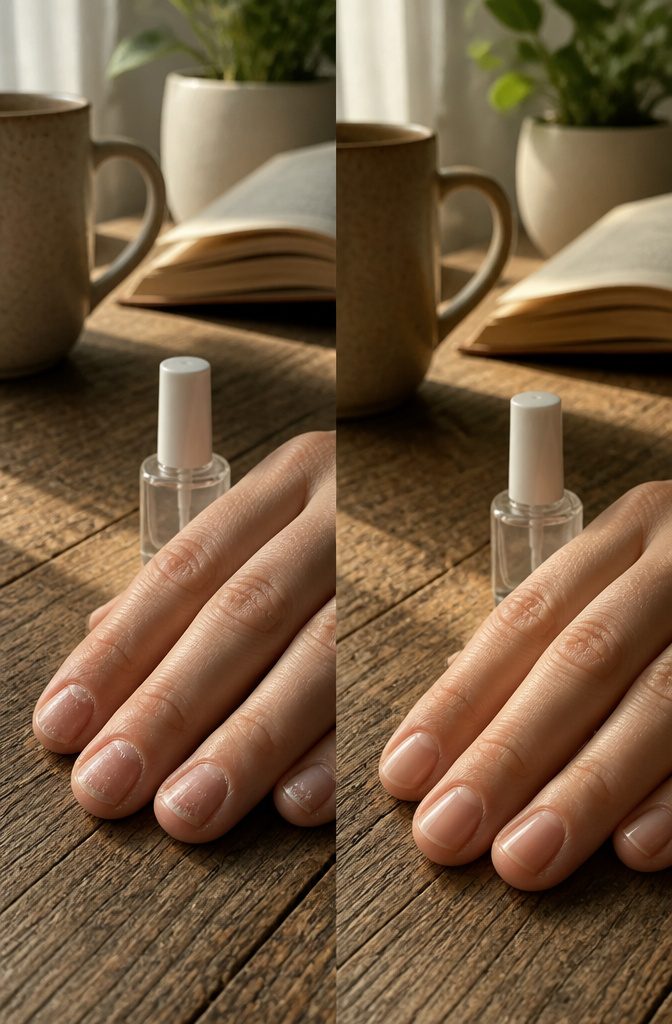
Picking at a chipped manicure used to be my worst habit. I’d start where the polish lifted near the cuticle and work my way up the nail, stripping away layers until the nail bed itself turned white and flaky.
The damage wasn’t just cosmetic. Nails are made of stacked, compacted cells held together by adhesion bonds.
Physical disruption from picking or peeling breaks those bonds, and once the layers separate, the flaking spreads.
The same thing happens with biting or using nails as tools to open cans or scrape off labels. Any pressure that presses on the nail plate can loosen cell-to-cell connections.
Gel and acrylic removal are repeat offenders; picking the product off rather than soaking it strips away the top layers of keratin, leaving nails thin, rough, and primed to flake further with even minor trauma.
One trick that finally broke my picking habit was keeping a nail strengthener on hand at all times, which gave the surface enough of a smooth coat that my fingers didn’t find an edge to start on.
Gentle, acetone-free remover instead of scraping polish off bit by bit made the bigger difference long term. The layers stay intact, and intact layers don’t invite the compulsion.
Nutrient Deficiencies
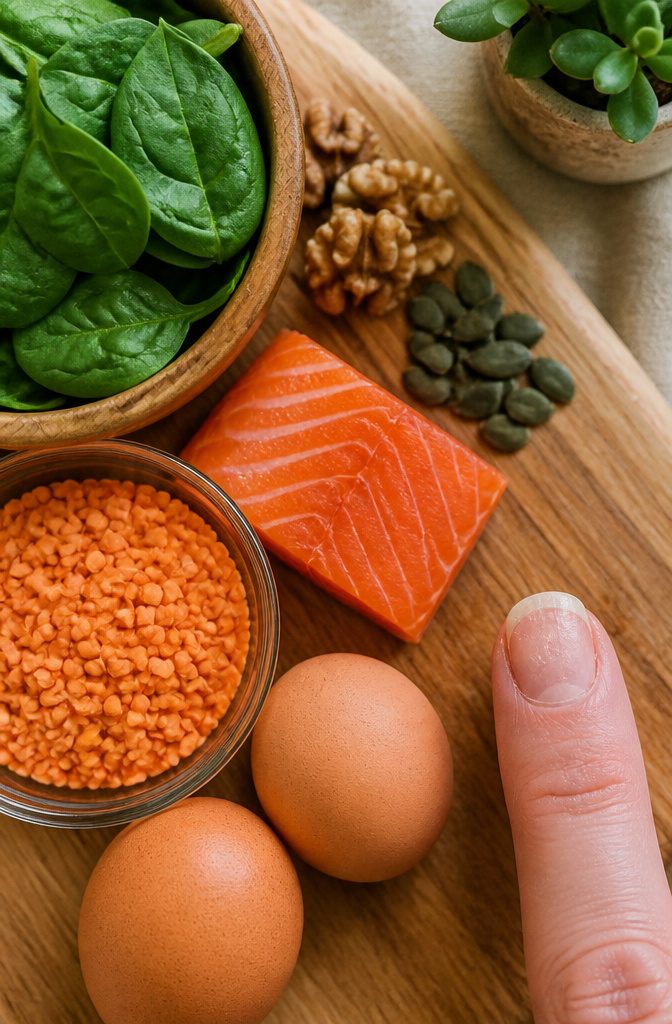
Peeling nails often point to iron or biotin gaps before they point to anything exotic. Low iron slows oxygen to the nail matrix, weakening structure from the inside out, and women with heavy periods know this pattern better than most.
A ferritin blood test clears up the guesswork fast.
Biotin, or B7, feeds keratin production directly. Biotin supplementation at 2.5 mg daily improved brittle nails in about 63% of participants across studies, which is solid but not magic, and the improvement takes months, not weeks.
Eggs, salmon, lentils, and spinach cover the bases for anyone who prefers food first, and a balanced plate beats a cabinet of bottles for most people.
That said, both your fingernails and toenails flaking together, or flaking paired with fatigue or hair thinning, is the moment to book bloodwork rather than self-diagnose.
Deficiencies matter, but they are less common than the external wear from water, chemicals, and rough handling that most flaking nails actually see.
Thyroid Issues
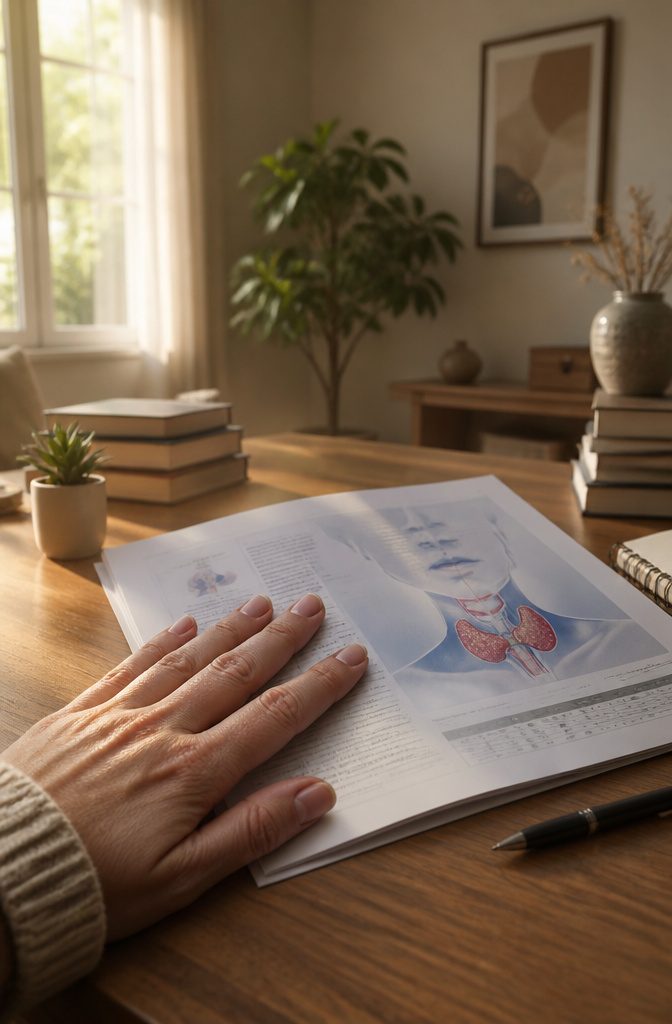
Thyroid hormones regulate metabolic functions across nearly every cell in the body, and that includes the cells that drive nail growth.
When levels shift too high or too low, nails may grow more slowly, peel more easily, or turn soft and brittle with visible ridging.
Dr. Peters explains that thyroid disease slows the turnover rate of nail tissue, so older layers stay in place longer and the nail surface begins to separate in horizontal flakes rather than clean breaks.
Dry skin, thinning hair, fatigue, and unexplained weight changes often travel with these nail changes.
Women face five to eight times the risk of thyroid problems compared with men, and more than 12% of people in the U.S. will develop thyroid disease at some point, per the American Thyroid Association.
The pattern matters too: when both fingernails and toenails show the same flaking, that points toward an internal cause rather than external damage from water or polish.
More than 12% of people in the U.S. will develop thyroid disease at some point, and women are five to eight times more likely to run into thyroid problems than men. If you’re experiencing a combo of brittle nails, dry skin, and thinning hair, schedule a visit with your doctor to have your thyroid tested.
Treatment is usually straightforward once hormones are stabilized, but you’ll need bloodwork to know whether this is the culprit.
Six to eight weeks of persistent peeling with no clear external trigger is the window where medical testing becomes worth the appointment.
Fungal Infections
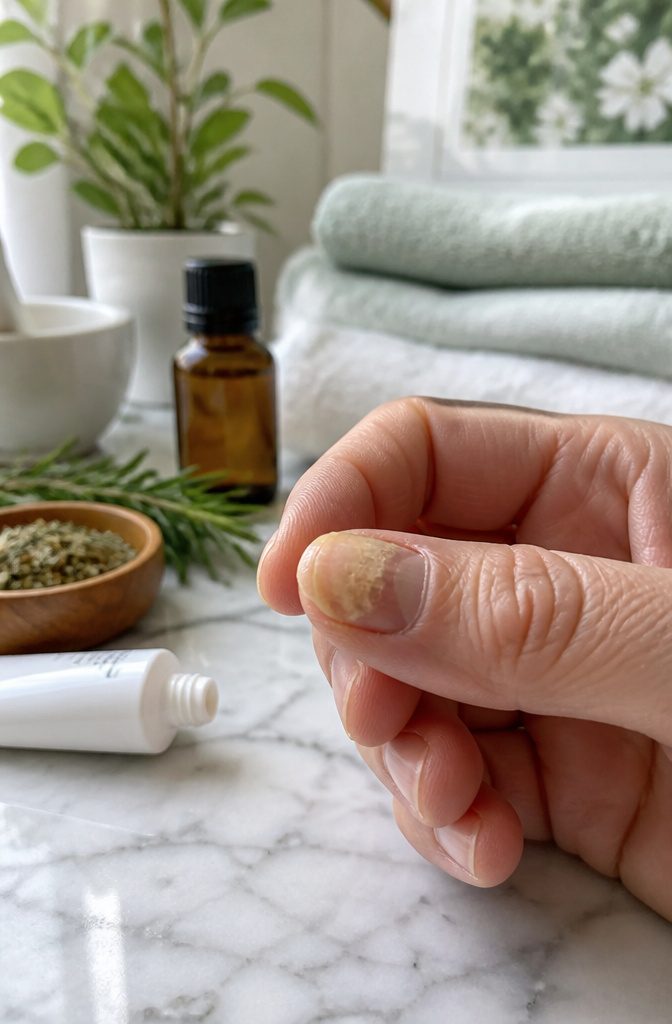
Nail fungus, formerly called onychomycosis, often announces itself through thickening and white or yellow-brown discoloration that starts at the tip and creeps toward the cuticle. The nail plate weakens as the infection spreads, and surface peeling follows.
This is where I trip myself up, because that surface peeling looks exactly like the layered separation from water damage, but the fix is entirely different.
Water lifts clean, uniform layers across the whole nail; fungal peeling arrives with color change and often a rougher texture in patches. Moisture alone will not solve it.
Over-the-counter treatments rarely reach deep enough to clear a true fungal infection, and a dermatologist will usually take a nail clipping for lab confirmation before prescribing oral antifungal medication.
If the peeling does not improve with basic protection and hydration, or if any thickening or discoloration shows up, that is the moment to book the appointment rather than guess.
Skin Conditions
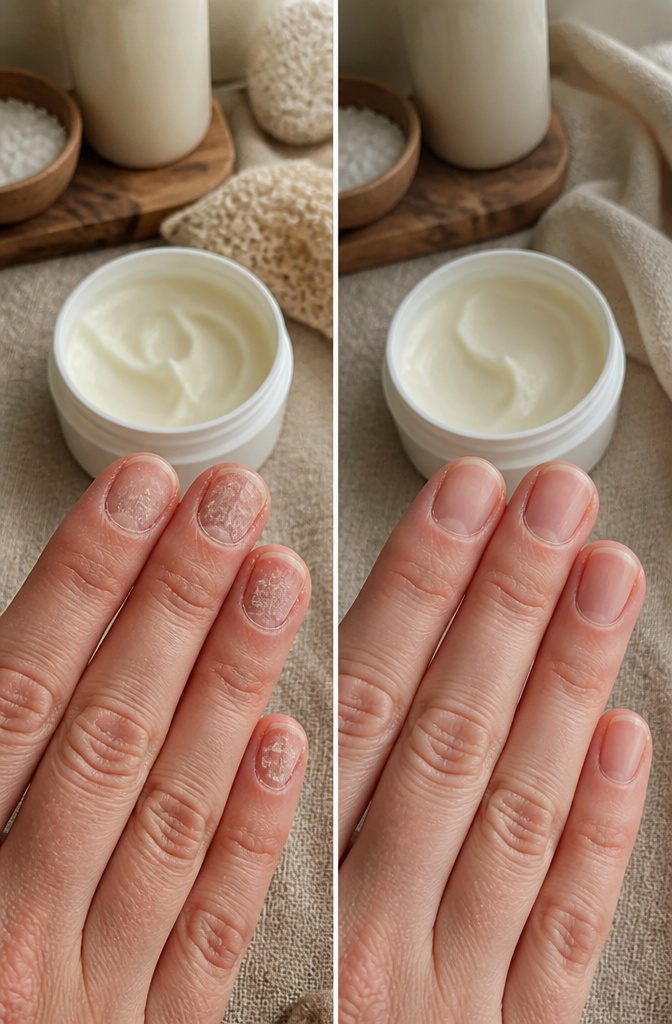
Eczema on the hands can spread right up to the nail fold, and once inflammation settles around the nail matrix, normal growth becomes nearly impossible.
My cuticles looked fine one winter, then split and wept within a week of switching to an industrial hand soap at a new job. The nails that grew out after were pitted, ridged, and peeled in thin layers for months.
The dermatologist I saw explained that the damage was already done by the time the surface showed it: treating the skin condition is what fixes the nail, not nail treatments alone.
Psoriasis works similarly, though it often leaves deeper pitting and that salmon-colored separation called oil-drop spot. Other inflammatory conditions can do the same.
The pattern matters more than the name: color changes or thick texture alongside peeling means a dermatologist should evaluate it, not a nail technician.
Keeping the skin hydrated helps slow the cycle, but only medical management of the underlying condition stops the nail from growing out damaged.
Moisture Against Dryness
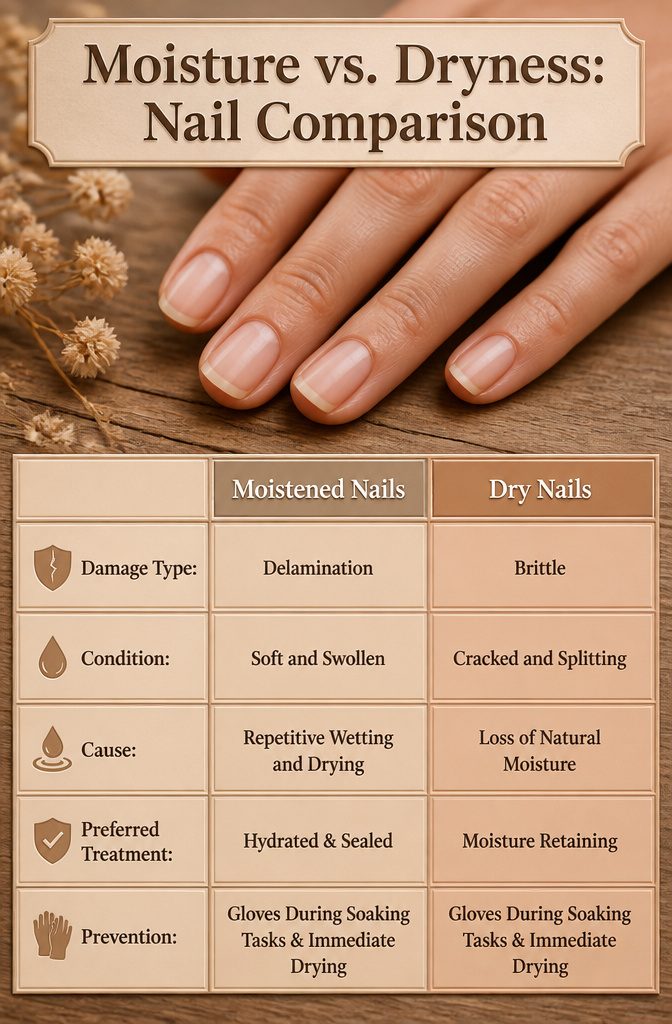
Repetitive wetting and drying is the most common cause of nails flaking, and the damage looks different depending on which extreme wins out.
Waterlogged nails swell with moisture, turn soft, and separate in layers; once they shrink, the delamination is already done. Dry nails go the opposite direction and become brittle so a small nick splits open under the slightest pressure.
Both paths end at the same place: peeling, weakened nails that catch on everything.
The fix is not simply adding more of what is missing. Extra water on already swollen plates worsens the cycle.
Oil alone on parched nails seals in nothing because there is no moisture to trap.
The balance is protective oil over adequately hydrated nails: wash, dry thoroughly, then seal with a hand cream that contains vitamin E or a dedicated nail oil.
For anyone whose job keeps their hands in water, such as hairdressers or house cleaners, gloves during soaking tasks and immediate drying afterward cut the swelling-shrinking loop at its source.
What Actually Helps
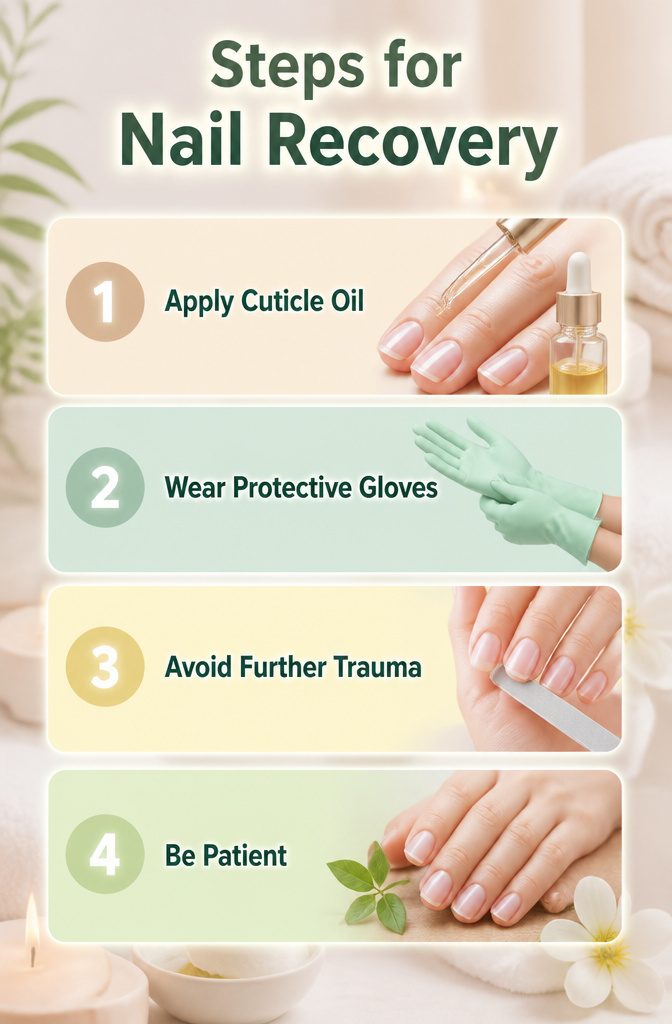
The real work starts after you have stopped the damage.
Most traditional nail strengtheners will backfire on peeling nails; the same hard coating that promises strength traps moisture underneath and adds rigidity to a nail plate that needs flexibility to heal. I skip them entirely.
Patience matters more than product. Cuticle oil after every hand wash, protective gloves during dishes or cleaning, and avoiding any further trauma builds the conditions for recovery.
Most sources agree you will see improvement within two to four weeks of that consistent daily care. Full nail renewal takes closer to six months, which is simply the time a damaged nail needs to grow out completely.
The early weeks are the hardest, because the nail looks unchanged while the new growth forming at the base is already healthier. Keep the oil by the sink and trust that layer underneath.
When to See a Doctor
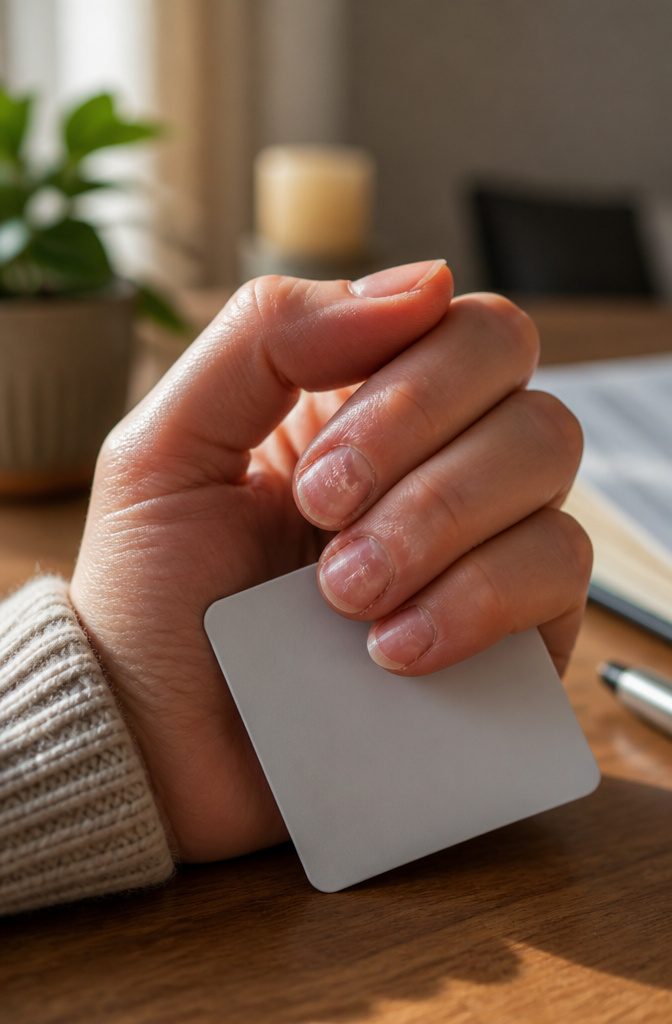
Peeling that does not ease after two months of basic care, color changes you cannot explain, or sharp pain around the nail bed all signal that a home routine has reached its limit.
A dermatologist or primary care physician will take a full history and decide which labs to run.
Most appointments for nails flaking start with bloodwork. Thyroid-stimulating hormone, ferritin to check stored iron, and sometimes a complete blood count are standard first steps.
If nails look thickened or crumbly underneath, a fungal culture may be added.
Both fingernails and toenails peeling at the same time often pushes doctors to look inside the body rather than at habits. The list is short and testable: iron deficiency, thyroid disease, low biotin, and occasionally medication effects.
A study on biotin supplementation used a 2.5 mg daily dose and saw improvement in about 63% of participants with brittle nails, but insist on testing before buying supplements; a normal result rules deficiency out and saves money.
One red flag that usually gets a faster appointment is new streaking or dark discoloration under a single nail. Melanoma can grow there, and "wait and see" is the wrong move.
Standard care plus persistent flaking equals a calendar slot.
Frequently Asked Questions
What causes nails to peel in layers?
Repeated water exposure is the most common trigger. Each soak makes the nail swell, and drying shrinks it back; after enough cycles, the keratin layers stop holding together.
Jobs that keep hands moving between wet and dry, like healthcare or food service, stress-test the nail plate on repeat.
How do you stop nails from peeling naturally?
Cut back on unprotected water exposure and apply cuticle oil after every hand wash. Wear rubber gloves for dishes and cleaning, skip buffing entirely for a few weeks, and switch to acetone-free remover.
Most people see improvement within two to four weeks of this daily routine.
Can vitamin deficiency cause peeling nails?
Sometimes, but external damage is the far more frequent culprit. Low iron or biotin can weaken nail structure, and both your fingernails and toenails flaking together is one signal to get bloodwork.
Still, water, chemicals, and rough handling explain most cases without any deficiency involved.
How long does it take to fix peeling nails?
Visible improvement typically shows in two to four weeks with consistent care. Full nail renewal takes about six months, which is simply how long a fingernail needs to grow out completely.
The new growth emerging from the matrix starts healthier even before the damaged edge looks different.
Should I use nail strengtheners for peeling nails?
Most traditional strengtheners will backfire. The hard coating traps moisture underneath and adds rigidity to a plate that needs flexibility to heal.
Skip them and focus on cuticle oil, protective gloves, and avoiding further trauma instead.