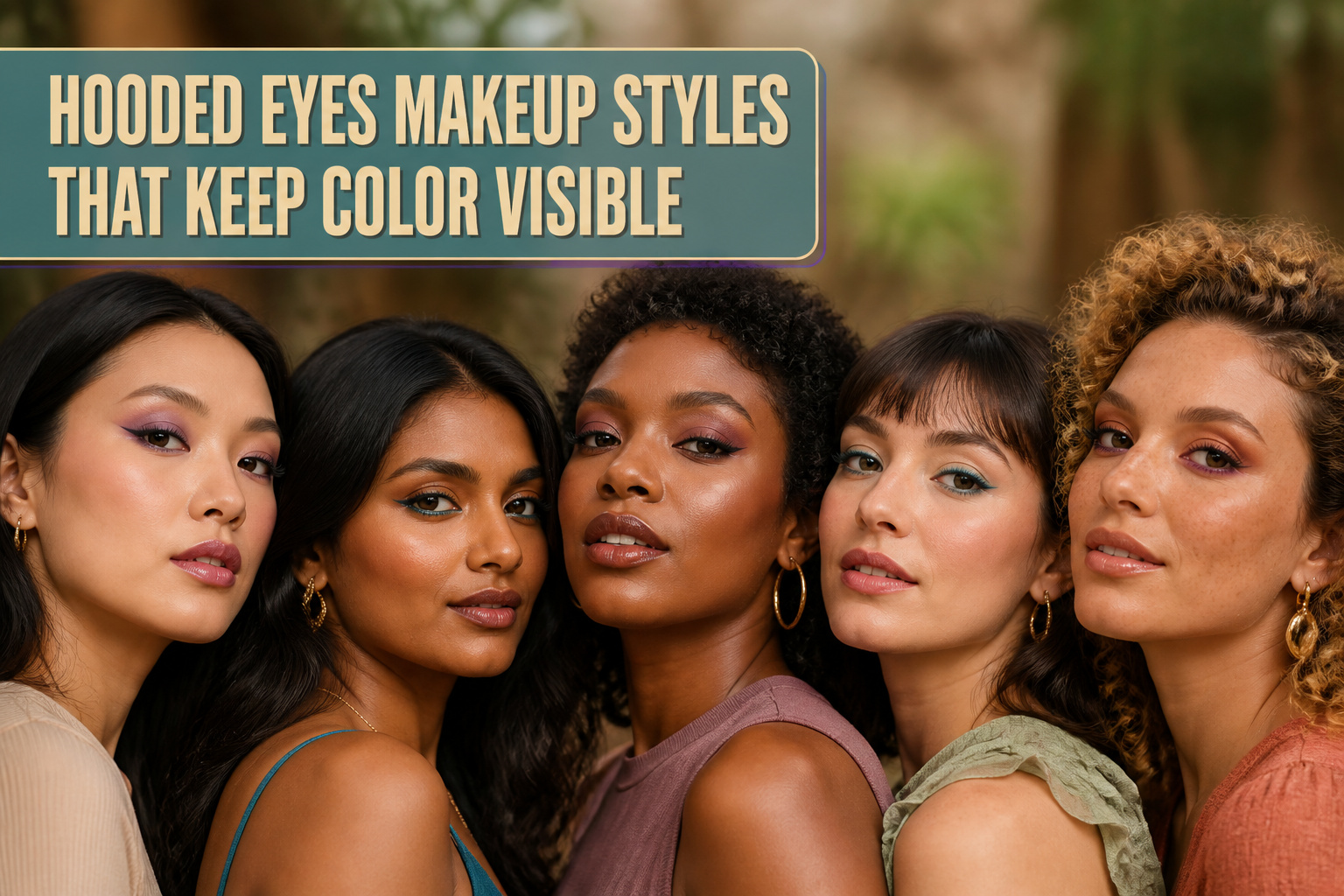
The shadow has to sit higher than your natural crease, up on the brow bone itself, or it vanishes the moment you open your eyes.
That is the single adjustment that makes every other hooded eyes makeup technique work, and most tutorials get it wrong because they have you apply with your chin tilted down.
Lan Nguyen-Grealis built an entire reverse-liner method around this same problem: what reads as a crease with eyes closed drops below the fold during actual conversation, so the color only lives where you can see it with eyes open and level.
A $35 kajal pencil and the habit of checking your mirror straight-on changes the result entirely.
1. Waterline Eyeliner
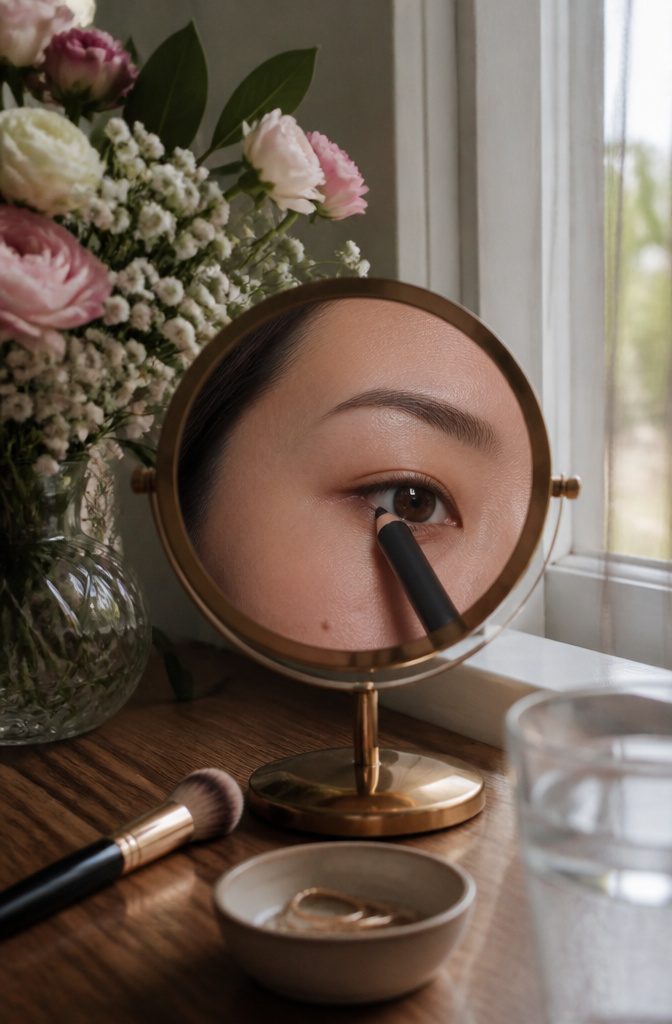
Liquid liner can swallow what little lid space you have, so I switched to tight-lining and never went back.
A soft kohl pencil drawn across the upper waterline adds definition at the root of the lashes without staking a claim to precious real estate above.
The trick that makes it feel finished: continue that line past the outer corner into a gentle wing. It reads as eyeliner from a distance, but the effect stays softer and more open than a hard stripe across the skin.
Victoria Beckham Beauty Satin Kajal Liner, at $35, is built exactly for this move. The formula blends enough to let you taper the wing with a fingertip before it sets, then locks in place through a full day.
I would not bother with a brush-tip liquid for this particular job; the kajal’s give against the waterline makes the placement forgiving, and forgiveness matters when you are working millimeters from your eyeball with your chin tilted to the mirror.

SILKY SMOOTH KOHL EYELINER PENCIL: Ideal for creating crisp lines or sultry, smoky eye looks—available in smoldering shades!
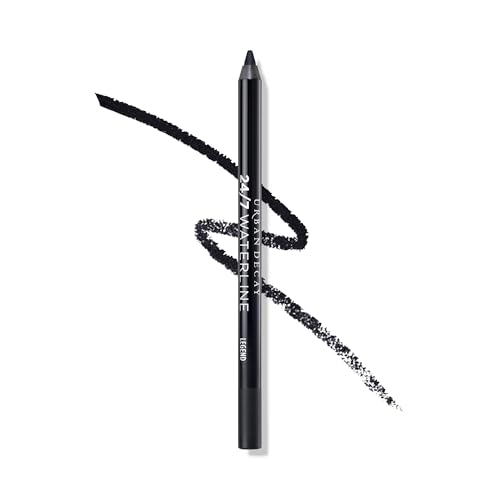
WATERLINE SAFE: Urban Decay 24/7 Glide-On Eyeliner Pencils are award-winning, waterproof eyeliners delivering intense, long-wearing color that will not budge. Available in versatile shades including white, brown, nude, gray, and black to deepen or brighten your eyes.

Retractable Eye Liner: A line and defined eye is just a twist away with this eyeliner pen; Intense pigment covers like a liquid eyeliner while its creamy formula holds for hours; No need to sharpen just twist up and apply for a winged out eyeliner look
2. Reverse Eyeliner
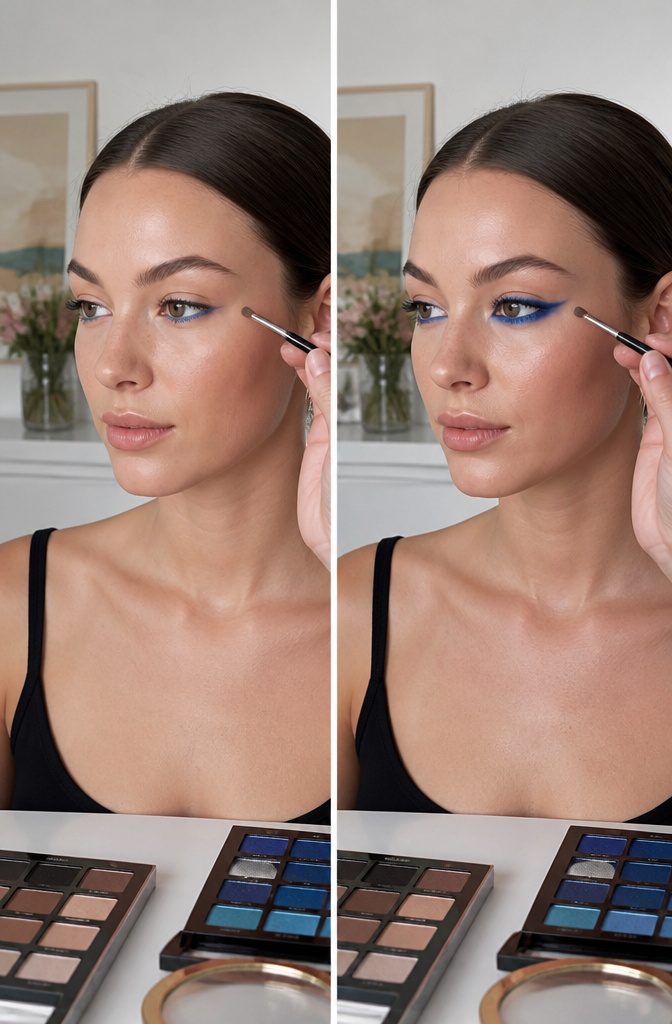
Reverse eyeliner works for hooded eyes because it redirects where the eye travels.
Heavy liner across the upper lid eats what little visible space is already there, but a clean line along the lower lash line, winged outward at the outer corner, pulls attention downward and creates the impression of more room above.
Lan Nguyen-Grealis, the makeup artist who developed this approach for hooded shapes, has her clients draw along the lower waterline or tightline first, then extend that line past the eye’s outer edge into a small wing.
The critical step comes next: diffuse the lower wing with a small shadow brush and connect it to the very outer tip of the upper lash line.
This bridging point is tiny, maybe a quarter-inch, but it keeps the two lines from floating separately and rounds the shape off wrong.
A bright liner color makes this deliberately graphic, though black or brown works for everyday wear.
Setting the line with matching powder shadow keeps it from migrating, which matters more here than with standard upper-lid liner since the lower lash line produces more moisture and blink friction.
The elongation happens because the wing extends the eye’s visual endpoint; the lid-space illusion happens because nothing competes with what little crease remains visible above.

Effortless Definition: Haute Couleur Eyeliner combines the ease of an eye pencil with the smoothness of a gel and the blendability of a powder. Glide into any eye makeup look, from classic to bold

Effortless Definition: Haute Couleur Eyeliner combines the ease of an eye pencil with the smoothness of a gel and the blendability of a powder. Glide into any eye makeup look, from classic to bold

Waterproof and Richly Pigmented: Eyeliner specifically formulated for the waterline to provide gentle, yet intensely pigmented definition to the eyes.
3. The Socket Smoke
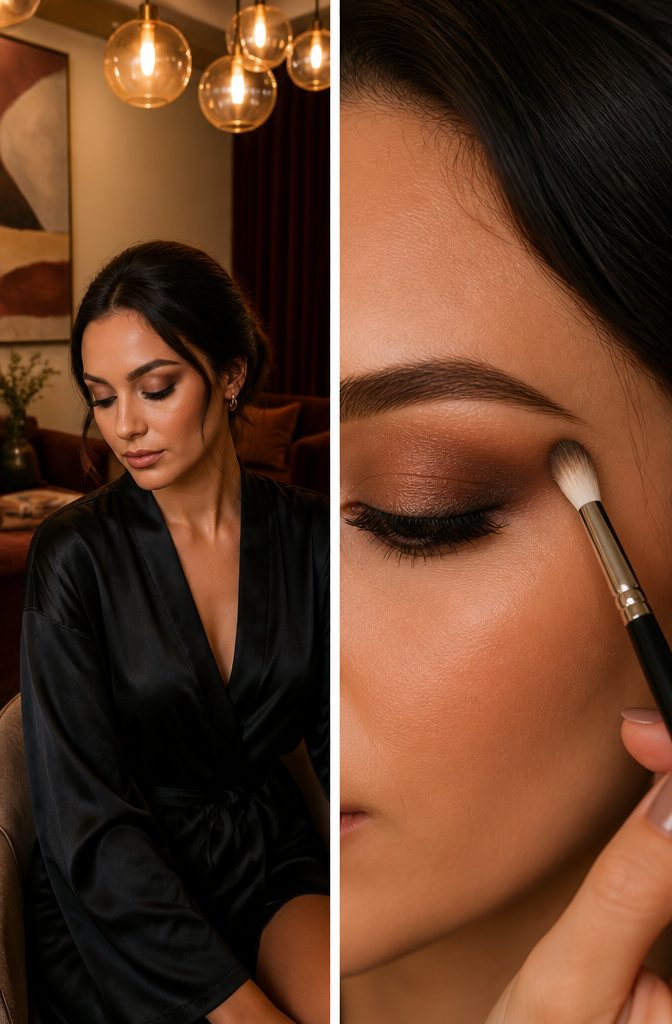
The first time I tried a smoked-out socket, I placed the color exactly where my crease folded and blended it until my arm hurt.
Open my eyes and the work vanished into the fold. The hooded eye swallows shadow placed at the natural crease; once the lid drops, that contour line sits hidden beneath skin and becomes visible only when you look down.
The shadow has to sit higher, on the brow bone itself, where the orbital bone casts its own natural hollow.
Tilting your head back in the mirror reveals the real estate: that soft depression beneath the brow is where the color lives, not the fold below it.
Matte or satin textures read as depth there; shimmer fights the illusion and can puff the area forward. Blend upward and outward, never straight across, so the shape lifts rather than drags.
"Eyeshadow placement matters so much on hooded lids because the natural crease isn’t fully visible when the eyes are open… Keeping depth focused on the outer third of the eye and blending a deeper crease color upward and outward helps the eyes look more open."
— Vogue
What this means practically: look straight ahead while you apply, not down into a hand mirror, or you will misplace the shadow by the exact distance your lid shifts when the eye opens.
The socket smoke lives above where you think it should.

3-IN-1 EYE MAKEUP STAMP KIT: Comes with 1 handle, L/R winged stamps, L/R lower lash stamps, a dot stamp, ink, mirror, and cleansing pads for winged eyeliner, separated lower lashes, and a lower-lid accent, helping create a coordinated eye look without drawing every detail freehand.

LASH BOOSTING EYELINER & SERUM: This high-tech 2-in-1 eyeliner & eyelash booster serum delivers the high-pigment, precision definition of a liquid eyeliner while nourishing & conditioning lashes.
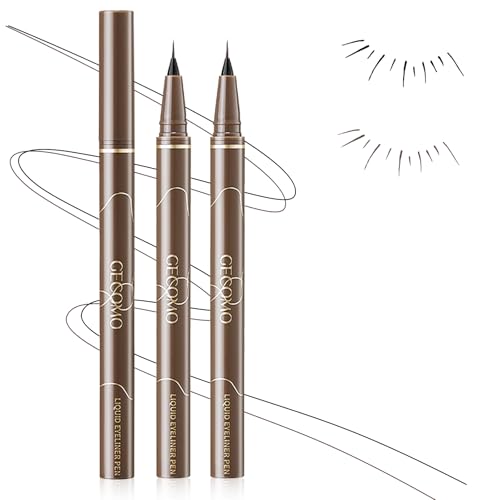
Lower Eyelash Eyeliner: The set contains a black and a brown lower lashes eyeliner. Our eyelash pen uses a new precision technology, very fine tip can be accurately controlled. You can easily create a clean and precise line that ensures your eyelashes look beautiful and natural
4. Mini Eyeliner Wing
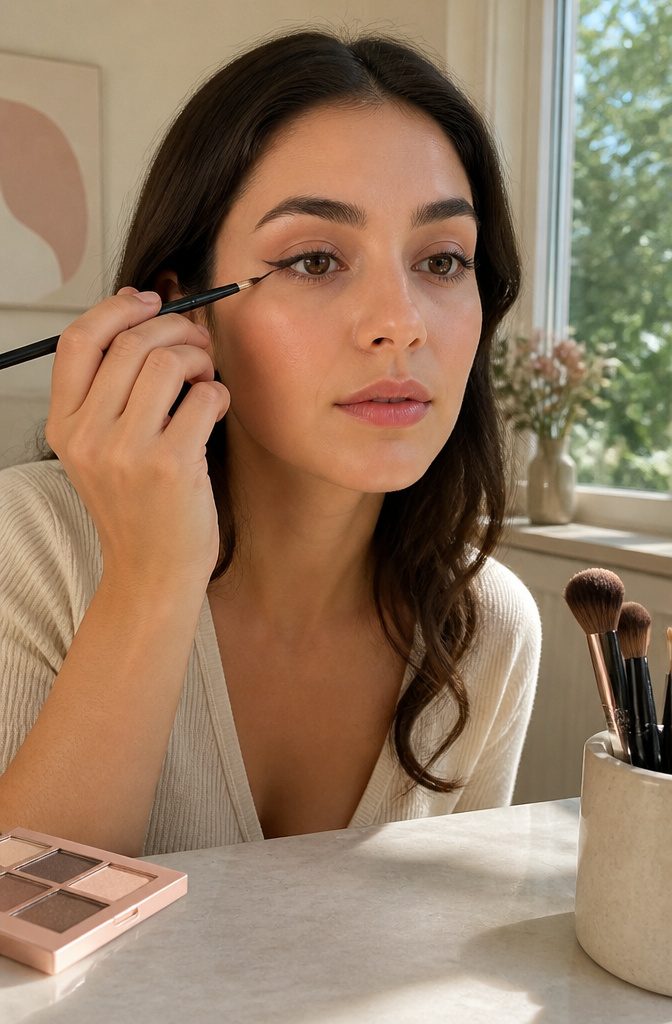
Full liquid liner across the lid has a way of vanishing the moment you open your eyes.
A hooded lid folds down and eats that line for lunch, so by noon you’re wearing a thick stripe that looks accidental and closes the eye off completely.
The fix is to start the wing at the outer corner only.
Keep your eye open and look straight ahead, then tilt your head back slightly. Draw the flick outward and upward, then taper it back down toward the upper lash line, stopping around the midpoint of your eye.
What you get is elongation without the weight: the eye reads as lifted, and the liner itself stays visible because it never sits where the hood creases.
A thin brush-tip liquid liner gets this right, and tight-lining the upper waterline underneath adds depth at the base while the flick does the shape work on the outside.
The kitten wing, some call it; whatever the name, it respects the anatomy instead of fighting it.
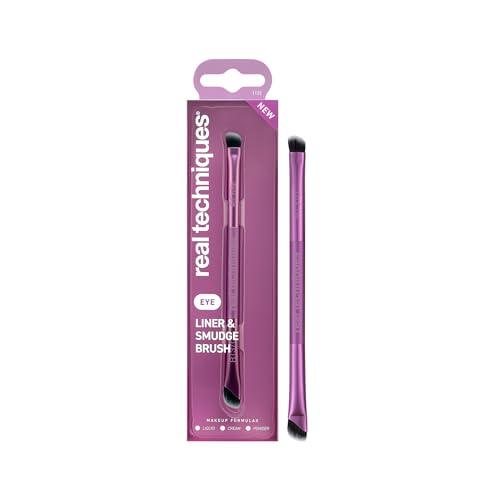
Eye makeup brush- Real Techniques Liner & Smudge Brush (RT 370) is a dual-ended precision brush that creates washes of color and crisp lines- best for eyeliner, eyeshadow and smoky eye looks

𝗨𝗹𝘁𝗿𝗮 𝗙𝗶𝗻𝗲- Say goodbye to bad smudges or sloppy eye makeup applications. This eyeliner brush is made from the highest quality Synthetic Bristles enabling it to deliver the finest and most precise lines-even in the tightest, smallest, and hard-to-reach areas of your eyes and lashes. It has been shaped and is enough stiff, great for applying eyeliner.
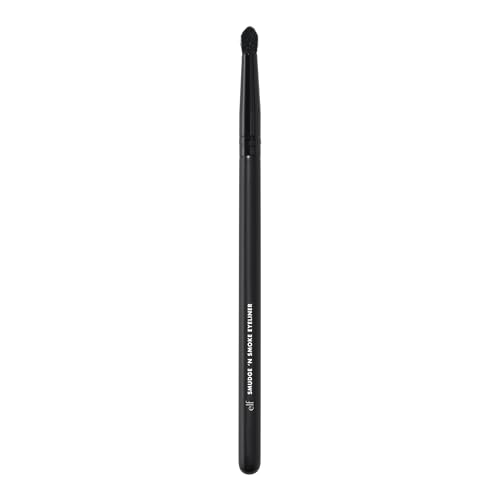
SMOKY EYELINER BRUSH: Eyeliner brush with densely packed bristles for creating smoky eyeliner looks.
5. Lower Lash Line Smoke
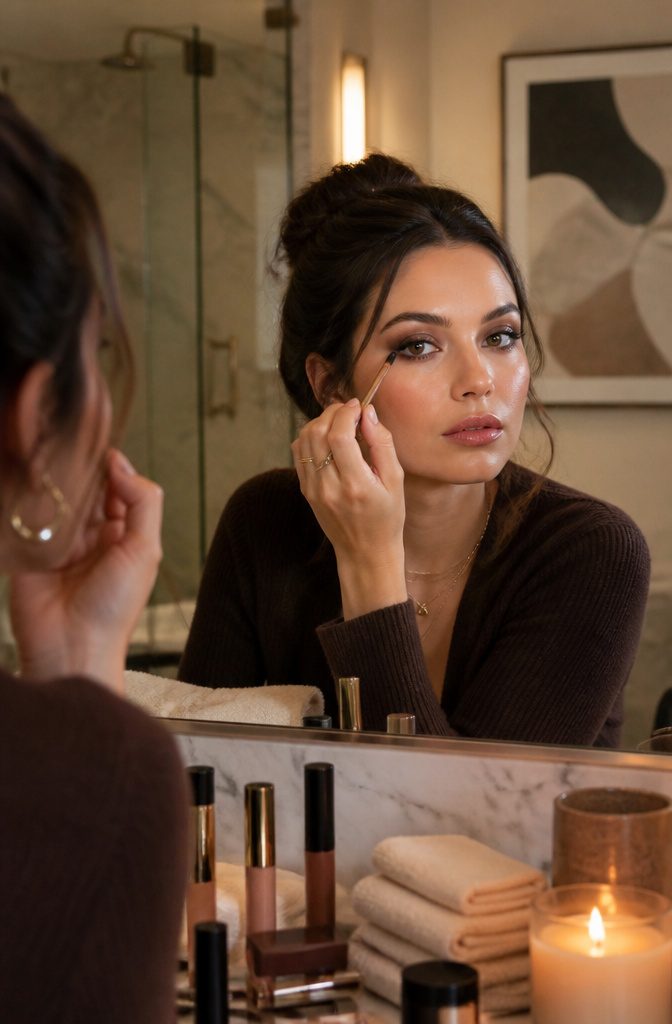
A soft sweep of darker shadow along the lower lash line makes hooded eyes read as larger and more open, but the balance matters more than the color itself.
Keep the lower definition lighter and softer than whatever is happening above, or the eye starts to look dragged downward.
What works in practice is a gradient that moves from light at the inner corner to dark at the outer edge, both top and bottom, so the shape stays cohesive.
Tightlining the upper waterline with a dark liner adds structure without competing, while a white or nude liner on the lower waterline keeps the eye from closing in.
Skip dark liner on the lower waterline entirely; on a hooded shape it shrinks the eye and amplifies any droop.
A matte brown smoked under the lashes, blended to nothing at the inner third, ties a whole evening look together without the heaviness of matching intensity above and below.
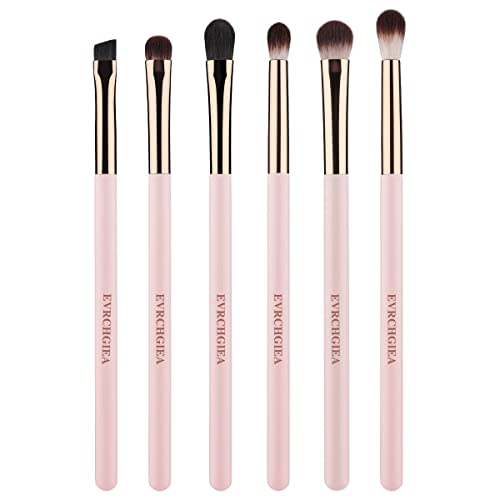
『Special Gifts for Her』The 6pcs eye makeup brush provides her daily eye makeup use. It will show her natural beauty and leave a perfect finish. Ideal gift to her, family or loved one for birthdays, Valentine's Day, Mother's Day, weddings and graduation ceremonies.

Twilight Dusk palette - features 18 shades, including 10 smooth, highly pigmented mattes in vibrant purples and ochres,along with soft sandy nudes. It has 7 pressed shimmers in plum, bronze and rose for easy layering and 1 bold gold metallic glitter.

【Crafted with the finest natural goat hair, pony hair, and high‑quality synthetic fibers】Elevate your makeup game with this complete set of makeup brushes, our premium collection of eye shadow brushes. This makeup brush set works great for professional makeup artists and beauty enthusiasts. These eye brushes for makeup bring outstanding precision, softness and durability to deliver flawless eye‑makeup results.
6. Eyelid Highlight
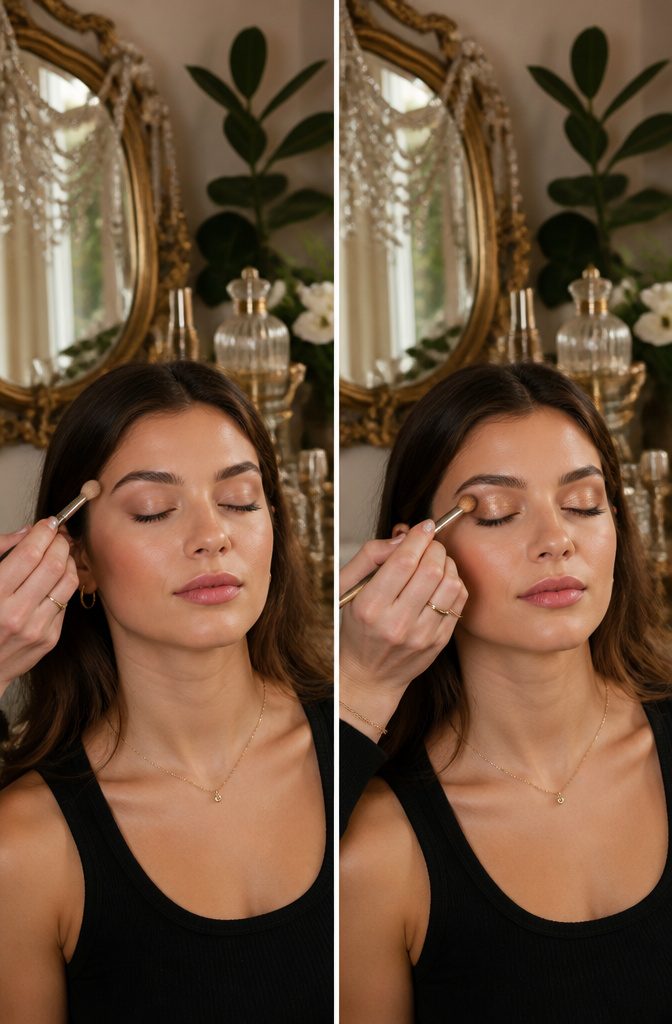
The visible part of a hooded lid is shorter than it looks once you open your eyes, so catching light on the center becomes its own strategy.
I place a satin or softly iridescent shade right above the iris, keeping it to the mobile lid that actually moves when you blink.
That single bright patch catches attention and lets the eye read more open than the anatomy alone would allow.
Chanel Les 4 Ombres in Clair Obscur at $72 gives you this in one of its four quadrants: a warm ivory that does the lifting without reading as glitter.
The highlight belongs dead center, not drifted upward toward the brow bone. Pro artists warn that reflective shadow above the socket fold, where the hood itself sits, will emphasize the fold rather than minimize it.
If you want an extra point of light, a trace along the brow arch works, but the main event stays low, where your lashes prove you still have lid to work with.

Retractable Eye Liner: A line and defined eye is just a twist away with this eyeliner pen; Intense pigment covers like a liquid eyeliner while its creamy formula holds for hours; No need to sharpen just twist up and apply for a winged out eyeliner look

Award-Winning Color in 30+ Shades: Create endless eye looks with Urban Decay's 24/7 Glide-On Eye Pencil, featuring rich, pigment-packed color in over 30 bold and wearable shades. Choose from 5 different eyeliner finishes—matte, shimmer, glitter, satin, and metallic—to define, line, wing, tightline, or smoke out your eyes. From classic black and neutral eyeliner shades to electrifying pops of color, find a 24/7 eyeliner for every look.

7. The Smokey Eye
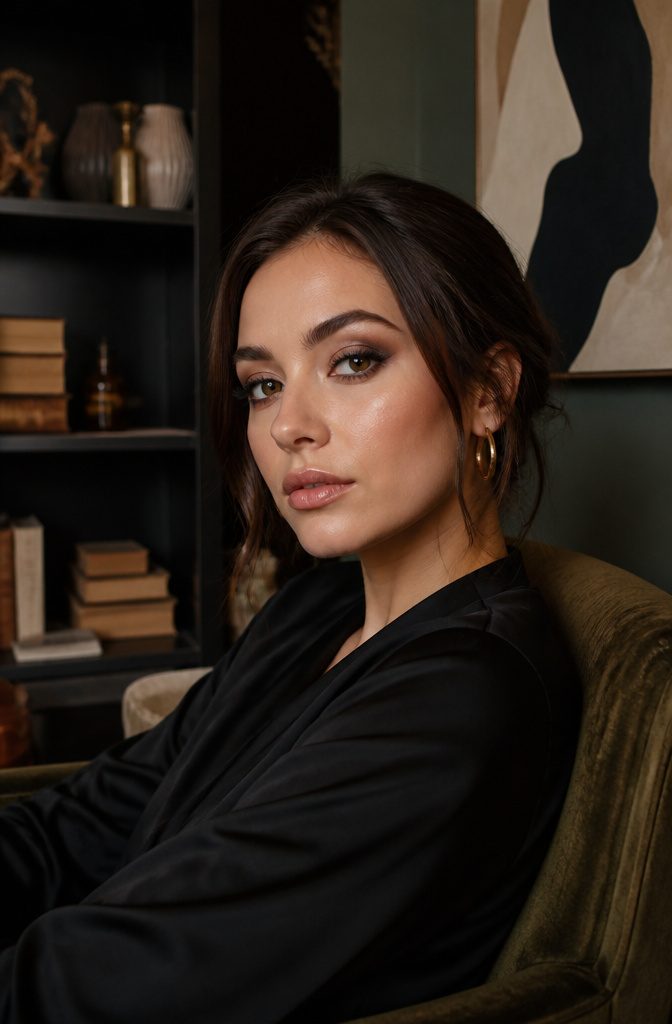
A classic smokey eye on hooded lids lives or dies by how high you take the color.
Buff the shadow all the way up toward the brow bone and out past the outer corner; stopping at the natural crease is exactly where the color disappears the moment you open your eyes.
Where the Socket Smoke builds a defined shape, this version is about density and diffusion, a haze of pigment that melts upward without a hard edge. The same shadow dragged along the lower lash line anchors the look.
Blend up and out, never straight across, to keep the eye lifted rather than weighed down. A couple of individual lashes on the outer corner add definition without the heaviness of a full strip.

Effortless Definition: Haute Couleur Eyeliner combines the ease of an eye pencil with the smoothness of a gel and the blendability of a powder. Glide into any eye makeup look, from classic to bold

Rimmel Soft Kohl Kajal Eye Liner Pencil, Sable Brown, 1 ea

【High Intensity Color for an Instant Impact】BEPHOLAN’s black eyeliner pencil delivers rich, highly pigmented color that defines and frames your eyes for a bold, beautiful look
8. Straight Eye Shadow
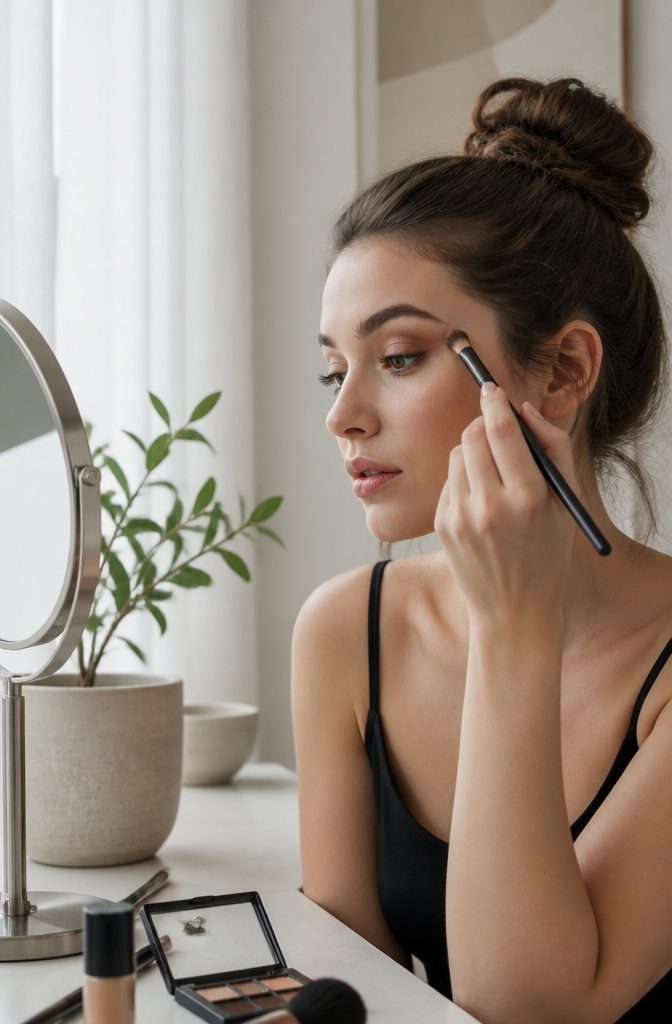
Straight eye shadow works on hooded eyes because it refuses to follow the crease.
The natural curve disappears the moment you open your eyes, so makeup blended along it vanishes into folded lid. A straight horizontal line keeps its shape visible, sitting parallel to the brow bone rather than dipping down and getting swallowed.
The technique is simpler than it sounds. Makeup artist Anthony Coombes suggests placing the edge of a sheet of paper from the corner of the nose to the end of the brow, keeping every blend within that straight boundary.
Your shadow stays inside the paper line, not above it. This forces a graphic, lifted shape that reads as intentional even when the eye is fully open.
Matte or satin shades behave best here. Shimmer on the upper lid of a hooded eye tends to migrate or emphasize fold, whereas a flat tone in a straight band reads as architecture, not accident.
Blend the color slightly above the natural crease so the definition survives the open eye, but keep the motion horizontal.
Blending up and out, not across, is the lift that hooded lids need, and stopping before you hit the brow bone preserves the clean edge.
Where this differs from classic eye makeup is the rejection of the crease as a guide. For most eye shapes, following the socket hollow creates dimension.
On hooded eyes, that same move erases itself. The straight line is a bypass around the problem, not a correction of it.

PERFECT WING IN ONE SECOND — NO SKILL NEEDED : Create flawless cat-eye wings every time with our winged eyeliner stamp. Simply stamp, line, and go. Ideal for beginners, pros, and even the best eyeliner for older women seeking an easier application.

Perfect Symmetrical Wings in 2 Seconds: Create flawless, identical cat eye wings instantly with our L/R stamped applicators. No skills needed—just press, line, and go for a dramatic eyeliner.

- Multi‑function stamp kit creates natural lower lashes, defined eyeliner lines and delicate beauty marks via simple stamping for diverse daily eye‑makeup styles.
9. Negative-Space ’60s Eye
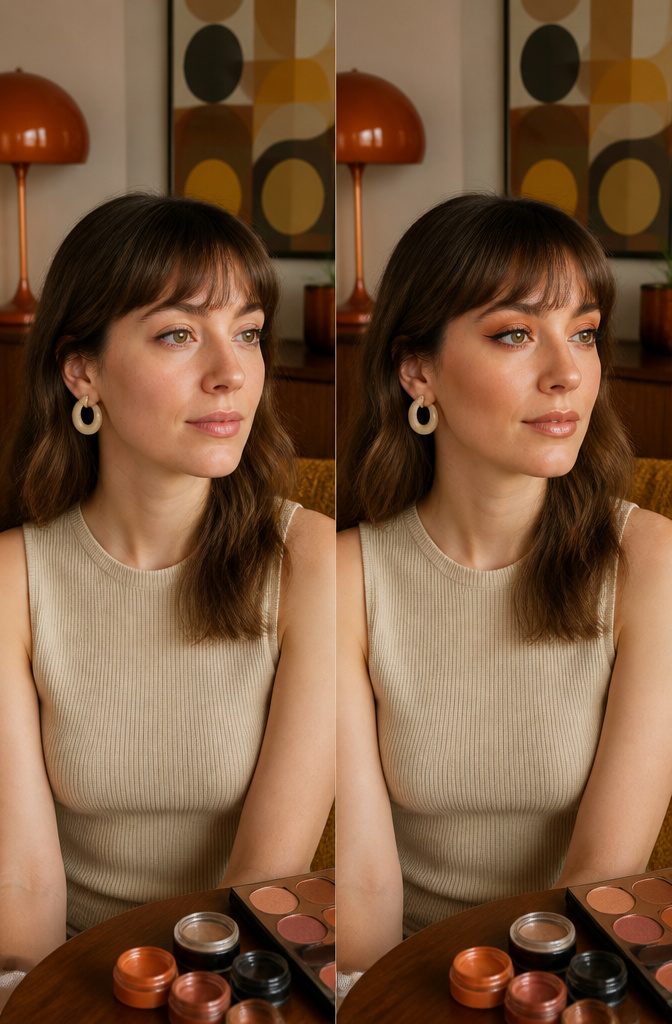
The negative-space ’60s eye is the one hooded eyes makeup trick that finally made the logic click for me.
Instead of forcing shadow into a natural crease that sits too low, you draw in what isn’t there: a visible socket line that reads with the eye open.
Taylor Swift’s recent crystal placement in this style showed exactly how it works.
The crystals created the illusion of a socket crease, opening the eye by adding dimension exactly where hooded lids go flat. You can recreate the same effect with softly diffused eye shadow or eyeliner placed slightly above your natural fold.
The mapping matters more than the product. With eyes open, mark a new "crease" where your brow bone creates a natural shadow, not where your lid folds.
Blend a deeper matte shade just above that mark, then keep shimmer strictly on the center lid rather than drifting upward.
A thin line of liquid eyeliner close to the lashes finishes the definition without swallowing what little visible lid space you have.
Checking the work with eyes open and relaxed is the step I used to skip. The shadow that looks precise with eyes closed drops entirely below the fold once you’re actually talking to someone.
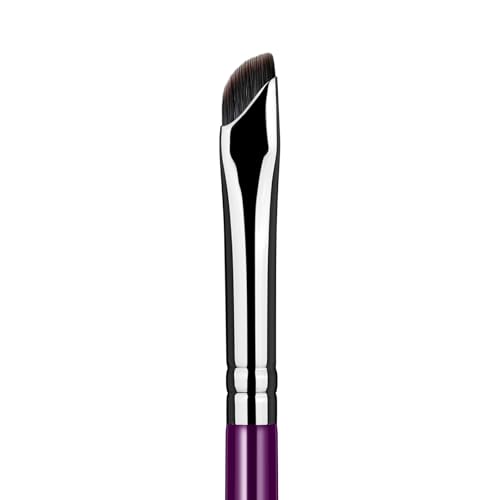
Unleash Your Inner Artist with the Perfect Eyeliner Brush: Discover the sickle eyeliner brush, designed with an angled shape inspired by the crescent moon, to effortlessly create enchanting lines with incredible finesse. Whether you prefer a razor-sharp wing or a sultry smoky eye, the luxe liner brush empowers you to express your creativity and enhance your natural beauty.

【Unleash Your Inner Artist with the Perfect Eyeliner Brush】 EIGSHOW sickle-shaped eyeliner brush, designed with an angled shape inspired by the crescent moon. This makeup brush effortlessly creates enchanting lines with incredible finesse. Whether you prefer a razor-sharp wing or a sultry smoky eye, the luxe liner brush empowers you to express your creativity and enhance your natural beauty.

MUIIGOOD Eyeshadow Brush Eye Makeup Brush Professional Blending Eyeshadow Makeup Brushes for Concealer Eyebrows Eyeliner Soft Hairs Makeup Tool for Precision Application Flawless Blending Contouring
10. Hooded Eyeliner Wing
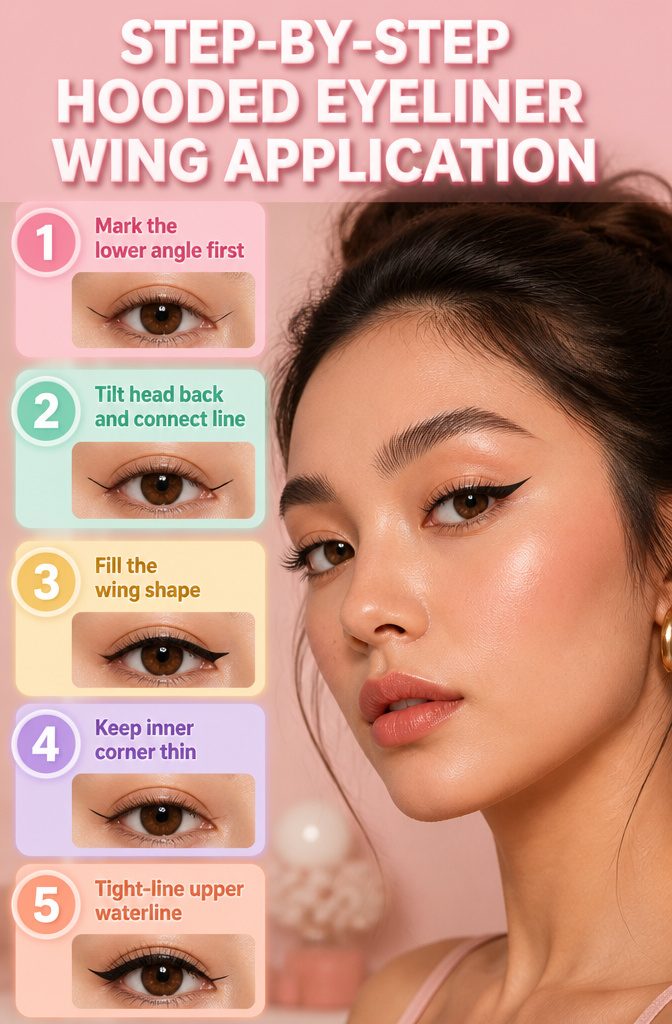
The winged liner so many tutorials draw assumes a lid that stays put while you blink.
A hooded lid does not cooperate that way, which is why the finished wing often disappears into the fold or skews sideways once the brow relaxes.
Mark the lower angle first, eyes open and level, by drawing a thin outward flick from the outer corner while you look straight ahead.
That line is your anchor; it holds the visible part of the wing when the lid is at rest.
Then tilt the head back slightly and connect that flick back toward the upper lash line, stopping where the natural crease begins.
The filled shape looks a little like a bat wing with the eye open, but the resting eye shows a clean, lifted line instead of a collapsed one.
Keep the inner corner thin or skip it entirely, and tight-line the upper waterline if you want definition without sacrificing the little lid space you have.

3-IN-1 EYE MAKEUP: The ultimate triple threat: This 3-in-1 creamy eyeshadow, primer, and eyeliner delivers richly pigmented color that won't budge, smudge, or crease.

Professional-Grade Eye Brush Set: All these 16pcs cosmetic brushes that we picked are the professional-grade eye makeup brushes to serve a distinct makeup purpose to make sure you have all brushes needed to create a perfect eye makeup. Designed for makeup artists and professional cosmetic users but also amateurs

Professional Eyeshadow Brush Set: Including 6pcs eyeshadow brushes, blending brush, duo eyebrow brush and concealer brush. Different shapes and sizes of the bristles give you a variety of eye looks.
11. Soft Smoke
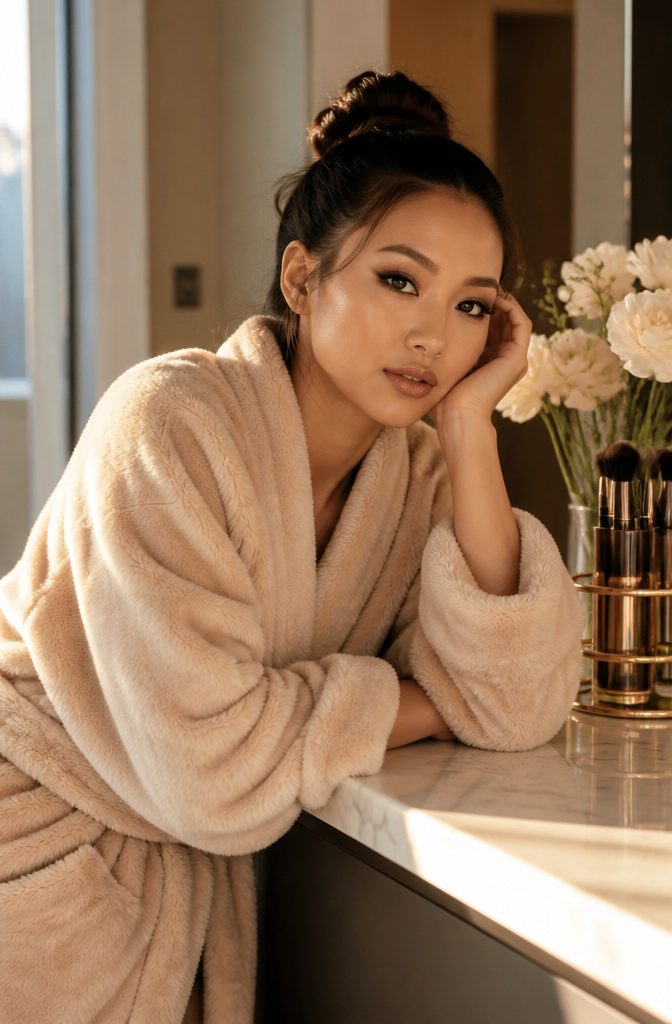
Running eyeliner along the lower lashes and smoking it outward takes maybe five minutes, and on hooded eyes it reads as deliberate rather than rushed because the color stays visible where the fold doesn’t swallow it.
I keep a pencil or a soft kajal in my bag for this: Victoria Beckham Beauty’s satin kajal blends out with a fingertip, so you don’t need brushes or patience.
The trick is stopping before you think you need to. A little smudge at the outer corner lifts the shape; dragging it too far inward drops the eye instead.
Keep eyes open and look straight ahead while you work, or the fold hides your placement until you blink and it’s suddenly twice as thick as you planned.
Skip the upper lid entirely here. The payoff is definition without sacrificing the little visible space you have.
12. Bold Eyelashes
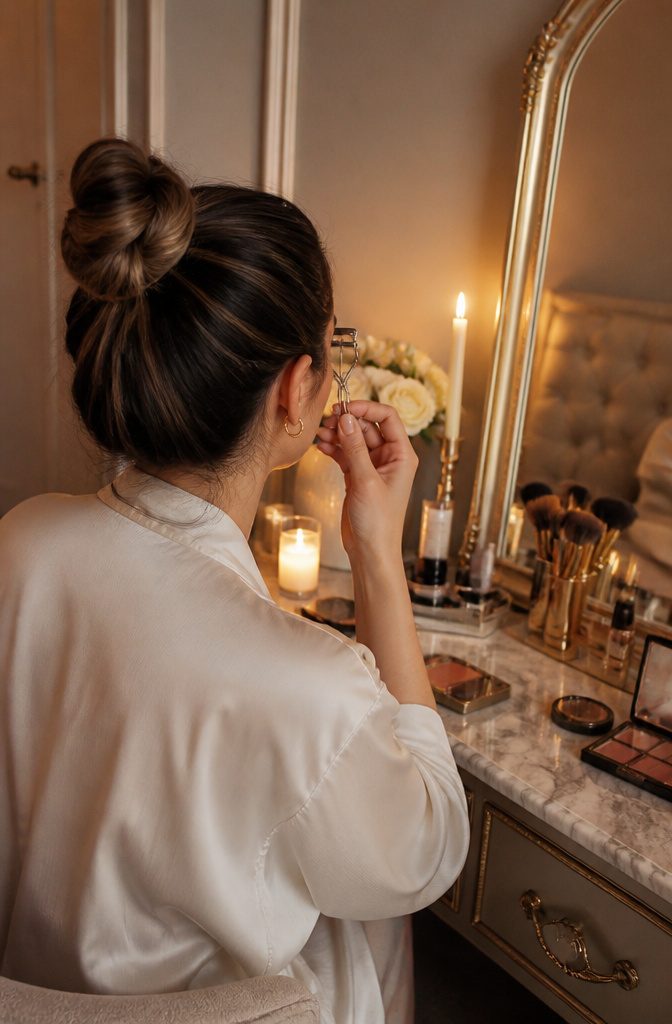
A good eyelash curl makes hooded eyes read as open instead of heavy, and the order of operations matters more than the product. Curl before mascara, never after, or the wet formula grips the pad and you lose lashes.
I squeeze from the base to the tip in a few small clamps rather than one hard pinch, because an even bend throughout the lash holds all day.
The Hourglass Unlocked Instant Extensions Mascara at $33 is what I reach for once the curve is set.
It is a tubing formula, which means the polymer tubes wrap each lash and stay lifted without smudging into the crease that hooded lids tend to have.
Drugstore alternatives exist, but water-resistant and waterproof formulas generally hold a curl better than washable ones, so check the label before you buy.
Understanding Hooded Eyes
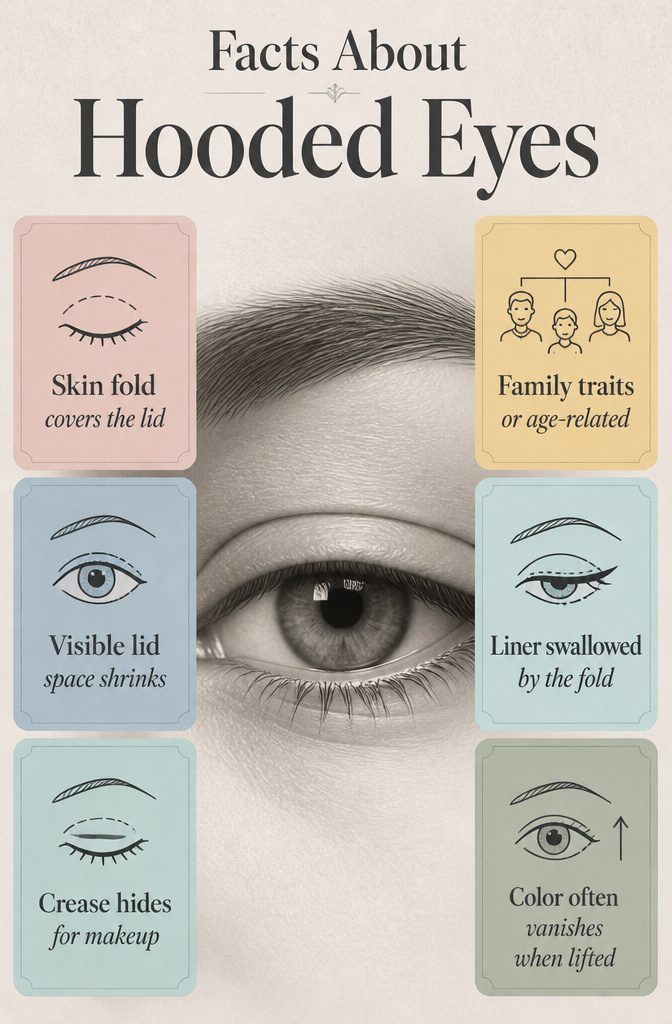
Hooded eyes sit under a fold of skin that drops from the brow bone and partly covers the lid.
When the eyes are open, that skin tucks the lid back into its own crease, so the visible lid space shrinks to a strip or disappears entirely.
The crease itself hides, which matters because most shadow tutorials treat that crease as the main coordinate for where color should go.
This shape can run in families or arrive later as skin softens. Either way, the practical result is the same: color placed on the lid alone vanishes the moment the eyes lift.
Liner drawn tight to the lash line can do the same, swallowed by the fold when the face is at rest and looking straight ahead.
Some hooded lids keep a little more visible skin at the inner corner or outer edge, and some shift depending on sleep or angle, so the fold is rarely uniform.
The variation means no single map works for everyone, but the shared problem is what the techniques ahead address: making color stay visible while the eyes are open, not just while they are closed in the mirror.
What the Mirror Should Show

The mirror position that most guides skim past is the one that rewires every other technique for hooded lids.
Makeup applied while looking down or with the head tilted back lands on the mobile lid, the part that vanishes the moment you face someone straight on.
Eyes open, relaxed, looking directly forward is where the color actually lives when you’re in conversation, in a meeting, across a dinner table.
Most of us default to looking down into a bathroom mirror or leaning close with one eye shut.
For hooded eyes, that placement hides the work. The socket you need to define sits higher than you think, sometimes up at the brow bone, and you only see that real estate when the eye is open and level.
A makeup artist who works with this eye shape calls it the single pro tip that changes the result completely: color has to go where it will be seen, not where it feels right when your face is pointed at the floor.
At home, a magnifying mirror held at eye level helps, or a wall mirror you can stand in front of.
The adjustment feels strange the first few tries. Shadow goes higher than habit suggests, liner lands in a different fold, and the shape you thought you were drawing shifts.
But the difference once you’re finished and talking to someone face to face is the difference between makeup that disappears and makeup that opens the eye.
Products That Stay Put
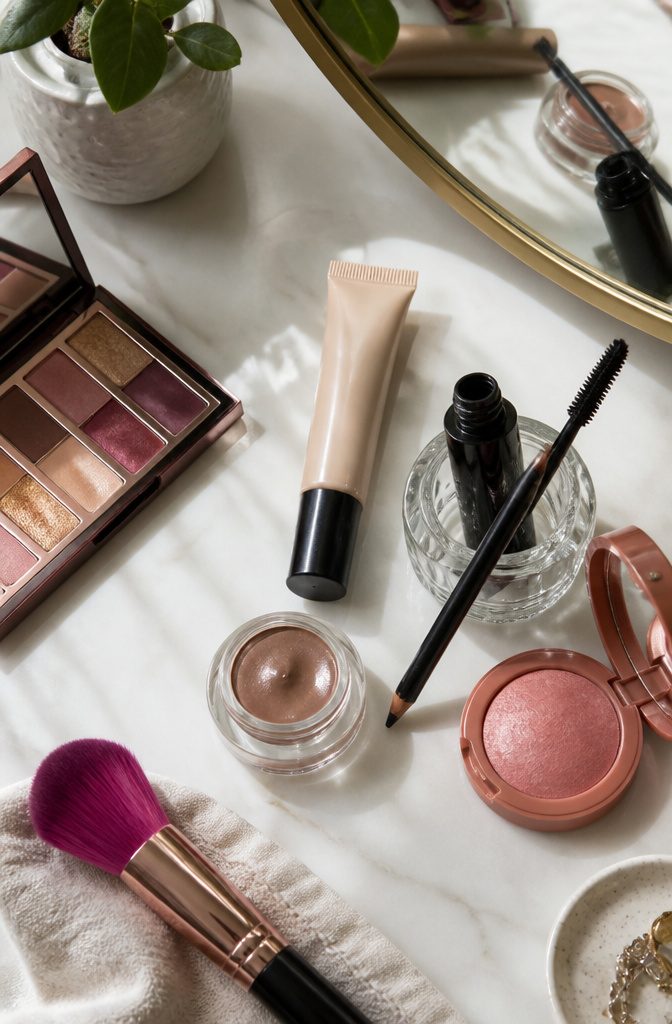
Hooded lids fold over the mobile part of the eye, so the product underneath has nowhere to go but up into the crease or sideways toward the brow bone.
A reliable eye primer fixes this before it starts; a thin layer of Urban Decay Primer Potion keeps shadow smooth and visible all day, and setting it with translucent powder grips pigment even harder.
Waterproof formulas are the first switch to make.
Ordinary liner slides on a hooded eye; waterproof eyeliner stays where the waterline meets the fold. Cream eyeshadows are the second, because a blendable, non-creasing texture moves with the lid instead of cracking across it.
Revlon’s ColorStay Creme Eye Shadow fits this, and the ColorStay Day to Night Eye Shadow Quads are built for exactly the problem at hand: coordinated, pigmented shades designed not to migrate once the hood comes down.
Volumizing mascara finishes the eye open, not heavy. Lashes that lift and hold their curl keep the lid from looking weighed down, which matters when so much of the lid itself disappears on the open eye.
Mistakes That Close the Eye
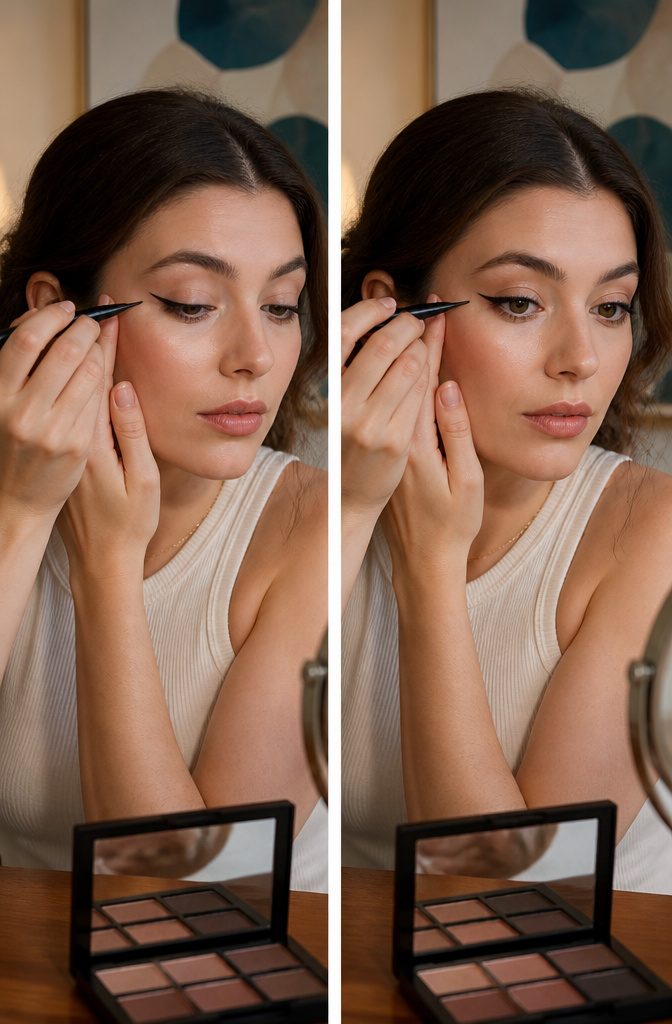
Thick eyeliner across the full lash line is the fastest way to make a hooded eye disappear completely.
The lid space that remains visible when your eyes are open is already limited, and a heavy band of pigment eats every millimeter of it.
What convinced me, reading through the techniques that actually work, was how consistent the fix is: keep the line thin and pressed as close to the lashes as possible, stopping around the midpoint and lifting slightly at the outer corner for that kitten-wing effect.
Darker shades belong above the natural crease, not in it. Blend shadow slightly higher than your instinct tells you, because the fold of a hooded lid will swallow anything placed at crease level the moment you look straight ahead.
Charcoal and navy are especially risky, they recede visually and can leave the eye looking sunken rather than defined.
The inner corner highlight is non-negotiable. Skipping it loses the contrast that makes an eye read as open and bright.
A small touch of something reflective there catches light and pulls the shape forward, especially paired with tightlining the upper waterline, which adds depth without stealing lid room.
The M2U NYC Pearl St. or Champagne Eye Crayons at $10 are built for this exact spot, though any similar formula works if you already own one.
Frequently Asked Questions
What is the best eyeliner for hooded eyes?
A long-wear, smudge-proof formula wins, but the placement matters just as much. Keep the line thin and pressed close to the lash line, stopping around the midpoint and lifting slightly at the outer corner into a kitten wing.
A soft kohl pencil like Victoria Beckham Beauty Satin Kajal Liner works well for tight-lining the upper waterline, since its give against the waterline makes placement forgiving.
How do I stop my eyeshadow from smudging on hooded eyes?
Prep with a reliable eye primer, then set it with translucent powder before any color goes on. Urban Decay Primer Potion is the article’s pick for keeping shadow smooth and visible all day.
Waterproof formulas and cream eyeshadows that move with the lid instead of cracking across it also help, since hooded lids fold over the mobile part of the eye and push product upward.
Can I wear bold colors with hooded eyes?
Yes, but place them slightly above the natural crease so they stay visible when your eyes are open.
The fold swallows color placed at crease level, so the pigment needs to sit higher, on the brow bone itself, where the orbital bone casts its own natural hollow.
A bright liner color on the lower lash line also works for a deliberately graphic look.
How do I apply eyeshadow to hooded eyes?
Apply shadow slightly above your natural crease, not in it, so the color survives the open eye. Blend up and out, never straight across or downward, to lift rather than drag the shape.
Look straight ahead while you apply, not down into a hand mirror, or you will misplace the shadow by the exact distance your lid shifts when the eye opens.