
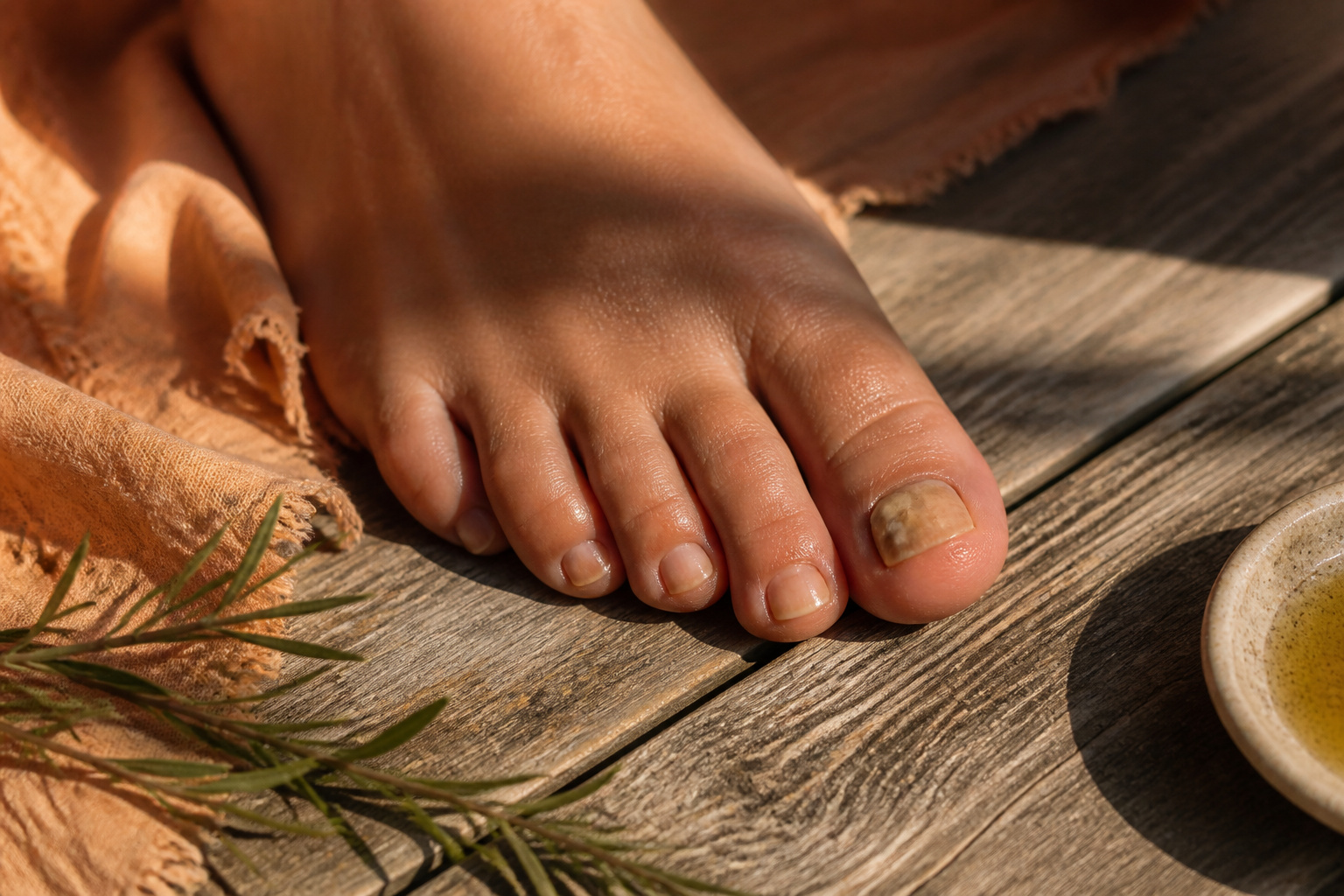
Tea tree oil is a topical antifungal made from the leaves of the Australian Melaleuca alternifolia plant.
It works against nail fungus only when diluted below 15% concentration and applied twice daily for roughly six months, a timeline that matches how slowly toenails grow out.
In one clinical study, full-strength application cleared the infection completely in about 18% of users, while 60% saw partial improvement. That modest success rate is why most dermatologists now treat it as a complement to prescription treatment rather than a standalone cure.
Prep and Clean Your Nails
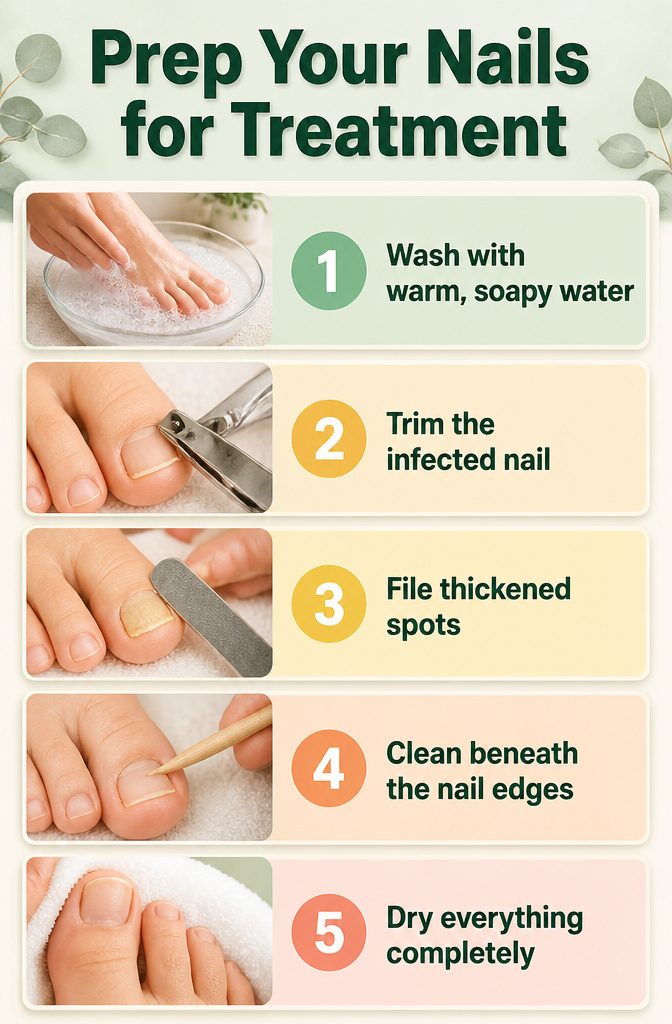
- Wash your feet or hands with warm, soapy water before anything else touches the nail.
- Trim the infected nail as short as you safely can; less surface area means less shelter for the fungus to hide.
- File down any thickened spots where the nail has gone yellow or crumbly. Tea tree oil only works when it can actually reach the living fungus underneath, and a thick, hardened plate blocks that cold.
- Clean beneath the nail edges with the corner of a nail file or an orange stick, chasing out packed debris and loose keratin.
- Dry everything completely. Fungus loves moisture, and trapping dampness under oil you apply next only feeds the problem you are trying to kill.
Apply Tea Tree Oil Twice Daily
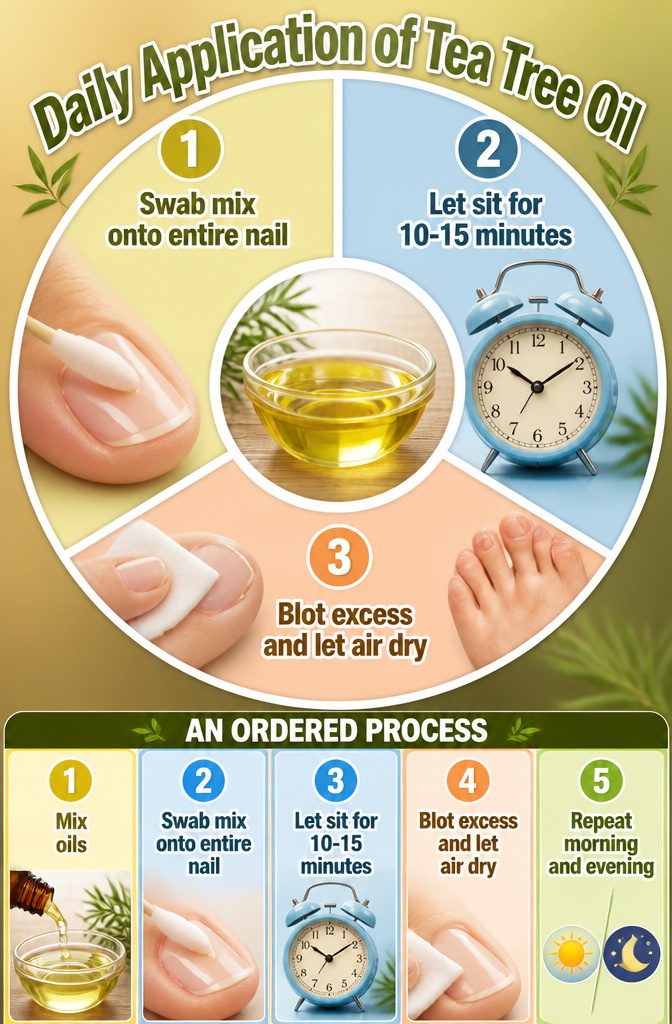
A 1-to-2 ratio keeps the concentration under 15%, which is the safety threshold for topical use.
One drop tea tree oil, two drops carrier oil: jojoba works for thinner application, coconut for something that stays put. Mix fresh each time or in a tiny bottle for the week; oil oxidizes and loses punch sitting open.
- Swab the mix onto the entire nail plate, working it under the free edge and into the corners where the fungus usually starts. A clean cotton swab or small brush keeps you from recontaminating the bottle.
- Let it sit 10 to 15 minutes so the terpinen-4-ol can penetrate the nail matrix. Go make coffee or brush your teeth; sitting there watching it does nothing extra.
- Blot any excess on surrounding skin, then let the nail air-dry completely. Trapped moisture under a sock or shoe just feeds what you are trying to kill.
That sequence, morning and evening, gives consistent coverage without overloading the skin. Skip a day and the fungus gets a window, which is exactly how treatment stretches from weeks into months.
Soak for Deep Healing
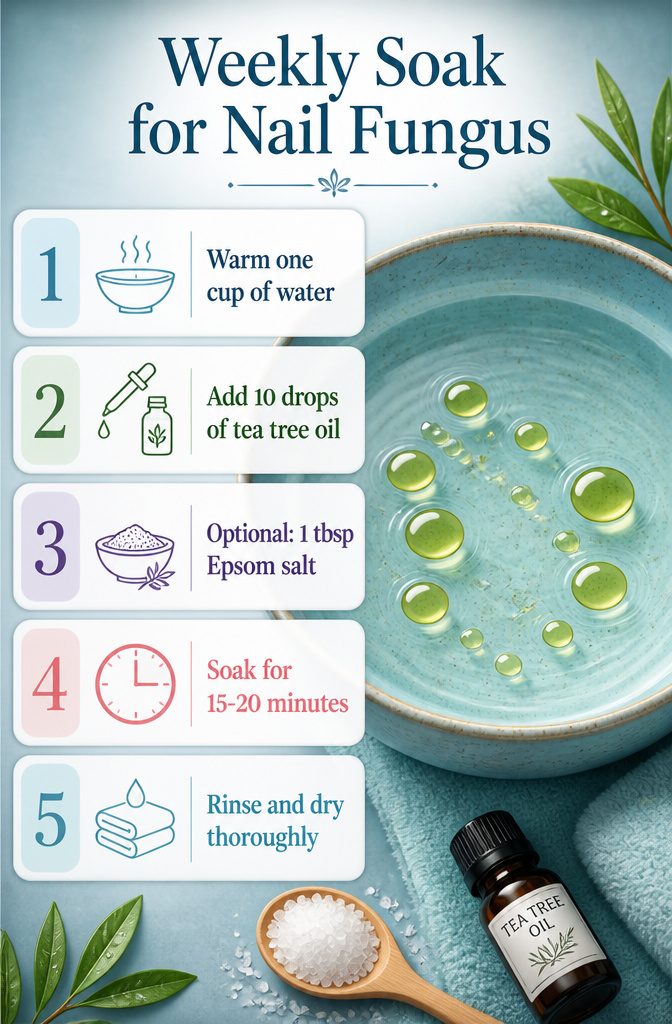
Nail fungus sits deeper than the surface, which is why a weekly soak makes more sense than trying to swab it away once and hoping for the best.
I read enough conflicting advice that I finally settled on one recipe that keeps appearing across the guides that actually bother with measurements.
Here is the soak that breaks down the nail plate so the oil can reach the fungus underneath:
- Warm one cup of water. Not hot; you will sit in this for twenty minutes and burnt skin around an infected nail is the last thing you need.
- Add ten drops of tea tree oil. The terpinen-4-ol in the oil does the antifungal work, and at this dilution it spreads across every toe rather than burning one spot.
- If your feet ache from the pressure of thickened nails, throw in one tablespoon of Epsom salt. The sources call it optional and I agree; it soothes, but it does not kill fungus.
- Soak for fifteen to twenty minutes. Set a timer. Nails go soft and pickable past twenty minutes, which creates new problems.
- Rinse and dry thoroughly. A damp foot is a fungus farm, so spend the extra thirty seconds between your toes with a clean towel.
Do this three to four times per week, not daily; over-soaking weakens the skin barrier you are relying on to keep new fungus out.
Prevent Reinfection
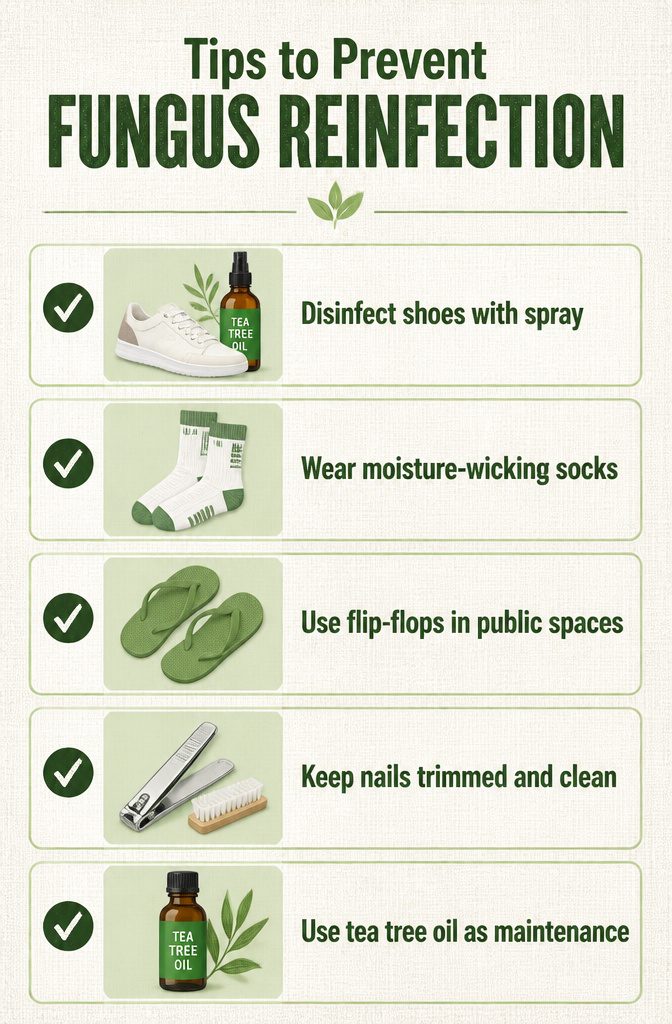
Even after the yellowing and thickening ease up, fungal spores can live in shoes, on shower floors, in the crevice of a nail clipper. I missed this the first time around and paid for it.
- Disinfect shoes with a tea tree oil spray: mix 10 drops of tea tree oil into half a cup of witch hazel and mist the interiors after each wear.
- Wear socks that actually wick moisture. Cotton holds sweat against the skin for hours.
- Flip-flops in public showers, pool decks, locker rooms. The reason is obvious once you’ve watched a cleared nail re-cloud from one locker-room step.
- Keep nails trimmed short and clean underneath. Long nails create the warm, dark gap fungus favors.
- After recovery, keep tea tree oil on the nails 2–3 times weekly. Think of it as maintenance, not treatment.
Tea Tree Oil
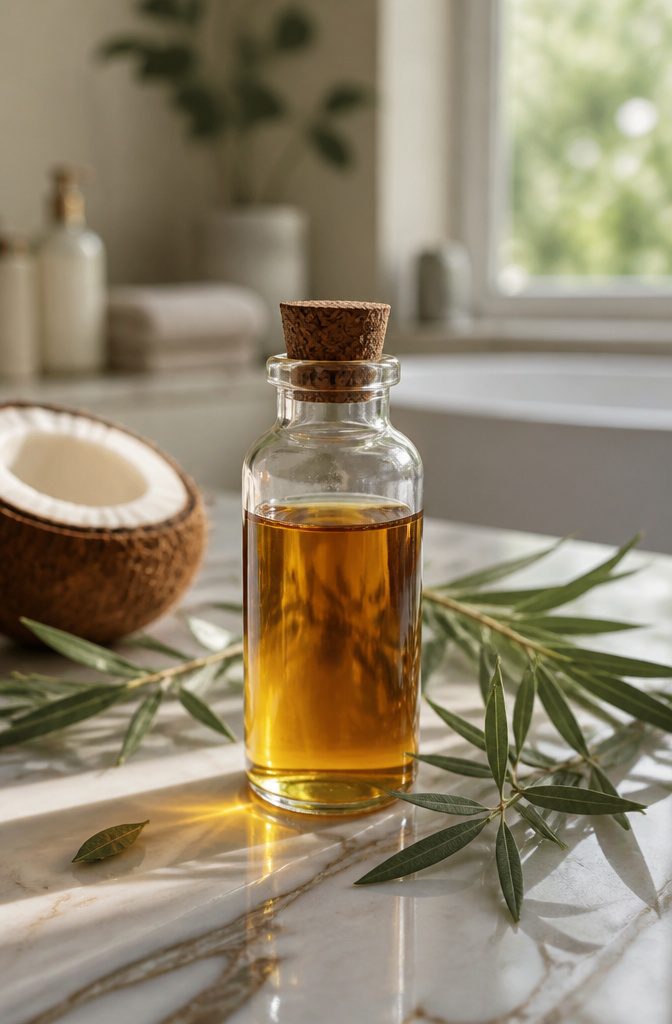
Tea tree oil is what gives this home remedy its antifungal power.
The active compound, terpinen-4-ol, works against the fungi that cause nail infections. A 2013 study found it reduced growth of Trichophyton rubrum, the fungus behind most cases.
Applied at full strength twice daily for six months, it cleared the infection completely in roughly 18 percent of people, while another 60 percent saw visible improvement even if the fungus lingered.
Concentrations below 15 percent are considered safe for topical use, which means diluting with a carrier oil.
Six drops of something like coconut or olive oil per drop of tea tree oil hits that mark, and twelve drops makes sense for sensitive skin.
Carrier Oils
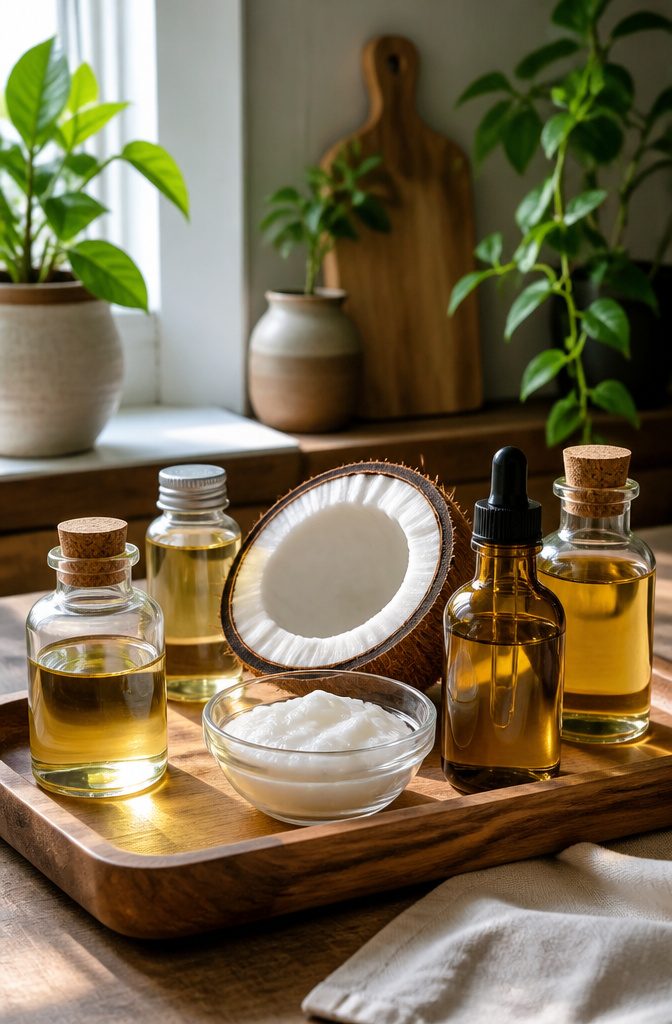
Tea tree oil straight from the bottle will burn your skin. Sources consistently recommend diluting, and the ratios show why: six drops of carrier oil per one drop of tea tree, at minimum.
I have seen 12-to-1 suggested for sensitive skin. Coconut oil and jojoba are the two carriers that come up most often for nail fungus treatment, and both earn that place for different reasons.
Coconut oil carries its own antifungal properties, which makes the pairing feel deliberate rather than merely practical. Jojoba oil sits closer to human sebum and absorbs without the greasy film that can trap moisture against the nail.
The choice between them matters most if you are already prone to irritation around the cuticles, since a base that spreads thin and dries clean reduces the chance of pooling and maceration.
Either will get you to the same dilution; neither changes the twice-daily application schedule, and neither lets you skip the 10–15 minute soak time before you blot the excess and let the nail air-dry.
Optional Essential Oils

Lavender and eucalyptus oils can round out the basic tea tree treatment if your skin tends toward irritation or you want extra antibacterial backup.
Lavender brings a skin-calming quality that matters when the surrounding cuticle gets angry from weeks of daily dabbing, and eucalyptus carries its own antifungal and antimicrobial properties against the same organisms tea tree targets.
Neither is required: the core tea tree oil for nail fungus routine works straight, and adding these means sourcing another bottle and working out the right dilution ratio alongside your carrier oil.
Eucalyptus, like tea tree, demands proper dilution before it ever touches broken or compromised skin, and it doubles comfortably as a foot soak on the days you are not doing direct nail applications.
Lavender’s gentler profile suits spot-soothing on the skin around the nail rather than the plate itself.
I keep them as backup players, not starters: buy the tea tree, get the protocol running, then decide whether the extra cost and complexity earn their place in your routine.
Vicks VapoRub Alternative
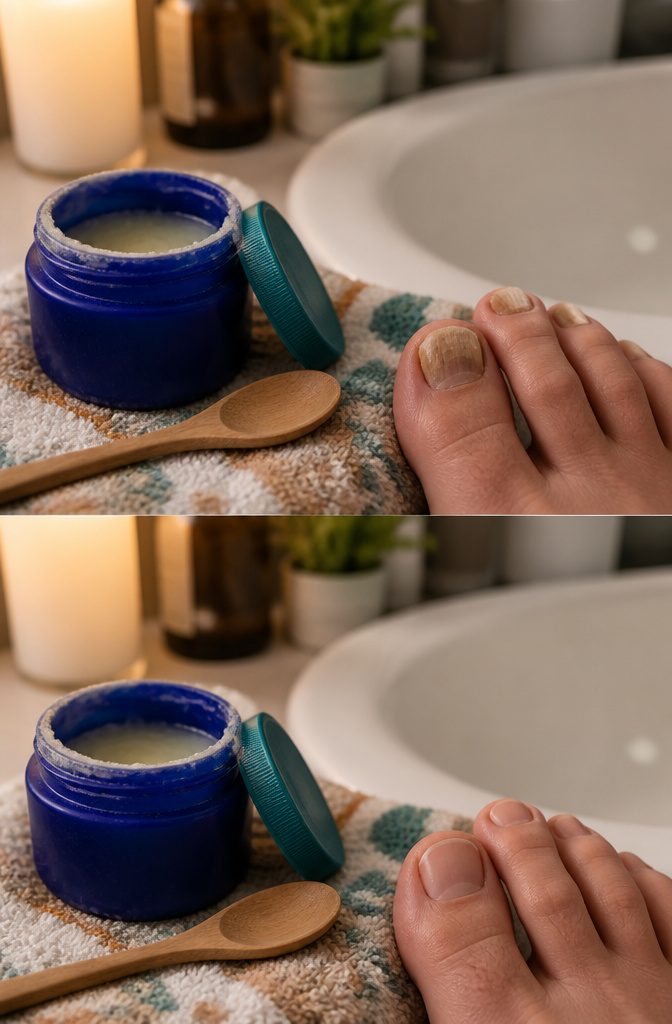
Some readers reach for Vicks VapoRub before they try essential oils, and small studies suggest it has modest effect against nail fungus.
A tiny trial with only eighteen participants showed partial improvement over nearly a year of use, which is far slower than prescription treatments but still enough to keep a jar in the bathroom for some people.
Vicks costs about three dollars at any drugstore, so the barrier to trying it is low.
The trade-off is time: one of those eighteen patients saw real clearing, and most of the rest showed at least partial response. That is better than nothing, but it is also not a reliable cure.
The menthol, camphor, and eucalyptus cool the skin and smell medicinal, masking the nail rather than resolving it. If the fungus has reached the matrix or thickened the nail substantially, Vicks is unlikely to shift it.
I see it as something to try when the case is mild and the budget is tight, not when the nail is crumbling or painful.
How Effective Is Tea Tree Oil for Nail Fungus
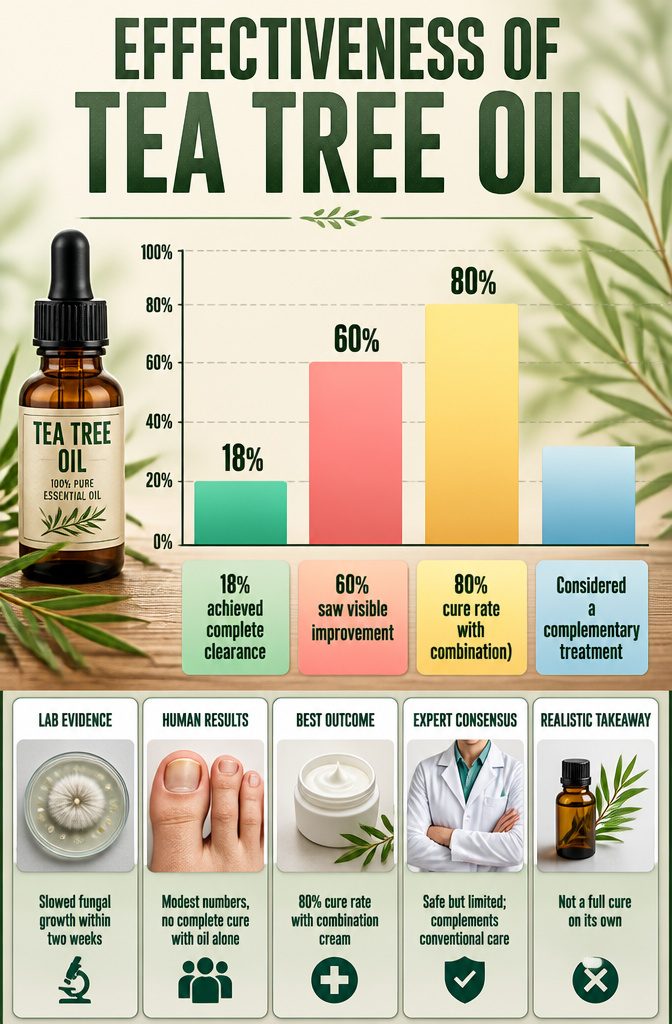
The antifungal punch of tea tree oil is well documented in lab settings. A 2013 study on Trichophyton rubrum, the fungus behind most nail infections, found that it noticeably slowed fungal growth within two weeks in a test-tube model.
How that translates to actual toes is still uncertain. Larger human trials haven’t followed up in the same way, and a 2022 review of the available research called much of the older work too small and too poorly designed to trust.
What human data we do have comes in modest numbers. When applied at full strength twice daily for six months, roughly 18% of users saw complete clearance, while 60% noticed visible improvement without full resolution.
The standout result, an 80% cure rate, belonged not to tea tree oil alone but to a 1999 cream combining it with the prescription antifungal butenafine hydrochloride.
Participants using tea tree oil by itself in that same study failed to cure the infection at all.
Several 2021 researchers now position tea tree oil as a complement to conventional treatment, something that might reduce reliance on oral medications rather than replace them.
The newer consensus reads as safe but limited. I would not bank on a bottle from the apothecary aisle doing the full job by itself.
Safety and Side Effects
Undiluted tea tree oil can wreck skin fast, and I learned the hard way to respect the dilution math.
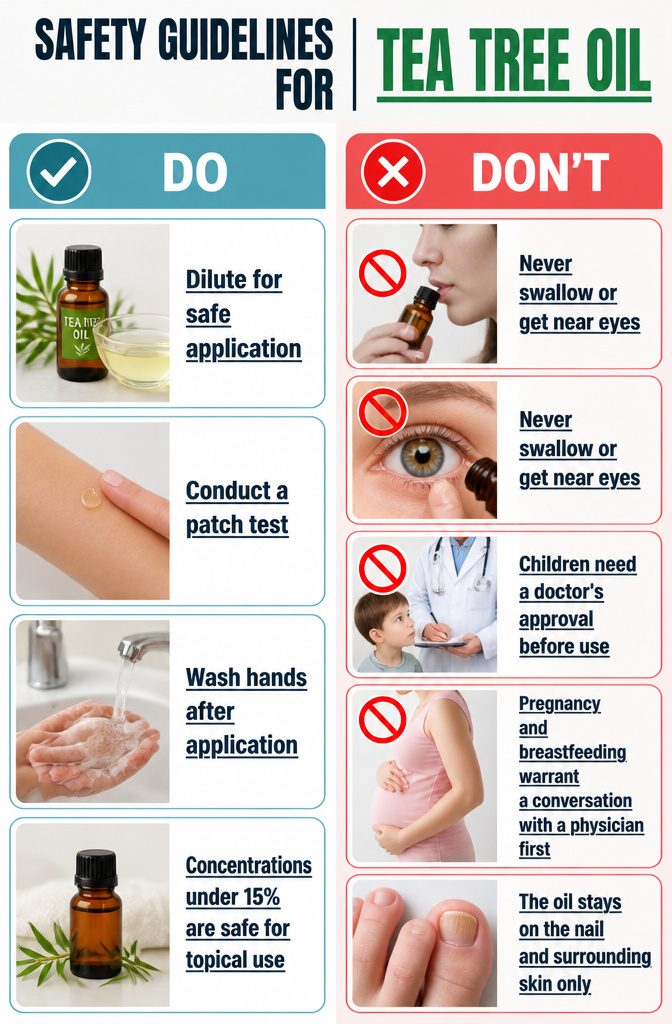
Concentrations under 15% are considered safe for topical use, which means one drop of tea tree oil needs at least six drops of a carrier oil like coconut or olive oil.
Sensitive skin pushes that ratio higher, up to twelve drops of carrier oil per single drop.
Some people react even at safe dilutions.
Redness, itchiness, and inflammation signal an allergy, which is why a patch test matters: one diluted drop on a small spot, then twenty-four hours of waiting. No reaction means you can proceed.
Never swallow tea tree oil or get it near eyes. Children need a doctor’s approval before use.
Pregnancy and breastfeeding also warrant a conversation with a physician first. The oil stays on the nail and surrounding skin only, with clean hands washing thoroughly after each application to keep the fungus from hitching a ride elsewhere.
How Long Treatment Takes
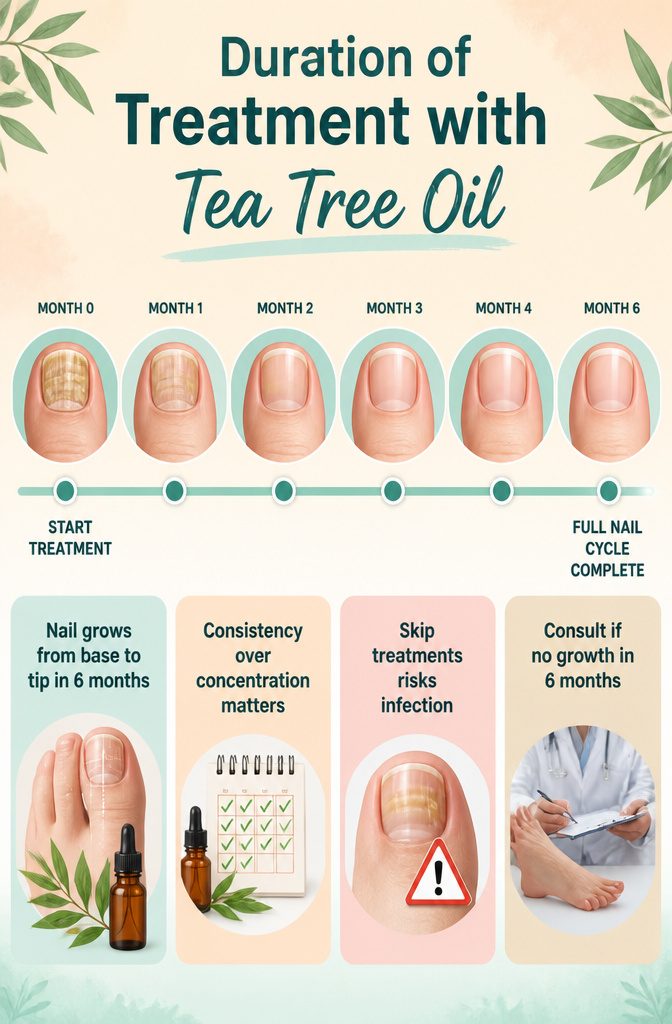
A toenail grows from base to tip in roughly six months, give or take, which is why nearly six months is realistic timeframe for tea tree oil treatment in the one clinical study that tested it.
Full healing means the complete nail has cycled through, not just surface clearance, so the calendar matters more than the day-by-day appearance.
Consistency carries more weight than concentration. Skipping applications because the nail looks normal mid-process risks leaving living fungus in the matrix, and the new plate starts infected all over again.
I found the most useful guideline was to keep going a couple weeks past visible clearing, since the nail bed can harbor what the surface no longer shows.
If six months pass with no fresh growth at the cuticle, a dermatologist or podiatrist can culture the nail and move to prescription options. But within that window, patience paired with twice-daily application usually delivers the outcome the study recorded.
Frequently Asked Questions
Is tea tree oil effective for nail fungus?
Tea tree oil has documented antifungal properties against Trichophyton rubrum, the fungus behind most nail infections, but its effectiveness as a standalone treatment is limited.
In one six-month study, roughly 18% of users saw complete clearance and 60% saw visible improvement without full resolution.
The best result, an 80% cure rate, came from a cream combining tea tree oil with prescription butenafine hydrochloride, not from tea tree oil alone.
How do you use tea tree oil for nail fungus?
Dilute one drop of tea tree oil with at least two drops of carrier oil to stay under the 15% safety threshold, then apply to the entire nail plate, working it under the free edge and into corners.
Let it sit for 10 to 15 minutes so the active compound terpinen-4-ol can penetrate, then blot excess and let the nail air-dry completely. Repeat this process morning and evening; consistency matters more than concentration.
How long does it take for nail fungus to heal with tea tree oil?
Plan for roughly six months of twice-daily application, which matches the time it takes a toenail to grow from base to tip.
One clinical study tested tea tree oil at full strength for exactly that duration. Keep treating for a couple weeks past visible clearing, since the nail bed can still harbor fungus the surface no longer shows.